SLEEPLESS (Italy - 2001) Directed by Dario Argento. Written by Dario Argento, Franco Ferrini and Carlo Lucarelli. Cast: Max von Sydow, Stefano Dionisi, Chiara Caselli, Gabriele Lavia, Rossella Falk, Paolo Maria Scalondro, Roberto Zibetti, Roberto Accornero, Barbara Lerici, Barbara Mautino, Conchita Puglisi, Massimo Sarchielli, Elena Marchesini, Guido Morbello, Aldo Massasso, Diego Casale, Alessandra Comerio, Daniela Fazzolari. (Unrated, 117 mins) Those Dario Argento fans who lament his decline after his trailblazing run from 1970's THE BIRD WITH THE CRYSTAL PLUMAGE to 1987's OPERA often speak of those later films as if he just suddenly started making terrible movies out of the blue. The shift was gradual, though it's easy to let an outright fiasco like 1998's THE PHANTOM OF THE OPERA cloud your judgment and taint everything surrounding it in his filmography. While things started to get precipitously bad around 2007's MOTHER OF TEARS, Argento's early 21st century output following PHANTOM--SLEEPLESS, THE CARD PLAYER, DO YOU LIKE HITCHCOCK?--has its merits and those films aren't as bad as their reputations suggest, even if they're unquestionably second-tier Argento. Such is the case with 2001's SLEEPLESS, a minor giallo in the Argento canon in retrospect but an important one at the time, as it was such an unabashed "give the fans what they want" movie that SHAMELESS might've been a better title. THE PHANTOM OF THE OPERA was met with such hostility and was so flatly rejected by everyone, that SLEEPLESS served as an olive branch, made with the promise of being the old Argento you know and love, and he even got disbanded DEEP RED and SUSPIRIA composers Goblin to reunite for the soundtrack.
If Argento wasn't such a gifted stylist, the greatest-hits pandering he engages in throughout SLEEPLESS would almost be embarrassing. He's like a legendary classic rocker coming off an ambitious, badly-received concept album and a costly tour that flopped and is now determined to win back the fans by promising to play nothing but the old hits. There's endless, constant callbacks to his earlier classics in scene after scene after scene--a teeth-bashing murder and a set-up similar to the "walking dummy" bit from DEEP RED; a riff on the way someone suddenly appears in the frame like the climax of TENEBRAE; murder sequences in the rain like TENEBRAE, and another bit with a woman outside a train station that recalls Jessica Harper waiting for a taxi in a torrential downpour outside the airport in SUSPIRIA, or Eleonora Giorgi outside the library in INFERNO; a parent trying to cover for a their murderer child in PHENOMENA; an aging protagonist with a disability like Karl Malden's blind earwitness to murder in THE CAT O'NINE TAILS; a locked, abandoned villa that holds a secret, much like DEEP RED; a long tracking shot across the carpeted floor of a theater leading to a brutal murder that's strongly reminiscent of the famous Louma crane shot in TENEBRAE; and most important to all of Argento's gialli, the notion of the amateur sleuth who's hung up on a barely-remembered and seemingly insignificant detail that's ultimately the key to the mystery.
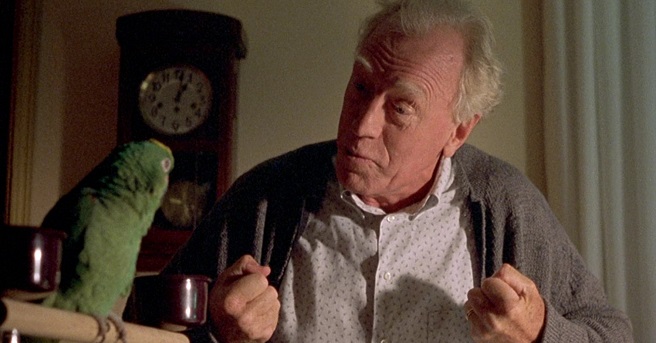
SLEEPLESS opens with a brief scene in Turin in 1983, as detective Ulisse Moretti (Max von Sydow) comforts a little boy who was hiding and listening as his mother was brutally murdered via an English horn being repeatedly, violently crammed into her mouth and throat. She's the latest victim of a "killer dwarf" in what's been dubbed by the press as "The Dwarf Murders." Cut to 2000 and the bizarre murders start once again, and though the murderer claims to be the Killer Dwarf, it's immediately deemed the work of a copycat, since the primary suspect in the Dwarf Murders drowned in what was ruled a suicide 17 years earlier, though his body washed away and was never found. The current detective on the case, Manni (Paolo Maria Scalandro) has no leads and reaches out to pick the brain of the retired Moretti, now an elderly widower with a heart condition and a spotty memory and seemingly in the earliest stages of Alzheimer's. Though he's foggy on some of the details, Moretti is still brought in as a consultant and ends up reconnecting with Giacomo (Stefano Dionisi), the now-grown little boy from 1983 who's coincidentally been summoned from Rome to Turin by his childhood friend Lorenzo (Roberto Zibetti) when the Dwarf Murders become front-page news once again.
Much like Karl Malden and James Franciscus in THE CAT O'NINE TAILS, David Hemmings and Daria Nicolodi in DEEP RED, Anthony Franciosa and Christian Borromeo in TENEBRAE, and Jennifer Connelly and Donald Pleasence in PHENOMENA, von Sydow's Moretti and Dionisi's Giacomo become yet another in a long line of Argento's unlikely sleuth teams resorting to their own investigation when the police either dismiss their concerns or have reached a dead-end. As you might guess, as they get closer to the truth, their lives are in danger (someone attempts to poison Giacomo's beer in a crowded bar at one point, but Lorenzo ends up drinking it and almost dies), and numerous red herrings abound, among them Lorenzo, his Giacomo-hating, asshole father (DEEP RED and INFERNO co-star Gabriele Lavia), and the killer dwarf's still-grieving, embittered mother (a semi-retired Rossella Falk, veteran of numerous vintage non-Argento gialli like Luigi Bazzoni's THE FIFTH CORD, Paolo Cavara's BLACK BELLY OF THE TARANTULA, and Umberto Lenzi's SEVEN BLOOD-STAINED ORCHIDS). And, as usual, the key to the mystery involves some obscure detail, in this case a little-known nursery rhyme for which Moretti can't remember the words, and a strange hissing sound heard amidst his mother's blood-gurgled screams that has stuck with Giacomo all these years and he still can't identify. There's absolutely nothing new here, but it's fun to see all of these Argento tropes being served up like giallo comfort food, not to mention the immeasurable boost it gets from the regal screen presence of the great von Sydow.
For these reasons, and in looking at Argento's subsequent decline through the benefit of hindsight, SLEEPLESS has aged better than expected. Much of that is due to the terrific transfer on Scorpion's new Blu-ray (because physical media is dead), which represents the first proper presentation the film has had in America. Artisan Entertainment picked it up for the US and released it straight-to-video in the fall of 2001, but the DVD was a subpar transfer, and to add insult to injury, was only offered in 1.33:1 pan & scan. Of course, this was prior to the days of widescreen HDTV being the standard, but even then, most DVDs offered both widescreen and 1.33:1 "fullscreen" versions--either as two-sided discs or two different packages--the fullscreen option there for those holdouts who still couldn't grasp the concept of letterboxing. Now, at last, SLEEPLESS looks and sounds like it should, but it still has its faults that keep it firmly entrenched as second-rate Argento. The initially-welcome familiarity becomes a slight liability after a while, as one gets over the joy of Argento being Argento again and realizes that, no matter how much better this is than PHANTOM OF THE OPERA, it kinda just becomes Dario Argento's homage to Dario Argento. The killer, once revealed, starts using a weird vocal affect that sounds less like a sinister serial killer and more like a lost Festrunk brother; and at just under two hours, it's entirely too long, which makes the film's final minutes even more bizarre in the way Argento has the closing credits roll over the final scene as shit is still happening. It probably sounded like an outside-the-box idea on paper as a way of messing with the audience, but in execution, it's jarring and distracting, like the film is already 20 minutes too long but now he's in a mad rush to wrap it up. He would do the same thing over a final scene with Stefania Rocca in THE CARD PLAYER, but it was in a much less obtrusive fashion. SLEEPLESS is a far from perfect film, and it doesn't even crack the top ten of any "Best of Argento" lists, but at the same time, it also doesn't belong anywhere near the bottom, and at least now, with a quality Blu-ray presentation, it can be assessed on its own admittedly flawed terms by devout Argentophiles.
THE IGUANA WITH THE TONGUE OF FIRE (Italy/France/West Germany - 1971) Directed by Willy Pareto (Riccardo Freda). Written by Willy Pareto (Riccardo Freda), Alessandro Continenza and Gunther Ebert. Cast: Luigi Pistilli, Dagmar Lassander, Anton Diffring, Valentina Cortese, Arthur O'Sullivan, Werner Pochat, Dominique Boschero, Renato Romano, Sergio Doria, Ruth Durley, Niall Toibin. (Unrated, 96 mins) Journeyman director Riccardo Freda (1909-1999) remains a key figure in Italian horror, having mentored Mario Bava and encouraged his transition from cinematographer to director by letting him handle large chunks of 1957's I VAMPIRI and 1959's CALTIKI, THE IMMORTAL MONSTER. Bava soon made the groundbreaking 1960 Italian horror classic BLACK SUNDAY while Freda, who often used the Anglicized pseudonym "Robert Hampton" on his films, never seemed particularly beholden to the genre beyond 1962's THE HORRIBLE DR. HICHCOCK and its 1963 semi-sequel THE GHOST, with both in very high regard by connoisseurs of Italian horror. But Freda spent most of the decade making a string of HERCULES-inspired peplum epics like 1960's THE GIANTS OF THESSALY and 1961's MACISTE AT THE COURT OF GRAND KHAN and assorted spaghetti westerns and 007 Eurospy knockoffs. Following Dario Argento's trailblazing 1970 giallo THE BIRD WITH THE CRYSTAL PLUMAGE and its followups, 1971's THE CAT O'NINE TAILS and 1972's FOUR FLIES ON GREY VELVET, Italian journeymen directors essentially formed a conga line to crank out a series of knockoff gialli with animals in the title, among them Lucio Fulci's A LIZARD IN A WOMAN'S SKIN (1971) and DON'T TORTURE A DUCKLING (1972), Sergio Martino's THE CASE OF THE SCORPION'S TAIL (1971), Paolo Cavara's THE BLACK BELLY OF THE TARANTULA (1971), Duccio Tessari's THE BLOODSTAINED BUTTERFLY (1971), Sergio Pastore's THE CRIMES OF THE BLACK CAT (1972), and Antonio Margheriti's SEVEN DEATHS IN THE CAT'S EYE (1973) just to name a few. Following his 1969 krimi-inspired DOUBLE FACE, Freda hopped on the animal giallo bandwagon with one of the genre's most nonsensically random titles, 1971's THE IGUANA WITH THE TONGUE OF FIRE.
The meaning of that title is shoehorned in almost as an aside and doesn't really make sense even in context, but it's probably the most memorable thing about the film, which suffers from erratic pacing, hilariously awful special effects, and Freda and his co-writers fighting a losing battle to keep track of all of their red herrings, at least two of whom completely disappear from the film. It does benefit from an unusual setting, a great cast of familiar Eurocult faces, an expectedly catchy lounge score by Stelvio Cipriani with the participation of Edda dell'Orso, whose wordless vocals were essentially legally mandated by this point, and an admirably off-the-rails climax that prefigures both Brian De Palma's DRESSED TO KILL and Dario Argento's TENEBRAE to a certain extent. In Dublin, a woman has acid thrown in her face and her throat slashed before being stuffed in the boot of a Rolls Royce belonging to Sobiesky (Anton Diffring), the Swiss ambassador to Ireland. Police inspector Lawrence (Arthur O'Sullivan) gets nowhere with the investigation since Sobiesky immediately plays the privileged asshole card by flaunting his diplomatic immunity and refusing to cooperate. It turns out the dead woman was his mistress, and when another Sobiesky mistress, a sultry nightclub chanteuse (Dominique Boschero), also turns up dead after trying to blackmail him over their affair, Lawrence sends rogue, plays-by-his-own-rules detective John Norton (Luigi Pistilli) undercover. Norton, who's persona non grata with the Dublin police after a suspect grabbed his gun and committed suicide during a brutal interrogation, and who's still plagued by the unsolved murder of his wife (a plot point that's mentioned and never revisited), lets himself get picked up at a bar by Sobiesky's promiscuous stepdaughter Helen (Dagmar Lassander), much to the chagrin of her arrogant boy-toy Walter (Sergio Doria), and manages to ingratiate himself into the Sobiesky household, also questioning the ambassador's alcoholic wife (Valentina Cortese, who would earn a Best Supporting Actress Oscar nomination three years later for Francois Truffaut's DAY FOR NIGHT) and generally not giving much of a shit about the ambassador's diplomatic immunity privileges. There's also suspicious, conjunctivitis-afflicted limo driver Mandel (Renato Romano), who's also blackmailing Sobiesky's weirdo stepson Marc (Werner Pochat) for his own indiscretions back home in Switzerland, a doctor (Niall Toibin) who's creepy for no reason whatsoever, and comic relief in the form of Norton's teenage daughter as well as his doddering, Agatha Christie superfan mother (Ruth Durley), an amateur sleuth whose annoying habit of misplacing her glasses with attached hearing aids leads to one of the dumbest contrivances in the entire giallo genre.
Never released theatrically in the US, THE IGUANA WITH THE TONGUE OF FIRE has been available only in bootleg format stateside, never even hitting home video and remaining one of the most obscure giallo offerings that, thanks to that title, was certainly read about more than it was actually seen. That is until now, thanks to Arrow's new extras-packed Blu-ray that gives it its first official US release, 48 years after it was made, because physical media is dead. That doesn't mean it's a classic waiting to be discovered. Structurally, THE IGUANA WITH THE TONGUE OF FIRE is a mess that's needlessly convoluted--is there anyone in it not involved in a clandestine blackmail scheme?--and goes to absurd lengths to make sure every character is a suspect at one point, usually in the form of an aggressive zoom into their faces, sporting expressions that land somewhere between suspicious and constipated. The best thing about the film is the unique Dublin setting, especially with some extensive location work done by Freda and his crew, particularly some breathtaking shots at the Cliffs of Moher. There's also a cringe-worthy shout-out to an iconic Dublin business--the Swastika Laundry and yes, that was its logo--which was in existence since 1912, well before the swastika was co-opted by Nazi Germany (it ultimately closed in 1987). And speaking of cringe-worthy, don't miss the scene where O'Sullivan's spectacularly unappealing Lawrence sneeringly hypothesizes that the first murder shows signs of "a woman's hand, or that of a colored person...they're experts at such things," which is the worst hunch by a cop this side of Jack Hedley's Lt. Williams in 1982's THE NEW YORK RIPPER expressing with certainty that "we know the killer has lived in New York his whole life."
Freda wasn't happy with much of anything about THE IGUANA WITH THE TONGUE OF FIRE, starting with Pistilli (best known as the priest brother of Eli Wallach's Tuco in THE GOOD, THE BAD AND THE UGLY and in a rare lead here), who he felt was forced on him by the producers after they failed to secure his first choice--Roger Moore, of all people (Ivan Rassimov was also considered at some point). Displeased with the end result after post-production, Freda decided to take his name off the finished film, where he's credited as "Willy Pareto." It's not a top-shelf giallo, but it's hardly the worst ever made and it's definitely worth seeing for completists. And it's a masterpiece compared to Freda's next film, his 1972 career nadir TRAGIC CEREMONY, which was so bad that it would be nine years before he made another, 1981's MURDER OBSESSION, aka FEAR. MURDER OBSESSION is no great shakes, but it's a decent enough second-tier giallo that's marginally better than THE IGUANA WITH THE TONGUE OF FIRE, if for no other reason than it co-stars Laura Gemser. Freda's comeback was short-lived, however, as he opted for retirement with MURDER OBSESSION proving to be his final film.
GIALLO IN VENICE aka GIALLO A VENEZIA (Italy - 1979) Directed by Mario Landi. Written by Aldo Serio. Cast: Leonora Fani, Jeff Blynn, Gianni Dei, Maria Angela Giordano, Michele Renzullo, Eolo Capritti, Vassili Karis, Giancarlo Del Duca, Maurizio Streccioni. (Unrated, 99 mins) After the genre reached its pinnacle with Dario Argento's 1975 classic DEEP RED, the Italian giallo didn't really have anywhere else to go. DEEP RED tangentially involved the supernatural with its story kicking off with a medium sensing the presence of a murderer who will kill again only to find that she's the next victim. Inspired to explore this new direction, Argento abandoned the giallo for several years to go into the full-on supernatural madness of SUSPIRIA and INFERNO. Gialli were still being made by others, but they were getting increasingly sleazy with the likes of Andrea Bianchi's STRIP NUDE FOR YOUR KILLER (1975) and Alberto Negrin's RED RINGS OF FEAR (1978). Some gialli--most notably Roberto Montero's 1972 offering THE SLASHER...IS THE SEX MANIAC!--were retrofitted with newly-shot porno inserts and released on the XXX circuit. When the Montero film was rechristened PENETRATION in 1976, it featured new hardcore footage of Harry Reems and Tina Russell, much to the chagrin of SLASHER star Farley Granger, who sued to have to it yanked--no pun intended--from porno houses. The introduction of such material foreshadowed the direction the giallo would take by the end of the 1970s before getting a second wind with Argento's 1982 masterpiece TENEBRAE. With interest in the genre waning, directors like Argento, Sergio Martino, and Lucio Fulci (whose 1977 film THE PSYCHIC is a solid giallo from the period) moved on to other things, which cleared the way for the D-list journeymen of Italian exploitation to scrounge for table scraps and make their mark in the mercifully short-lived giallo/porno crossover craze of 1979.
The attempted mainstreaming of pornography reached its apex (or nadir, depending on your POV) with 1980's epic CALIGULA, but as far as the giallo is concerned, it sounds a lot more fun in theory than in practice, because the two signature examples of the movement are both grungy, grimy, ugly, bottom-of-the-barrel affairs. For Eurotrash fans and Italian horror connoisseurs, PLAY MOTEL and GIALLO IN VENICE (neither film received a US theatrical release) had a certain mystique about them when they languished in obscurity in the olden, 1990s days of mail order catalogs and barely-watchable transfers on bootleg VHS often so dodgy and difficult to come by that they'd be in Italian without English subtitles, all the proof you need that the plots in these things didn't even matter. Directed by Mario Gariazzo (THE EERIE MIDNIGHT HORROR SHOW), PLAY MOTEL was released on Blu-ray and DVD by Raro a couple of years ago, and it was decidedly not worth the wait. Star Ray Lovelock (THE LIVING DEAD AT MANCHESTER MORGUE) called it the worst movie he ever made and he's probably right. PLAY MOTEL exists in both hardcore and softcore variants, the softcore basically featuring everything but the money shots, and the hardcore footage not involving established, "name" actors like Lovelock and Anthony Steffen. It's a giallo in the sense that people are killed, but the story of blackmail at a no-tell motel is completely DOA, and the sex scenes aren't even remotely erotic. Likewise with the even more notorious GIALLO IN VENICE, directed by Mario Landi, who would also helm 1980's similarly scuzzy fake PATRICK sequel PATRICK STILL LIVES, the most famous scene of which involves C-list Eurocult sex goddess Maria Angela Giordano getting impaled by a fireplace poker rammed into her vagina.
That's pretty much the level you're at with GIALLO IN VENICE, a problematic 99-minute Vulture/AV Club/Vice doomsday scenario that also features an almost identical vaginal violation involving a large pair of scissors that's somehow less distasteful for what it depicts and more offensive for the cheap and shoddy way in which the gore effect is accomplished. Unlike PLAY MOTEL, GIALLO IN VENICE actually makes a few half-assed overtures at pretending to be a giallo, and in better hands, a couple of its plot twists and a few genuinely striking shots, even if achieved accidentally, might've made it at least a serviceable justification for the giallo/porno mash-up. But it's saddled with some terrible actors, a hilariously inappropriate score, which has graphic scenes of sexual sadism accompanied by what sounds like the kind of brassy, big-band orchestration more suited for an old MGM musical, and endless, extremely unerotic and unpleasant sexual interludes. It never quite goes full-on porno, but there's explicit female masturbation, a cunnilingus scene that leaves almost nothing to the imagination, and an onscreen erection with a guy jerking off in a movie theater, all showcasing the finest in 1979 pubic grooming standards, plus one of the least subtle uses of an oyster you'll ever see. The gore is also over-the-top, but done so amateurishly that you can't help but laugh at it if the film doesn't put you to sleep. It's really hard to believe that an X-worthy grinder filled with wall-to-wall sex and violence could be as boring as GIALLO AS VENICE.
The film utilizes a flashback-heavy structure, opening with the murders of Venice architect Fabio (Gianni Dei) and his wife Flavia (Leonora Fani). Enter shaggy-haired, hard-boiled egg-fixated Insp. De Pol (Jeff Blynn, a Maurizio Merli clone who looks more like Jefferson Starship frontman Mickey Thomas here) going through their sordid life to find out what happened. He questions her friend Marzia (Giordano), who has a drug rap with dealer Marco (Maurizio Streccioni). Marzia tells De Pol of the couple's dirty secrets, with Fabio a sadistic exhibitionist with a strong desire for public sex with Flavia, often hoping that strangers joined in (including a movie theater perv who's silently encouraged by Fabio to jerk off on his wife). Flavia tried to go along, especially since Fabio couldn't achieve arousal unless he was humiliating her, even agreeing to take part in an orgy, which was documented in a series of photos De Pol's slovenly, Kojak-looking sidekick (Eolo Capritti) snags from Marzia's apartment. Soon, a sunglassed killer (Michele Renzullo, who resembles a balding Klaus Kinski) kills a hooker (the vaginal scissor stabbing) and then sets his sights on Marzia, who dumped him after the pair briefly dated.
Jeff Blynn as Maurizio Merli as Mickey Thomas
It should become clear to De Pol who the killer is, but he's unquestionably the worst detective in the entire giallo canon. He's there when the killer leaves an obscene message for Marzia, who claims that it's an ex but he doesn't bother asking her the guy's name, and he has an eyewitness but doesn't ask any follow-up questions, probably because he can't think of anything other than hard-boiled eggs. The killer soon takes out Marco and Marzia in ways that are simultaneously (intentionally) gross and (unintentionally) hilarious, but the story takes an unexpected twist that lands with a thud but could've been a knockout if handled by a better filmmaker than the clock-punching Landi, who had a lengthy career in TV going back to the 1950s but did little to make a name for himself. There's essentially two storylines going on in GIALLO IN VENICE, which may make it sound like Flavio Mogherini's ambitious 1977 gem THE PYJAMA GIRL CASE, but the comparisons end there. It's ultimately all pointless smoke and mirrors, especially since De Pol never does get to the bottom of what happened. It's obvious with the introduction of Flavia's ex-boyfriend, comic book artist Bruno (Vassili Karis), that he's there for a reason, but while it's not the one you expect, the resolution is still ultimately unsatisfying. Of course, it hardly matters by that point anyway, as the film's sole reason for being is to wallow in as much tawdry lewdness that Landi can cram into its seemingly interminable running time.
WHAT HAVE THEY DONE TO YOUR DAUGHTERS? aka THE COED MURDERS (Italy - 1974; US release 1977) Directed by Massimo Dallamano. Written by Ettore Sanza and Massimo Dallamano. Cast: Giovanna Ralli, Claudio Cassinelli, Mario Adorf, Franco Fabrizi, Farley Granger, Marina Berti, Paolo Turco, Corrado Gaipa, Micaela Pignatelli, Ferdinando Murolo, Eleonora Morano, Sherry Buchanan, Roberta Paladini, Renata Moar, Adriana Falco, Lorenzo Piani, Giancarlo Badessi, Steffen Zacharias, Attilio Dottesio. (Unrated, 91 mins) The second film in a loosely-connected trilogy of "schoolgirl in peril" thrillers, WHAT HAVE THEY DONE TO YOUR DAUGHTERS? is a semi-sequel of sorts to 1972's giallo/krimi hybrid WHAT HAVE YOU DONE TO SOLANGE?, jettisoning the German "krimi" element to instead function as a giallo/poliziotteschi mash-up. Both films were directed and co-written by Massimo Dallamano, who earlier established himself as a top cinematographer for Sergio Leone on A FISTFUL OF DOLLARS and FOR A FEW DOLLARS MORE before becoming a filmmaker in his own right. Dallamano was set to direct the third film in the series, 1978's ENIGMA ROSSO, aka RED RINGS OF FEAR, but was killed in a car accident in late 1976 before finishing the script, which was completed by others with directing duties assigned to Alberto Negrin. All three films share the "schoolgirls in peril" motif, but where SOLANGE dealt with a string of brutal murders--where a group of teenage girls are stabbed in the vagina--committed in the wake of an unspeakable, heartbreaking tragedy, DAUGHTERS takes sociopolitical aim at the powers that be in the upper echelon of Italian society, with its darkly misanthropic tone abetted by one of Stelvio Cipriani's top scores, with a chipper-sounding, wordless vocal refrain that, given the subject matter, comes across as incongruously unsettling.
The film opens with the discovery of a nude 15-year-old girl found hanged in a small apartment that appears to be a secret love nest. Insp. Valentini (Mario Adorf) catches the case, but is soon replaced by the more bullish Silvestri (Claudio Cassinelli) and his partner Sgt. Giardana (Ferdinando Murolo), who team with deputy D.A. Vittoria Stori (Giovanna Ralli) in their investigation. For much of its first half, DAUGHTERS is more of a polizia-tinged procedural than a giallo, with Silvestri and Stori looking into the background of the dead girl, Silvia (Sherry Buchanan), who they soon discover was murdered at a different location, then taken to the apartment, with her body staged to look like a suicide. They also learn that Silvia was part of a secret teenage prostitution ring, much to the dismay of her wealthy parents, with her mother (Marina Berti) expressing outrage at finding her stash of birth control pills, and her father (Hollywood expat Farley Granger, in one of several gialli he made around this time) remorseful that he loved his daughter but never really tried to get close to her. Before long, the giallo end of the story kicks in as a meat cleaver-wielding hired killer decked out in leather and a black motorcycle helmet starts going after the other girls in the ring as well as any clients who pose a threat at exposing the powerful forces in charge of running it and profiting off the forced sexual servitude of underage girls.
From the beginning, Dallamano pulls no punches with WHAT HAVE THEY DONE TO YOUR DAUGHTERS? Valentini's reading of the coroner's report on Silvia's murder is graphic, mentioning the semen of multiple men found in her vagina, anus, and stomach, and later on, one scene where Silvestri and Stori listen in shock and disgust to secretly-recorded tapes of teenage girls being subjected to abhorrent sexual violence--including an impotent john who resorts to penetrating the girls with a bottle--is excruciating. With 1970s Italy in constant political upheaval and with crime rampant, there was also an epidemic of teenagers running away from home, disappearing, falling into drug abuse, etc. Secret prostitution rings were a recurring theme in Italian genre fare around this time, as seen in ENIGMA ROSSO as well as Sergio Martino's THE SUSPICIOUS DEATH OF A MINOR (1975), which also starred Cassinelli, Paolo Cavara's PLOT OF FEAR (1976), and Carlo Lizzani's bluntly-titled THE TEENAGE PROSTITUTION RACKET (1975), arguably the CHRISTIANE F of Red Brigade-era Italy. DAUGHTERS does an excellent job of balancing its dual polizia and giallo nature, with some dizzying camera work in a couple of chase scenes as well as a terrific suspense set piece with the killer pursuing Stori through a dark parking garage. There's also a few jarring moments of over-the-top splatter (one that prefigures a famous bit in Argento's TENEBRAE) along the way to its appropriately bleak, cynical, and pissed-off ending.
WHAT HAVE THEY DONE TO YOUR DAUGHTERS? wasn't released in the US until 1977, when short-lived exploitation outfit Peppercorn-Wormser sent it out on the grindhouse and drive-in circuit. It was re-released in 1980 as THE COED MURDERS, but never made it to video stores in VHS' 1980s glory days. It's been difficult to see in America outside of the bootleg circuit until Arrow's recent Blu-ray release with numerous extras, including a commentary by film historian Troy Howarth that takes time to give props to the unsung dubbing heroes revoicing the actors on the English version. Arrow's restoration really does the film justice in its 2.35:1 aspect ratio, of which former cinematographer Dallamano takes full advantage. It also benefits from a strong cast, though one wishes the great Adorf wasn't sidelined for much of the film, even though Cassinelli and Ralli make a fine LAW & ORDER: SVU team. Veteran actress Ralli was back in Italy after a brief attempt to break into Hollywood with James Coburn in the 1966 Blake Edwards farce WHAT DID YOU DO IN THE WAR, DADDY?, the 1967 Stephen Boyd/Yvette Mimieux heist comedy THE CAPER OF THE GOLDEN BULLS, and the 1970 George Peppard actioner CANNON FOR CORDOBA. She's given an especially substantive role, and her casting is practically progressive--perhaps even approaching woke--on the part of Dallamano, considering the unusual notion of a strong, independent female lead in a 1970s Italian polizia, a genre where women usually existed as victims, complaining girlfriends, or abused junkies. Ralli's Stori takes no shit from anyone, is respected by her male colleagues, lives alone, and she and Cassinelli's Silvestri never hook up. Fans of Aldo Lado's NIGHT TRAIN MURDERS will recognize Marina Berti and Franco Fabrizi in familiar roles, with Berti as the distraught mother of a victim and Fabrizi as a voyeuristic Peeping Tom. Also worth noting are some of the young actresses cast as the girls in the prostitution ring, with Mississippi-born Buchanan going on to a reasonably busy Eurotrash career over the next decade (TENTACLES, THE HEROIN BUSTERS, ESCAPE FROM GALAXY 3, DOCTOR BUTCHER M.D.), Micaela Pignatelli co-starring as James Franciscus' wife in Enzo G. Castellari's infamous JAWS ripoff GREAT WHITE, and Renata Moar, whose place in film history would be secured the next year as the girl forced to eat a handful of human excrement in Pier Paolo Pasolini's SALO, a moment preserved on the cover of the film's Criterion release.
RED RINGS OF FEAR aka ENIGMA ROSSO aka RINGS OF FEAR aka TRAUMA aka VIRGIN KILLER (Italy/West Germany/Spain - 1978) Directed by Alberto Negrin. Written by Marcello Coccia, Massimo Dallamano, Franco Ferrini, Stefano Ubezio, Alberto Negrin and Peter Berling. Cast: Fabio Testi, Christine Kaufmann, Ivan Desny, Jack Taylor, Fausta Avelli, Bruno Alessandro, Tony Isbert, Helga Line, Brigitte Wagner, Caroline Ohrner, Silvia Aguilar, Taida Urruzola, Maria Asquerino, Cecilia Roth. (Unrated, 84 mins)
The final installment of a loosely-connected "Schoolgirls in Peril" trilogy that began with 1972's WHAT HAVE YOU DONE TO SOLANGE? and 1974's WHAT HAVE THEY DONE TO YOUR DAUGHTERS?, the giallo RED RINGS OF FEAR was a troubled production even before filming began. Massimo Dallamano, a career journeyman (A BLACK VEIL FOR LISA, DORIAN GRAY, THE NIGHT CHILD) who established himself as a top cinematographer in the 1960s with Sergio Leone's A FISTFUL OF DOLLARS and FOR A FEW DOLLARS MORE, directed SOLANGE and DAUGHTERS and was set to helm the third installment, but was killed in a car accident in Rome in November 1976, not long after the release of his final film, the polizia COLT 38 SPECIAL SQUAD. He was still in the process of completing the RED RINGS script, which was then cycled through an additional five credited writers--including future Dario Argento collaborator Franco Ferrini--over the next year and a half before shooting finally began. In Dallamano's stead, directing duties were assigned to Alberto Negrin, who's spent his entire career in Italian television as a go-to guy for prestigious RAI Radiotelevisione Italiana TV-movies and miniseries that would occasionally make it onto American networks, such as the 1985 miniseries MUSSOLINI AND I with Susan Sarandon, Anthony Hopkins, and Bob Hoskins as Il Duce, and 1990's VOYAGE OF TERROR: THE ACHILLE LAURO AFFAIR with Burt Lancaster and Eva Marie Saint. RED RINGS OF FEAR remains Negrin's only theatrical feature to date in a career going back to 1971, and he took the opportunity to cut loose and run with it. Typical of the sleazy direction gialli would take in the latter half of the 1970s beginning with the likes of the subtly-titled STRIP NUDE FOR YOUR KILLER, RED RINGS OF FEAR doesn't go as far as the 1979 giallo/porno crossovers GIALLO A VENEZIA and PLAY MOTEL, but it doesn't avoid embracing the trashier side of things, with a twisty and perverse story involving murders, corruption, cover-ups, abortion, and Catholic schoolgirls forced to take part in a prostitution ring being run by one of their own teachers.
Fabio Testi starred in WHAT HAVE YOU DONE TO SOLANGE? as a lecherous teacher at a posh girls school who, as per giallo rules, becomes an amateur sleuth in an attempt to get to the bottom of a mystery in which he's briefly the main suspect. Here, dubbed by the velvet tones of Ted Rusoff, he plays the actual detective in charge of the case, Insp. Gianni Di Salvo, assigned to investigate the death of a teenage girl whose genitally-mutilated corpse was found wrapped in plastic and dumped in a river near a dam. The girl was a student a nearby Catholic girls school and, from a tip by the victim's little sister Emily (Fausta Avelli), learns that she was part of a clique known as "The Inseparables." He immediately suspects the other girls are hiding something, and since it's a giallo, he's right. The investigation leads to numerous red herrings, mostly involving the teaching staff who all act like they're hiding something, including an uptight headmistress and another who pointlessly sleeps with one black glove on his bedside table. The dead girl's diary also has recurring drawings of a designer jeans logo, which eventually leads to the involvement of uncooperative clothing store owner Parravicini (Jack Taylor with a perm). Anger management case Di Salvo begins losing his patience, especially after an attempt on his life as well as an escalating body count when a teacher (Tony Isbert) is killed in a mysterious hit-and-run accident and the remaining Inseparables become targets themselves.
Unlike SOLANGE and DAUGHTERS, RED RINGS OF FEAR was never released theatrically in the US, instead going straight to video in 1985 as TRAUMA (one of its many retitlings, another being the grindhouse-ready VIRGIN KILLER), in one of those Wizard Video big boxes that also erroneously included five-time Oscar-nominee Arthur Kennedy in the credits on the packaging (he was in his share of Eurotrash movies in the mid-to-late '70s, but this wasn't one of them). It's just out now on Blu-ray from Scorpion in a restored transfer, properly framed at 2.35:1, and looking better than it ever has after decades of barely watchable VHS prints that were ported over to numerous public domain DVD sets. From the time of Dallamano's tragic death, the film was plagued with problems, from script changes to, as Nathaniel Thompson points out on the Blu-ray's commentary track, co-star Jack Taylor even claiming the film was never completely finished. At the very least, things seem to be missing and possibly never shot, which may explain the unusually brief running time of just 84 minutes. Second-billed Christine Kaufmann, an Austrian actress and former Hollywood ingenue who was married to Tony Curtis for five years after co-starring with him in 1962's TARAS BULBA, is barely in the movie as Di Salvo's kleptomaniac friend-with-benefits. It's not really clear if they already know each other when he catches her stealing cat food at the supermarket early on (some of the dialogue even hints at the possibility that she's a prostitute) and nothing results from a later revelation after they have a fight and she's next seen sleeping with Di Salvo's boss, Chief Insp. Roccaglio (Ivan Desny, dubbed by Ed Mannix). She's never seen again after that--it's unknown whether she had scenes cut or never filmed and her appearances are sporadic and pointless enough that it's not out of the question to wonder if she simply quit the movie. For a prominently-billed actress of established repute in both Europe and Hollywood (she won the Golden Globe for Best Newcomer Female for 1961's TOWN WITHOUT PITY and went on to appear in several Rainer Werner Fassbinder films before and after RED RINGS OF FEAR), it's a strangely minor and insignificant role. Spanish cult actress Helga Line (HORROR EXPRESS) also has a brief bit part as the first victim's mother and future Pedro Almodovar regular Cecilia Roth (ALL ABOUT MY MOTHER) has a small early role as a Parravicini employee sleeping with her boss. In keeping with the choppy, seemingly rushed nature of the film's assembly, Riz Ortolani's main theme sounds like it belongs more to a 1970s cop show than a giallo murder mystery (Thompson points out that it was recycled in full from Ortolani's score for Dallmano's 1973 crime film SUPERBITCH).
But RED RINGS OF FEAR holds your attention: you've got Testi's rageaholic detective barging into a school meeting and bellowing "Somebody with a cock THIS BIG raped and killed her!"; you've got a bizarre sequence where, following the designer jeans lead, Di Salvo's partner (Bruno Alessandro) goes jeans shopping and struts around in skin-tight denim; you've got Di Salvo sarcastically calling the same partner "Starsky," something obviously ad-libbed by Rusoff in the dubbing studio; you've got one victim being stabbed in the neck with a flaming hot curling iron; bullying Di Salvo interrogating and threatening a scared-shitless Parravicini on a speeding rollercoaster; there's an ominous, unsettling vibe in the dimly-lit hallways of the school, filled with intimidatingly-placed religious iconography and a statue of a scowling, finger-pointing nun at the top of the main staircase, seemingly silently and pre-emptively judging everyone who walks in the building; an Argento-like sequence where an absurd amount of marbles are poured down a staircase being ascended by one of The Inseparables; a memorable performance by young Avelli, the other little red-haired girl in 1970s Italian horror movies who was called upon when the far creepier Nicoletta Elmi was busy (Avelli is probably best known to mainstream audiences as "Sweets," the little girl O.J. Simpson is killed trying to rescue in the 1977 plague-on-a-train disaster movie THE CASSANDRA CROSSING); and, in what has to be the film's most notorious bit, a cross-cutting juxtaposition of Inseparables member Virginia (Silvia Aguilar) going to a clinic for an abortion, intercut with flashback footage of the Inseparables at the orgy where the first victim was killed, bleeding out after her vagina was penetrated and torn apart by an oversized dildo. It has to rank as one of the tackiest sequences in any giallo up to that point, made even more retroactively surreal since one of the actresses playing The Inseparables is a dead ringer for Jennifer Lawrence. It had to be hard to fathom the giallo getting any more tasteless, but fear not, the 1979 double shot of GIALLO A VENEZIA and PLAY MOTEL saw ENIGMA ROSSO's abortion/orgy jawdropper, said "Hold our beers," and introduced hardcore porn into the genre, pretty much taking things as far as they could go and effectively ending the giallo at least until it was given a post-slasher film resurrection with a return to relatively traditional, classier fare in the 1980s. RED RINGS OF FEAR is a mess, but it's got its share of unusual, inventive, and audacious moments that make it hard to outright dismiss, especially with a quality Blu-ray presentation that helps it make a credible case for itself.
The back of the Wizard Video big box from 1985,
with Arthur Kennedy mistakenly credited.
WHAT HAVE YOU DONE TO SOLANGE? (Italy/West Germany - 1972) Directed by Massimo Dallamano. Written by Bruno Di Geronimo and Massimo Dallamano. Cast: Fabio Testi, Karin Baal, Joachim Fuchsberger, Christine Galbo, Camille Keaton, Gunther W. Stoll, Claudia Botenuth, Maria Monti, Pilar Castel, Giovanna Di Bernardo, Rainer Penkert, Marco Mariani, Antonio Casale, Giancarlo Badessi, Aristide Massaccesi. (Unrated, 107 mins)
After the international success of Dario Argento's THE BIRD WITH THE CRYSTAL PLUMAGE (1970), the Italian horror/mystery subgenre known as giallo was a legitimate phenomenon. Argento is generally credited with starting the craze, but the style can be seen in its early stages as far back as Mario Bava's THE EVIL EYE (1963) and BLOOD AND BLACK LACE (1964) and other giallo prototypes like Antonio Margheriti's THE YOUNG, THE EVIL AND THE SAVAGE (1968), Romolo Guerrieri's THE SWEET BODY OF DEBORAH (1968) and Massimo Dallamano's A BLACK VEIL FOR LISA (1968). Following the breakout success of BIRD, Argento quickly followed with THE CAT O'NINE TAILS (1971) and FOUR FLIES ON GREY VELVET (1972), and the giallo floodgates were opened. Strange, poetic, verbose titles that often incorporated colors, numbers, letters, animals, a woman's name, or questions were hallmarks of the giallo movement, and Argento's films paved the way for Luciano Ercoli's THE FORBIDDEN PHOTOS OF A LADY ABOVE SUSPICION (1970) and DEATH WALKS ON HIGH HEELS (1971), Paolo Cavara's THE BLACK BELLY OF THE TARANTULA (1971), Lucio Fulci's A LIZARD IN A WOMAN'S SKIN (1971) and DON'T TORTURE A DUCKLING (1972), Riccardo Freda's THE IGUANA WITH THE TONGUE OF FIRE (1971), Duccio Tessari's THE BLOODSTAINED BUTTERFLY (1971), Emilio P. Miraglia's THE RED QUEEN KILLS 7 TIMES (1972), Giuliano Carnimeo's THE CASE OF THE BLOODY IRIS (1972), aka WHAT ARE THOSE STRANGE DROPS OF BLOOD DOING ON JENNIFER'S BODY?, Aldo Lado's SHORT NIGHT OF GLASS DOLLS (1971) and WHO SAW HER DIE? (1972), Carlos Aured's Spanish-made BLUE EYES OF THE BROKEN DOLL (1974), and several from Sergio Martino: THE CASE OF THE SCORPION'S TAIL (1971), YOUR VICE IS A LOCKED ROOM AND ONLY I HAVE THE KEY (1972), and ALL THE COLORS OF THE DARK (1972), aka THEY'RE COMING TO GET YOU, among countless others.
The gialli were also inspired by the work of prolific British mystery novelist, playwright, short-story writer, and screenwriter Edgar Wallace (1875-1932), who died while in the early stages of scripting the 1933 classic KING KONG. Wallace's works had been adapted to the big screen as far back as 1915, but the late 1950s saw a massive resurgence in Wallace's popularity in West Germany roughly 25 years after his death. In 1959, the German production company Rialto Film acquired the rights to a good chunk of the Wallace catalog and produced dozens of films based on his writings throughout the 1960s. Known as krimi, most of these were directed by Harald Reinl or Alfred Vohrer and made their way to the US as part of syndication packages aired on late-night TV and afternoon Creature Features, and like their future gialli brethren, boasted memorable titles like THE FELLOWSHIP OF THE FROG (1959), THE DEVIL'S DAFFODIL (1961), SECRETS OF THE RED ORCHID (1962), THE CURSE OF THE HIDDEN VAULT (1964), THE COLLEGE GIRL MURDERS (1967), and CREATURE WITH THE BLUE HAND (1967). The Rialto Wallace programmers featured a stock company of West Germany-based actors like Klaus Kinski, Karin Dor, Joachim Fuchsberger, Harald Leipnitz, Eddi Arent, Heinz Drache, Werner Peters, and Aidy Berber, but would occasionally import an international star like Christopher Lee. The films were so popular in West Germany that Rialto's rival studio CCC Film bought the rights to several books by Wallace's son Bryan Edgar Wallace, which were turned into a competing series of "B. Edgar Wallace" adaptations like THE STRANGLER OF BLACKMOOR CASTLE (1962), THE PHANTOM OF SOHO (1964), and THE MONSTER OF LONDON CITY (1964).
In 1972, for their final Wallace-inspired production and more or less a passing of the torch to Italian thrillers, Rialto teamed up with Clodio Cinematografica and Italian International Film to produce the Italian/West German giallo/krimi hybrid WHAT HAVE YOU DONE TO SOLANGE?, a film that attempted to balance the sleaze and the graphic violence of the gialli with the old-school, Edgar Wallace-inspired mystery of the krimi. For the most part, it succeeded, though it certainly leans more toward the giallo side of things, with the primary influence of the krimi coming from the presence of genre vets Karen Baal and Joachim Fuchsberger. If there's a poster boy for all things krimi, it's Fuchsberger (1927-2014), a busy character actor who became a beloved celebrity (nicknamed "Blacky" by friends and fans) and TV talk and game show fixture in his homeland, even serving as the stadium announcer at the opening and closing ceremonies at the ill-fated 1972 Olympics in Munich. Fuchsberger made a career playing detectives and inspectors in seemingly every krimi ever made, and of course, he's the lead detective in SOLANGE, which centers on philandering Enrico Rossini (Fabio Testi), a married gym teacher at a British girls' school who's having an affair with one of his students, Elizabeth (Christine Galbo). While the two are carrying on in a rowboat by the riverside, Elizabeth catches a flash of a blade coming from a nearby wooded area and the next day, a body is found near their canoodling spot, the woman stabbed and the knife still sticking out of her vagina. Initially dismissing Elizabeth's claims that she saw a knife, a concerned Rossini goes to the murder scene to find it swarming with police, arrives late for work and lies about having car trouble to wife and fellow teacher Herta (Baal), which blows up in his face when he's visible among the onlookers in a newspaper photograph of the murder scene on the front page of the next day's paper. This brings him into the sights of Inspector Barth (Fuchsberger), who thinks he has his prime suspect, which puts more strain on Rossini's already-fracturing relationship with the cold and brittle Herta. Elizabeth is plagued by nightmares about the murder, and more victims are found, all girls at the school and stabbed in the vagina, and though Rossini is eventually cleared as a suspect, he follows the rules of the giallo by conducting his own investigation. This ultimately leads him to the mysterious Solange (Camille Keaton, later to cement her place in exploitation history in the infamous 1978 grindhouse rape/revenge cult classic I SPIT ON YOUR GRAVE), a traumatized, mentally-disturbed young woman with a dark tragedy in her past that has a direct correlation to the horrific serial killings that also claim the life of Elizabeth.
Directed by Italian journeyman Massimo Dallamano, of the aforementioned A BLACK VEIL FOR LISA and the cinematographer on Sergio Leone's A FISTFUL OF DOLLARS (1964) and FOR A FEW DOLLARS MORE (1965), SOLANGE is very much a giallo, right down to its sordid story, and the haunting score by Ennio Morricone, with dreamy, wordless vocals by the ubiquitous Edda Dell'Orso. It's one of the great "schoolgirls in peril" slasher thrillers, a tangent of the giallo movement that began with Margheriti's THE YOUNG, THE EVIL AND THE SAVAGE, aka NAKED YOU DIE, and popularized by the likes of Narciso Ibanez Serrador's THE HOUSE THAT SCREAMED (1969), Sergio Martino's masterpiece TORSO (1973), and even Bob Clark's Canadian-made classic BLACK CHRISTMAS (1974), and Juan Piquer Simon's insane chainsaw massacre epic PIECES (1983). Even the schoolgirls-in-peril films had their own supernatural spinoffs, like Dario Argento's SUSPIRIA (1977) and PHENOMENA (1985). SOLANGE adheres to many tropes of its giallo contemporaries beyond its disturbing violence and its dark, bleak twist. Elizabeth is a murder witness haunted by a barely-glimpsed clue that's just one piece of a complicated puzzle. Rossini's wife Herta is introduced in somewhat of a misogynistic fashion as a shrewish and vaguely androgynous tight-ass, not unlike Mimsy Farmer's similarly blonde, angry, and cheated-on wife in Argento's FOUR FLIES ON GREY VELVET, with Herta only letting her tightly-bunned hair down after it's revealed that Elizabeth was a virgin and Rossini's escapades stopped at going down on her, which apparently is enough to forgive him and go full-on "Stand by Your Man." Additionally, a potential murder suspect in the school's priest Father Webber (Marco Mariani) and the possibility of the killer posing as a priest are two plot strands very much in line with the giallo's inherent distrust of religious and church figures, also a key element of DON'T TORTURE A DUCKLING, WHO SAW HER DIE? and Antonio Bido's THE BLOODSTAINED SHADOW (1978), to name a few.
Photographed by Aristide Massaccesi, the Italian exploitation legend later known as "Joe D'Amato," WHAT HAVE YOU DONE TO SOLANGE? was released in the US by Newport in 1975 as the more lurid, drive-in-ready THE SCHOOL THAT COULDN'T SCREAM. SOLANGE was the first of a very loose trilogy of Dallamano schoolgirl outings that was followed in 1974 by the giallo/polizia hybrid WHAT HAVE THEY DONE TO YOUR DAUGHTERS?, with Claudio Cassinelli and Giovanna Ralli (released in the US in 1977 under its original title and later reissued as THE COED MURDERS), and in 1978 by ENIGMA ROSSO (released on US home video in 1985 as TRAUMA), starring Testi in a different role than he played in SOLANGE. Dallamano was set to direct ROSSO but only has a co-writing credit--it was ultimately helmed by Alberto Negrin after Dallamano's tragic death in a car accident in Rome in November 1976. WHAT HAVE YOU DONE TO SOLANGE?'s cult has endured over the years for a variety of reasons--giallo superfans, hardcore krimi buffs, and the devoted horror-con fan base of the iconic Keaton, who doesn't appear until very late in the film but makes a powerful impression, starting with her memorable introduction--and was just released in a Criterion-level special edition from Arrow Video, complete with a booklet of essays, various interviews (including Baal, who really hates this movie), and a commentary track with film critics Kim Newman and Alan Jones. Firmly planted in the giallo but exhibiting a noticeable outside krimi influence, WHAT HAVE YOU DONE TO SOLANGE? is a bit of a slow-burner but is stylishly made, more emotionally-driven than most of its type, and with the devastating reveal of its still-controversial subject matter, it remains one of the most downbeat and heartbreaking of the entire Italian giallo movement.
AMUCK! aka MANIAC MANSION aka LEATHER AND WHIPS aka HOT BED OF SEX (Italy - 1972; US release 1978) Written and directed by Silvio Amadio. Cast: Farley Granger, Barbara Bouchet, Rosalba Neri, Nino Segurini, Umberto Raho, Patrizia Viotti, Dino Mele, Petar Martinovic. (R, 78 mins/85 mins/98 mins)
Following the huge success of the early gialli of Dario Argento after 1970's THE BIRD WITH THE CRYSTAL PLUMAGE, the trailblazing Italian subgenre needed new ways to make the formula more appealing to audiences. Of course, the answer was to make them even more sensational by increasing the violence and sex at the expense of the craft and style that guys like Argento, Sergio Martino, and Mario Bava, whose 1964 classic BLOOD AND BLACK LACE was an early giallo prototype, brought to the more exemplary offerings. The giallo gets downright scuzzy by the time you get to 1975's STRIP NUDE FOR YOUR KILLER, but it was around 1971-72 that gialli began getting a little more daring with how much they were willing to show. Films like Martino's THE STRANGE VICE OF MRS. WARDH and THE CASE OF THE SCORPION'S TAIL (both 1972), and YOUR VICE IS A LOCKED ROOM AND ONLY I HAVE THE KEY (1972), Giuliano Carnimeo's THE CASE OF THE BLOODY IRIS (1971), and Luciano Ercoli's FORBIDDEN PHOTOS OF A LADY ABOVE SUSPICION (1970) and DEATH WALKS ON HIGH HEELS (1971) invariably involve the rich and decadent artistic types (writers, photographers, models) basking in a world of privilege and luxury in gorgeous villas as a body count rises because of some past event obscured in a byzantine plot. Silvio Amadio's 1972 giallo ALLA RICERCA DEL PIACERE--translated: IN SEARCH OF PLEASURE--is one of the more flagrantly lewd contributions to the genre. It took six years to find a US distributor, when exploitation outfit Group 1 acquired it and released it under the catchy moniker AMUCK! in the summer of 1978. Group 1 was a prolific supplier of drive-in favorites throughout the mid-to-late 1970s like THE GIANT SPIDER INVASION (1975), NAZI LOVE CAMP 27 (1977), Lucio Fulci's THE PSYCHIC (1977), and PARTS: THE CLONUS HORROR (1979). The company's biggest successes were ALLIGATOR (1980) and THE SWORD AND THE SORCERER (1982), which was one of the major sleeper hits of its year. SWORD was so successful that Group 1 honcho Brandon Chase cashed out while he was ahead and closed down the company, taking the money he made from distributing grindhouse trash and forming the hugely-successful watch company Chase-Durer.
Because of its hyperbolic poster art promising such things as "An Explosion of Sexual Frenzy!" (which I'm guessing attracted more attention than "In Blazing Color") and its vaguely silly and exclamatory title, AMUCK! proved to be a durable drive-in and grindhouse hit for Group 1, who kept it in near-constant circulation into the early 1980s. Chase would frequently pair it up with other Group 1 titles like DR. TARR'S TORTURE DUNGEON (1973, acquired by Group 1 in 1976) and MEATCLEAVER MASSACRE (1977). As late as 1982, AMUCK! was still being shown at American drive-ins on the bottom half of a double bill with a re-released ALLIGATOR. And when Chase felt AMUCK! was getting too much exposure, he'd simply slap a new title on it and send it out again. The 98-minute AMUCK! was also released in an 85-minute version called MANIAC MANSION, and it played some areas in an even more-condensed 78-minute cut meaninglessly titled LEATHER AND WHIPS (meanwhile, AMUCK!'s UK distributor opted to christen it HOT BED OF SEX). It's doubtful that people were upset about seeing the film again and again, considering that Eurocult goddesses Barbara Bouchet (DON'T TORTURE A DUCKLING) and Rosalba Neri (LADY FRANKENSTEIN) have an extended, slow-motion sex scene and spend a good chunk of the remainder of the film either completely nude or strutting around in skimpy lingerie or see-through gowns. Sure, there's a story and some people get killed and there's a mystery to solve, but with the rampant sleaze, the nudity, the Euro-lounge music (one song played to a striptease just has the singer repeatedly gasping "Sexually!"), the nudity, the dubbing, the nudity, the way the opening credits awkwardly cut from Bouchet on a gondola in scenic Venice to a plain AMUCK! title card, and the nudity, AMUCK! comes pretty close to perfectly encapsulating what this kind drive-in or Times Square grindhouse experience should be.
AMUCK! opens with Greta (Bouchet) arriving in Venice for her new job as an assistant to novelist Richard Stuart (Farley Granger, dubbing himself) after her predecessor Sally (Patrizia Viotti) has gone missing. But Greta has a secret: Sally was her lover and she's there to find out what happened to her. It doesn't take long for Eleanora to drug Greta and seduce her, a gateway for the young woman into the decadent life of debauchery, perversion, and homemade stag films enjoyed by the swinging Stuarts. In flashbacks, we see how Sally was drawn deeper into their hedonistic world. Even mentally-challenged handyman Rocco (Petar Martinovic) gets in on the action. While Eleanora carries on with Rocco and young boy-toy Sandro (Dino Mele), Greta allows herself to be seduced into a night of wild sex with Richard, even after she was convinced Richard and Eleanora were trying to kill her. Things get complicated when Sally's badly-decomposed body surfaces in a nearby lagoon, and while useless detective Antonelli (Nino Segurini) tries to get to the bottom of what happened, everyone else--except hapless butler Giovanni (Umberto Raho)--just keeps getting laid.
Amadio's script centers on a mystery that isn't particularly difficult to solve, and the big reveal isn't much of a reveal. But the notion of a homicidal writer using his own novel to strategize and secretly confess his murders is a clever one that would be utilized to a somewhat similar degree by Dario Argento a decade later in 1982's TENEBRE. AMUCK! also has a fumbling insertion of a potential supernatural subplot regarding Eleanora suddenly falling into a trance and Richard announcing she has ESP, but it's soon dropped and never mentioned again. And don't miss Greta pleading with dedicated man-of-action Detective Antonelli--who just rescued her from quicksand, which she fell into fleeing the shotgun-toting Stuarts--to believe her when she says Richard and Eleanora are trying to kill her, which he responds to by promptly excusing himself, hopping on a rowboat back to the heart of Venice, and leaving her at the isolated mansion for another night. Whatever interesting ideas Amadio (who had a largely undistinguished journeyman career, primarily as a screenwriter) brings to the table are quickly cast aside to get to the next nude scene, and that's precisely the reason why AMUCK! is undeniably fun, sleazy, trashy entertainment. You know a movie's going all in with the T&A when even a veteran of Hollywood's Golden Age like Farley Granger gets a sex scene where he gets to tilt his neck back in response to Richard receiving a just out-of-frame BJ from Bouchet's Greta.
Granger in a late 1940s publicity shot
When AMUCK! was shot in 1972, Granger was at the height of the busy Eurotrash phase of his career. Born in 1925, Granger was a Samuel Goldwyn prodigy who made a big splash with his film debut at 18 in THE NORTH STAR (1943) and he headlined two Alfred Hitchcock classics with 1948's ROPE and 1951's STRANGERS ON A TRAIN. He was among the first Hollywood stars to test the waters of the burgeoning Italian film industry with Luchino Visconti's SENSO (1954), cut down and released in the US in 1955 as THE WANTON CONTESSA. Granger's big-screen career began to fizzle in the late 1950s, and he found his services were much more in-demand on Broadway and in television. By the early 1970s, Granger was living in Rome and working almost exclusively as the American export value in Italian genre films like the popular Terence Hill/Bud Spencer spaghetti western THEY CALL ME TRINITY (1970), but mostly in sordid gialli like AMUCK!, SOMETHING CREEPING IN THE DARK (1971), THE RED-HEADED CORPSE (1972), KILL ME, MY LOVE (1973), DEATH WILL HAVE YOUR EYES (1974), and WHAT HAVE THEY DONE TO YOUR DAUGHTERS? (1974). One such thriller, SO SWEET, SO DEAD (1972) was released in the US in 1974 by grindhouse outfit William Mishkin Motion Pictures as THE SLASHER IS THE SEX MANIAC. In 1976, Mishkin gutted and retro-fitted SLASHER with US-shot hardcore inserts featuring American porn stars Harry Reems and Tina Russell, and edited the new footage in a way that made it appear that Granger's character was voyeuristically watching them. Mishkin released this drastically altered version on the XXX circuit in 1976 as PENETRATION, with Granger's name prominently displayed in print ads and poster art, which boasted the charming tag line "Some women deserve it!" PENETRATION was quickly withdrawn from release after an outraged Granger threatened legal action. In his bluntly honest 2007 memoir Include Me Out, Granger more or less admits these films were mostly trash, but he was getting lead roles that Hollywood wasn't offering, they paid well, and they allowed him to live a very comfortable life of luxury in Rome. By the time Group 1 released AMUCK! in the US, Granger had moved back to the States and was keeping busy with guest spots on TV shows like THE SIX MILLION DOLLAR MAN and THE LOVE BOAT, and in made-for-TV movies like THE LIVES OF JENNY DOLAN (1975). After starring in a pair of post-FRIDAY THE 13TH slasher films (1981's THE PROWLER and 1984's DEATH MASK), Granger worked sparingly in forgettable films like the Michael Nouri-headlined political thriller THE IMAGEMAKER (1986), had an obligatory MURDER, SHE WROTE guest spot, and from 1986-1988, had a recurring role on the daytime soap AS THE WORLD TURNS (more on that below). He left the business around 1990 but was talked out of retirement for a supporting role in the 2002 indie comedy THE NEXT BIG THING, starring then-Hal Hartley and Noah Baumbach regular Chris Eigeman. The film was barely seen outside of the festival circuit before getting dumped in video stores, and once more, Granger retired from acting.
Granger in his later years
Granger didn't go public until rather later in life, discussing it in the context of the movie industry as an interview subject in the 1995 documentary THE CELLULOID CLOSET, but in Hollywood circles, his bisexuality was an open secret throughout his career. The star was romantically linked to ROPE screenwriter Arthur Laurents, Shelley Winters, Leonard Bernstein, and French actor Jean Marais, and was engaged to Janice Rule at one point in the late 1950s. He met National Repertory Theater production manager and future AS THE WORLD TURNS producer Robert Calhoun in 1963 and they remained together until Calhoun's death in 2008. It was around the time of his memoir and after Calhoun's passing that Granger, still sharp and with a wry sense of humor, dove into the Raconteur Emeritus phase of his life, regularly giving interviews and doing Q&As at Hitchcock retrospectives, and screenings of other classic films in which he appeared going back to his Samuel Goldwyn days in the 1940s. While his career peaked early and his time as an A-list box-office draw ended by the late 1950s, Granger was happy to see that fans of Hollywood's classic era still remembered him and held him in high regard. Granger died in 2011 at 85.
Barbara Bouchet and Rosalba Neri in a pivotal scene
vital to the advancement of the plot of AMUCK!
With the possible exception of Edwige Fenech, Bouchet and Neri are probably the most stunning B-movie Euro starlets of this time period (they also appeared together in the Italian thriller THE FRENCH SEX MURDERS the same year). Born in 1943, Bouchet started in Hollywood fare like CASINO ROYALE (1967) and SWEET CHARITY (1969) before becoming a fixture in gialli and polizia films in the 1970s. She quit acting in the late 1980s but emerged from retirement for a small role in Martin Scorsese's GANGS OF NEW YORK (2002) and has since stayed very busy on Italian television. She's given many interviews over the years and pulls no punches, even attending a Quentin Tarantino-hosted screening of Antonio Margheriti's DEATH RAGE (1976), and giving the audience her unfiltered opinion about how much she hated working on the film with a rude and abusive Yul Brynner. Neri, sometimes credited as "Sara Bay," was born in 1939 and got an earlier start, appearing in some post-HERCULES peplum titles in the early 1960s but really hitting her stride around the time of AMUCK!, with 1971's LADY FRANKENSTEIN and 1973's THE DEVIL'S WEDDING NIGHT being particular favorites of her fans. Neri quit acting in the late 1970s before she even hit 40 but, like Bouchet, she's done numerous interviews in recent years, discussing her films that remain cult favorites today.
AMUCK! was released on VHS in a horribly cropped print by Catalina Video in the '80s but has been very difficult to see in the years since. Something Weird released it on VHS in its correct 2.35:1 aspect ratio, but it was the severely-cut, 78-minute LEATHER AND WHIPS print. The bootleg outfit Eurovista released it in the complete 98-minute version but it was just the visually compromised Catalina VHS master. Code Red recently unveiled what's--for now, at least--the best way to see AMUCK!, an occasionally and appropriately battered but still very watchable 2.35:1 anamorphic transfer of the 85-minute MANIAC MANSION cut (missing some exposition and dialogue, but the sexual content is intact), on the second half of a double feature "Spaghetti Cinema" DVD set with Alfonso Brescia's 1974 adventure comedy SUPER STOOGES VS. THE WONDER WOMEN, available exclusively through them. Since it's a crapshoot whether Code Red's web site--or company founder Bill Olsen, for that matter--will be functional on any given day, the fine folks at DiabolikDVD have purchased bulk quantities of Code Red product directly from Olsen to sell on their own site, subject to availability.