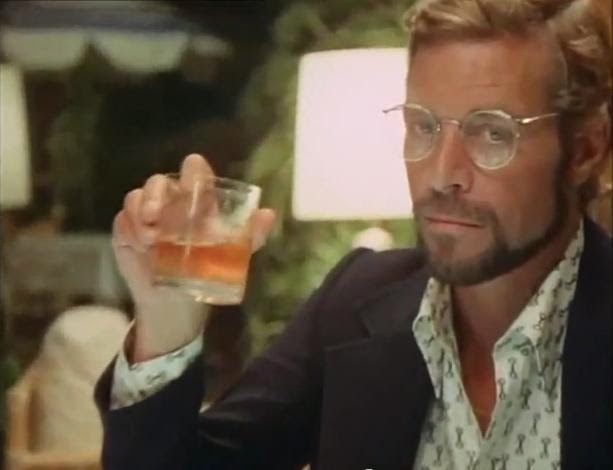
CUT AND RUN (Italy - 1985; US release 1986) Directed by Ruggero Deodato. Written by Cesare Frugoni and Dardano Sacchetti. Cast: Lisa Blount, Leonard Mann, Willie Aames, Richard Lynch, Richard Bright, Michael Berryman, Karen Black, John Steiner, Valentina Forte, Eriq La Salle, Gabriele Tinti, Barbara Magnolfi, Luca Barbareschi, Penny Brown, Carlos De Carvalho, Edward Farrelly, Ottaviano Dell'Acqua. (Unrated, 91 mins) Often erroneously lumped in with his controversial cannibal films, CUT AND RUN is a fairly straightforward and infrequently tacky '80s Italian jungle actioner from the infamous Ruggero Deodato. Unlike his JUNGLE HOLOCAUST (1977) and the legendary CANNIBAL HOLOCAUST (1980), CUT AND RUN has absolutely no cannibal gut-munching, so it's surprising that so many people consider it the final chapter of a non-existent Deodato "cannibal trilogy" or some such nonsense. Sure, it takes place in the Amazon and has some savage tribes who engage in shooting poisoned blowdarts, decapitations, and rape, but even it in its uncensored, hard-edged European form that features one poor bastard being split in half up the middle--softer kill scenes and alternate takes were used for the export version handled by New World, which hit US theaters in May 1986--there's nothing here that equals the disturbing savagery seen in any Italian cannibal outing. No flesh-eating. No on-camera animal deaths. It's not a cannibal movie. It's a distant cousin at best.
Deodato nevertheless finds other ways to be tactless, like using actual footage of Jonestown cult leader and Kool-Aid aficionado Jim Jones being interviewed by NBC reporter Don Harris, who would be one of the people ambushed and killed on a Guyana airstrip by Jones' "People's Temple" disciples when he and other members of Congressman Leo Ryan's entourage tried to help people escape from Jonestown in 1978. CUT AND RUN's chief villain is the fictional Col. Brian Horne (Richard Lynch), a disgraced and dishonorably discharged ex-Green Beret purported to be Jones' right-hand man and the mastermind behind the Jonestown massacre. Horne escaped from Jonestown and has secretly built a powerful drug operation in South America with a few Jonestown latecomers and some Amazon tribesmen he uses to eliminate the competition. He's more or less what might happen if APOCALYPSE NOW's Col. Kurtz ran a drug cartel. Horne has been believed dead, but when intrepid Cable Video News reporter Fran Hudson (Lisa Blount) and her cameraman Mark Ludman (Leonard Mann) beat the police to a bloody crime scene and find a recent picture of Horne with runaway Tommy Allo (Willie Aames), the son of their boss Bob (Richard Bright), they head down to the Amazon to find Tommy and get an exclusive interview with Horne. Obviously, mayhem and over-the-top violence ensue.
Shot in Florida and Venezuela, CUT AND RUN began life, oddly enough, as an unmade Wes Craven script titled MARIMBA. Written around 1980, MARIMBA got as far as pre-production when Craven made the acquaintance of Alessandro Fracassi, a wealthy Italian Formula One racing enthusiast looking to break into film production. Craven had scouted locations in South America and went so far as casting Dirk Benedict, Chris Mitchum, and Tim McIntire in starring roles before the project fell apart. Fracassi hung on to Craven's script and it was eventually completely reworked for Deodato by veteran Italian genre screenwriters Cesare Frugoni (MOUNTAIN OF THE CANNIBAL GOD, THE GREAT ALLIGATOR), frequent Lucio Fulci collaborator Dardano Sacchetti (CITY OF THE LIVING DEAD, THE NEW YORK RIPPER), and an uncredited Luciano Vincenzoni (THE GOOD, THE BAD AND THE UGLY). None of Craven's MARIMBA script was used, and he remains uncredited even in a courtesy "Story by" capacity on CUT AND RUN. The closest one gets to any sense of Craven's at-most peripheral involvement in what was eventually made is the presence of THE HILLS HAVE EYES' Michael Berryman as a machete-wielding madman working for Horne. He disembowels a few people and chops off a few heads, but other than that, his primary job is to be Michael Berryman.
1980 Variety ad announcing Wes Craven's never-made MARIMBA
Fracassi managed to corral an impressive cast for Deodato, certainly one with more recognizable names and faces than most junky Italian exploitation movies of the time. The appealing Blount was one of the few stars of AN OFFICER AND A GENTLEMAN who didn't get a career bump from it, possibly because her shallow, scheming Lynette was so unlikable, duping David Keith's Sid, faking a pregnancy, and ultimately driving him to suicide. On Anchor Bay's 2001 DVD release, Deodato praised Blount as "completely professional," but he got the sense that she "didn't really want to be there." The cast also included small roles for a shrieking Karen Black as a Cable Video News exec; John Steiner as a rival cartel boss and recipient of the truly disgusting "split up the middle" death, which was cut from the US release (he just gets put out of his misery by being shot instead); Gabriele Tinti as a drug-running pilot who gets a particularly gushing decapitation courtesy of Steve (David Warbeck lookalike Edward Farrelly), another Horne henchman; and future ER star Eriq La Salle, of all people, turns up as Vargas, a Huggy Bear-like Miami pimp and informant who keeps Fran in the loop about what's going on in the cartel. Of his stars, Deodato had the most trouble with two American actors. Bright (best known as Michael Corleone's chief enforcer Al Neri in the GODFATHER trilogy) was drinking heavily but, according to the director, got his act together after being kicked off the set for a day and set straight by an intervening Karen Black. EIGHT IS ENOUGH's Aames had just started both CHARLES IN CHARGE and a serious cocaine addiction around the time CUT AND RUN was made. By his own admission in his later memoir, Aames was on a massive coke binge during the entire shoot and, as required in such circumstances, destroyed a hotel room. He would eventually get clean and become a born-again Christian, producing and starring in the inspirational kids video series BIBLEMAN. Aames now works as a celebrity cruise director for Oceania Cruises, and other than a pair of EIGHT IS ENOUGH reunion movies in the late '80s, has acted very sparingly, most recently appearing in a couple of Hallmark Channel original movies.
Anchor Bay's uncut and uncensored DVD release was a welcome offering at the time, but it's in serious need of an upgrade. It's a composite assembling of the New World US cut (opening with the company's logo) with a few scattered scenes in Italian with English subtitles, usually whenever there's violent imagery exclusive to the European version. In the first issue of Video Watchdog, Stephen R. Bissette's article "Uncut and Run" details the differences between the European and American versions, with several scenes completely reshot for the softer US version or, in the case of Steiner's death scene, drastically edited to make it appear that he dies a different way (the same with Tinti's decapitation after getting shot with a poisoned dart; the US cut just shows him getting shot with the dart). The decline in quality of some of the footage is noticeable, with Steiner's big scene looking like a subpar bootleg.
There's enough of a minor cult following around CUT AND RUN and a major one around Deodato himself to warrant a Blu-ray upgrade to the acceptable but problematic 15-year-old DVD. CUT AND RUN suffers from some dumb plotting that relies too much on convenience and contrivance (no way the lady with the fake baby is making it through customs), but it's extremely fast-paced, loaded with action and splatter, has a killer score by Goblin's Claudio Simonetti, and has the kind of bizarre cast (Lisa Blount, Willie Aames, and Eriq La Salle in a Ruggero Deodato movie?) that makes it a must-see for followers of strange cinema. Deodato and Fracassi reteamed for the 1986 slasher BODY COUNT, which was never officially released in the US, and Fracassi continued to sporadically work in the Italian and Romanian film industry. Fracassi now makes his living in the financial industry, his last major credit being a co-producer of the 2006 Donald Sutherland-Sissy Spacek horror film AN AMERICAN HAUNTING.
CUT AND RUN and the Dario Argento-produced DEMONS
opening in Toledo, OH on May 30, 1986
Visual proof of a Ruggero Deodato movie opening
at three Toledo malls in the summer of 1986.
KILLER FISH (UK/Italy/Brazil/US - 1979) Directed by Anthony M. Dawson (Antonio Margheriti). Written by Michael Rogers. Cast: Lee Majors, Karen Black, Margaux Hemingway, Marisa Berenson, James Franciscus, Gary Collins, Anthony Steffen, Dan Pastorini, Roy Brocksmith, Frank Pesce, Charlie Guardino, Fabio Sabag, Chico Arago, Jorge Cherques. (PG, 101 mins)
A hybrid of heist thriller, disaster movie, and JAWS ripoff, KILLER FISH is a perfect example of the kind of international co-production insanity that only could've happened in the 1970s. Produced by the UK's Sir Lew Grade, Italy's Carlo Ponti, the Brazilian company Filmar do Brasil, and American TV power couple Lee Majors and Farrah Fawcett-Majors, the film was designed as a star vehicle for Lee Majors, whose successful five-season run on ABC's THE SIX MILLION DOLLAR MAN had just come to a close in 1978. Majors, a veteran of several past TV hits like THE BIG VALLEY, THE VIRGINIAN, and OWEN MARSHALL, COUNSELOR AT LAW, was trying to parlay his television success into a big-screen career and from 1978 to 1981, starred in several B-movies of usually dubious quality, while at the same time turning down an offer from Paramount to co-star with Nick Nolte in NORTH DALLAS FORTY (1979). Majors' role--a hard-partying, good ol' boy star quarterback--went to Mac Davis and the film is now regarded by many as the definitive serious football film. While NORTH DALLAS FORTY was a box office hit and opened to almost universal acclaim, Majors was making KILLER FISH and other films like THE NORSEMAN (1978), STEEL (1980), AGENCY (1981), and THE LAST CHASE (1981), all of which were out of theaters in a week, and by the end of 1981, he was back on ABC for another series, THE FALL GUY, which ran until 1986.
Of those five films Majors made before going back to TV, KILLER FISH has become a legitimate cult film, primarily for its loony plot and its unusual cast, and that it's directed by legendary Eurocult journeyman Antonio Margheriti, using his usual "Anthony M. Dawson" pseudonym. Margheriti was just coming off his NYC-shot heist thriller THE SQUEEZE and brought that film's suddenly slumming co-star Karen Black along to Brazil for another heist plot. Shot entirely in some stunningly beautiful locations, it's very likely that it was the idea of a working vacation in Rio that lured much of KILLER FISH's cast, which had an unusually large number of American actors for such trashy European-ish fare. While the Italian/West German co-production THE SQUEEZE is probably Margheriti's most American-looking film thanks to some effective location work in some grimy parts of Manhattan and just over the river in New Jersey, KILLER FISH is right alongside the US/Spanish blaxploitation western TAKE A HARD RIDE (1975) and the rainforest-set Italian RAMBO ripoff INDIO (1989) as the most American-feeling of Margheriti's vast output. Much effort was made to package KILLER FISH like a typical Hollywood disaster movie, with only one Italian actor in the cast (former DJANGO Anthony Steffen, best known for 1971's THE NIGHT EVELYN CAME OUT OF THE GRAVE), several Americans, including model Margaux Hemingway, part-time actor and soon-to-be talk show and Miss America host Gary Collins and, as usual in these types of movies, an off-season football star--in this case, Houston Oilers QB Dan Pastorini. KILLER FISH also sported its own Maureen McGovern-mandated disaster movie theme song, "Winner Takes All," performed by flash-in-the-pan disco queen Amii Stewart, who had a chart-topping, Grammy-nominated hit in early 1979 with "Knock on Wood."
KILLER FISH is great cheesy entertainment, but other than the outstanding location shooting by cinematographer Alberto Spagnoli, it can barely compete with the budget-conscious likes of Roger Corman, let alone the expensive product that Master of Disaster Irwin Allen was cranking out. The main reason is that Margheriti was too attached to his use of outdated miniatures, which he would be until the end of his career. Sloppy rearscreen projection work is one thing, but toy trains and model dams that look like Lionel factory irregulars aren't going to cut the mustard. Of course, now these laughable effects are part of KILLER FISH's charm, but Margheriti's continued insistence on using techniques that were antiquated in the 1960s would consistently undermine his work into the 1990s. Margheriti was adept at action scenes and shootouts and could stage an explosion as impressively as any director who ever stepped on to a movie set, but it's hard to get into the excitement of a car chase in something like CODENAME: WILDGEESE (1984) when you can clearly see in a few shots that it's a toy car with an immobile plastic action figure in the driver's seat. For all the big names involved in the financing, KILLER FISH often looks ridiculously cheap. It's more likely that most of money went to the actors, their hotel bills, their bar tabs, and their per diems than toward anything that ended up on the screen. KILLER FISH is so lacking in funds for special effects and spectacle that Ponti had Margheriti open it with a factory explosion lifted completely from THE SQUEEZE.
In Brazil, former mine executive and fanatical backgammon enthusiast Paul Diller (James Franciscus), pushed out of the company after a heart attack, has hired a team of professional thieves led by Lasky (Majors) to break into a secure part of the mine and make off with a large stash of diamonds and emeralds. Helping Lasky is Diller's girlfriend Kate (Black), and when the team stashes the diamonds in a weighed-down metal container at the bottom of a lake, tensions start to mount when Kate suggests they wait 60 days for the cops to give up looking for them or the loot. That doesn't sit well with Lasky, who's conspired with a pair of sibling mooks, Warren (Frank Pesce) and Lloyd (Charlie Guardino) to replace the container in the lake with another and make off with the goods. When Lloyd dives into the lake to retrieve the container, he's promptly devoured by something unseen, which Warren thinks is "a giant snake." Warren talks their getaway driver Hans (Pastorini) into diving into the lake to check things, and when he starts being eaten in a similar fashion, Warren falls in trying to rescue him and they're both dead. It seems that months before pulling off the heist, Diller introduced an especially vicious strain of piranha into the lake to breed ("There's probably tens of thousands of them by now," he sneers), completely altering the ecosystem of a major tourist destination just in case some criminal co-conspirators got greedy. When one of cinema's least convincing hurricanes hits and destroys a nearby dam, the piranha are let loose in the open water and almost everyone in the cast who hasn't been eaten ends up on a small, damaged, dead-in-the-water charter boat captained by rugged local sea salt Max (Steffen, dubbed by Ted Rusoff), who's acting as a guide for a fashion shoot for supermodel Gabrielle (Margaux Hemingway), her manager Ann (Marisa Berenson), and portly, flamboyant photographer Ollie (Roy Brocksmith). As an untold number of hungry piranha surround the boat, Diller--after a backgammon showdown with Lasky--is willing to kill everyone if it means getting away and keeping his diamonds, and it's up to playboy pilot Tom (Collins) to rescue the stranded boaters.
The climax is quite hilarious at times, with Majors' Lasky and Steffen's Max indulging in heroics so stupid that you might even think they deserve to be piranha chow. Franciscus is appropriately dastardly and Black has one very convincing scene where her character is having a convulsing panic attack as she's being pulled out of the water after nearly being eaten. There's also a strange sexual undercurrent to the film, with Kate growing intensely jealous over Lasky's pre-mayhem resort romance with Gabrielle, and Gabrielle subtly suggesting to Lasky that they have a threesome with the bisexual Ollie. In addition, Margheriti and screenwriter Michael Rogers (probably a pseudonym for a committee of Italian writers, as this is "Rogers"' only IMDb credit) spend far too much time on Tom trying to get in Ann's pants. There's too many characters in KILLER FISH, with Tom and Ann's flirting, Ollie functioning as dual stereotypes of the raging queen and comic-relief fat guy, and even more extraneous characters turning up on the boat with no purpose at all. When KILLER FISH focuses on the heist, the piranha, and the janky special effects--the piranha swimming shots are priceless--it's a lot of fun.
Arriving not long after the definitive piranha movie, Joe Dante's PIRANHA (1978), KILLER FISH opened in US theaters in December 1979 and promptly bombed. It played on NBC a few times starting in 1981, under the title DEADLY TREASURE OF THE PIRANHA, and was released on VHS in 1986 as KILLER FISH, but has only now been released on DVD and Blu-ray, courtesy of Scorpion Releasing/Kino Lorber. The 1.78 transfer is pristine as can be, and the sole bonus feature is a nearly-hour-long informal dinner discussion between Frank Pesce and cult filmmaker William Lustig (MANIAC, MANIAC COP), who's known Pesce for decades and worked as a production assistant on the American location shooting of Margheriti's THE SQUEEZE. Pesce found work as an extra in THE GODFATHER (1972) and THE GODFATHER PART II (1974) and was hanging around the set of ROCKY (1976), lucking into acting after winning $6 million in the New York state lottery in 1976. He's appeared in many movies and TV shows over the years, usually B or straight-to-video titles, but he's occasionally turned up in big movies--he's the bolting cigarette buyer at the beginning of BEVERLY HILLS COP (1984) and returned to further incur Axel Foley's wrath in BEVERLY HILLS COP II (1987), and he played gangsters in MIDNIGHT RUN (1988) and DONNIE BRASCO (1997). His story was chronicled in the 1991 film 29TH STREET, with Anthony LaPaglia as Pesce, and the film produced and based on a story by Pesce and Franciscus, who became good friends after working together on KILLER FISH (Franciscus retired from acting in 1985 and died of emphysema at just 57 in 1991, a few months before 29TH STREET's release). Pesce and Lustig get sidetracked, as old friends do, and don't start talking about KILLER FISH until midway through the segment, but Pesce's got some priceless stories about his and Lustig's late friend Joe Spinell, and about working as a stand-in for Robert De Niro on TAXI DRIVER (1976), and Roy Scheider on MARATHON MAN (1976) and in the NYC scenes in SORCERER (1977). He also talks about Black trying to convert him to Scientology and tells a great story about some KILLER FISH cast and crew members going to a popular Rio disco, where Pesce's working his magic on an attractive blonde and was about to make his move when a bat flew into his hair, startling him and prompting him to scream loudly. The blonde immediately lost interest and Pesce later saw her leaving with Majors, who was "with her" for the rest of the shoot. Regarding Majors and his then-wife Farrah Fawcett-Majors, Pesce recalls that it was during the filming of KILLER FISH that Majors got word that Fawcett was involved with Ryan O'Neal, or as Pesce eloquently puts it, "Lee found out that whatsisname, Ryan O'Neal, was bangin' Farrah."
THE SQUEEZE aka THE RIP-OFF (Italy/West Germany - 1978; US release 1981) Directed by Anthony M. Dawson (Antonio Margheriti). Written by Simon O'Neill (Giovanni Simonelli), Marc Princi, and Paul Costello. Cast: Lee Van Cleef, Karen Black, Edward Albert, Lionel Stander, Robert Alda, Angelo Infanti, Peter Carsten, Antonella Murgia, Dan Van Husen, Roy Brocksmith, Ron Van Clief, Steve Burche. (R, 99 mins) Italian cult director Antonio Margheriti (1930-2002) was the consummate journeyman over the course of his career, dabbling in everything from muscleman epics, gothic horror, and 007 ripoffs in the '60s, spaghetti westerns and gialli in the '70s, and Namsploitation, commando, and INDIANA JONES-derived action films in the '80s. He's perhaps best known today for his "Gamma 1" quadrilogy of goofy and practically interchangeable far-out space operas THE WILD, WILD PLANET (1965), WAR OF THE PLANETS (1966), WAR BETWEEN THE PLANETS (1966) and SNOW DEVILS (1967) as well as the immortal YOR: THE HUNTER FROM THE FUTURE (1983) and his many actioners of the '80s, like THE LAST HUNTER (1980), HUNTERS OF THE GOLDEN COBRA (1982), CODENAME: WILDGEESE (1984), and INDIO (1989). Margheriti, aka "Anthony M. Dawson," dabbled in a little bit of everything and could stage an explosion with the panache of any Hollywood blockbuster.
With his 1975 spaghetti western/kung-fu hybrid THE STRANGER AND THE GUNFIGHTER, Margheriti worked with legendary badass Lee Van Cleef for the first time and the pair became good friends who would team up for five more projects before Van Cleef's death in 1989. After STRANGER, Margheriti cast Van Cleef as the bad guy squaring off against Jim Brown in the 20th Century Fox blaxploitation western TAKE A HARD RIDE, which would be Margheriti's only Hollywood studio gig. Van Cleef also turned up in Margheriti's RAIDERS OF THE LOST ARK knockoff JUNGLE RAIDERS (1985) and two of his WILD GEESE ripoffs with CODENAME: WILDGEESE (released in the US by New World in 1986), and the unreleased-in-the-US THE COMMANDER (1988). But the pinnacle of the Margheriti/Van Cleef alliance is 1978's THE SQUEEZE, a wonderfully grungy little heist flick that began production in December 1977, with extensive location work in the NYC metropolitan area in January and February 1978. According to Edoardo Margheriti, the director's son and regular production assistant, some of THE SQUEEZE's NYC shoot coincided with a major late January snowstorm that, given the time frame, would've been the tapered-off remnants of the Blizzard of '78 that hit Ohio during the last week of January. By the time it hit the east coast, it wasn't quite the monster that incapacitated Ohio, but it managed to dump heavily on the city, which also got hit with its own separate blizzard during the first week of February and you can see some of both storms in THE SQUEEZE. The brutal cold, the unplowed streets, the wet slush, the visible breath on the actors, and cars getting stuck in the snow all add to the harshly gritty ambience that makes it an essential NYC movie of the era, playing more like a street-tough American crime thriller rather than the generously budgeted, Carlo Ponti-backed Italian/German co-production that it was. Margheriti made a lot of films over his long career, but none boasted the bitterly cold and uniquely scuzzy verite atmosphere that he and cinematographer Sergio D'Offizi captured with THE SQUEEZE. They secured an American production office and permits to shoot in certain areas, but there's an unmistakable handheld immediacy to scenes set in fleabag hotels, bars, tenements, a police precinct, filthy cabs, and a ride on the Roosevelt Island tram, and enough gawking onlookers throughout to suggest that Margheriti caught a lot of footage on the fly in the guerrilla-style of many Italian filmmakers shooting in the city without permits in the 1970s and 1980s. The only mistake Margheriti makes in his depiction of the city's sublime grime of the time is not finding a reason to send any of the characters to Times Square.
THE SQUEEZE was written by veteran Italian screenwriter and frequent Margheriti collaborator Giovanni Simonelli (SEVEN DEATHS IN THE CAT'S EYE), Marc Princi (GREAT WHITE), and voice/dubbing actor Paul Costello, who was probably in charge of the English translation. The script is essentially another in the One Last Job heist subgenre, with legendary safecracker Chris Gretchko (Van Cleef) in self-imposed exile on a Mexican ranch under the name "Ray Sloan." He's tracked down by Jeff Olafson (Edward Albert), the son of an old criminal associate who told his son to find Chris if he ever got into a jam. Jeff is involved with some German mobsters led by Van Stratten (Peter Carsten), and he needs Chris to open a safe filled with diamonds or Van Stratten's goons will whack him. Chris is reluctant ("The last door I opened cost me eight years!"), but out of loyalty to Jeff's late father, agrees to help the kid out and heads back to NYC and secures the assistance of his old fence, grumpy pawn shop owner Sam (Lionel Stander). When Van Stratten tries to cut Jeff out of the deal, Jeff tells Chris that Van Stratten's going to kill him as soon as he opens the safe, prompting Chris to hatch a scheme to keep the diamonds for themselves and split the take. To do so requires Jeff being out of the picture so nobody knows about his involvement, so he gets himself arrested on a minor charge so he can spend a month in jail while Chris plans to wait it out at a safe house rented by Jeff. Chris gets the stones, but takes a bullet in the leg in the process, and is tended to at the safe house by ditzy, new age neighbor Clarisse (Karen Black), while Van Stratten's guys and the muscle for the safe owner (Roy Brocksmith) try to track down Jeff, figuring there's some kind of con game going on. All the while, irate police captain Donati (Robert Alda) is perpetually one step behind but closing in.
As the double and triple crosses ensue, Chris takes too long to realize that he's being played, and the script could do a better job of exploring that storyline. Once he knows Chris has the diamonds, Jeff is already figuring out a way to get rid of him. Chris is a smart enough guy that he should see this, but time and again, he lets his loyalty to Jeff's father blind him to what should be right in front of his face. These are interesting ideas that are never fully fleshed out, as Margheriti gets sidetracked with an extended action sequence and a series of explosions that were impressive enough for Ponti to have him recycle the footage for his 1979 PIRANHA ripoff KILLER FISH. THE SQUEEZE is one of the rare Margheriti films where dialogue scenes really come alive, and it's likely due in part to the abundance of American actors working together instead of European actors being post-synched later on. For instance, here's a very loose and improvisational feel to some of Van Cleef's and Stander's scenes together, with Stander even making fun of Van Cleef's earring at one point.
There's that same familiar feel in the conversations between Chris and Jeff. Albert was a promising actor in the early '70s, winning a Golden Globe for his breakout performance as a young blind man who falls in love with Goldie Hawn in BUTTERFLIES ARE FREE (1972), but while he remained busy until his death in 2006 at just 55, stardom eluded the son of GREEN ACRES star Eddie Albert. He turns in one of his best performances in THE SQUEEZE, but not long after, he was mainly doing TV guest spots and B-movies like GALAXY OF TERROR (1981) and THE HOUSE WHERE EVIL DWELLS (1982). His most high-profile gig after that was a recurring role as Linda Hamilton's love interest on the CBS series BEAUTY AND THE BEAST. But Albert was still getting major Hollywood work when he made THE SQUEEZE, which features an unusually strong cast for a Margheriti film--probably because Ponti could afford them--the most notable being the participation of Black. Black was nominated for an Oscar for 1970's FIVE EASY PIECES and was only a couple of years removed from films like THE GREAT GATSBY (1974), NASHVILLE, THE DAY OF THE LOCUST, the legendary TV-movie TRILOGY OF TERROR (all 1975), BURNT OFFERINGS, and Alfred Hitchcock's swan song FAMILY PLOT (both 1976). Black's fall from the A-list was alarmingly rapid--she worked for Margheriti again on KILLER FISH--though she remained a beloved B-movie figure until her death in 2013, her late-career cult status due in large part to shock rockers The Voluptuous Horror of Karen Black, and for her role as Mother Firefly in Rob Zombie's HOUSE OF 1000 CORPSES (2003), which she apparently disliked so much that she refused to do the 2005 sequel THE DEVIL'S REJECTS and was replaced by Leslie Easterbrook.
Many American actors did these sort of Eurotrash movies for quick paychecks and free vacations, but the ensemble of THE SQUEEZE brings their A-game. At the heart is a top-notch Van Cleef, who does everything he can to add deeper dimensions to the character. Chris is a guy who made his money and enjoyed the life, but he knew when to get out, especially now that the game is run by greedy bastards like Van Stratten and amoral shitbags like Jeff. It's only through his loyalty to Jeff's father that he inadvertantly allows himself to be manipulated by the young man. It almost takes too long for Chris to realize that Jeff isn't like his father (or Chris or Sam, for that matter), and Van Cleef's weary yet stone-cold Angel Eyes demeanor in the climax is some terrific acting. When he's forced to shoot Jeff and tells Sam with a resigned sadness "I had to kill the kid," both old men lament not just the loss of someone they trusted and that Chris came to regard like his own son, but the loss of another era when a man's word and his honor meant something. Chris doesn't even care about the diamonds at that point. He's already lost too much for the stones to even matter. As Sam's car drives down the unplowed, snowy, slushy streets with the NYC skyline in the background, there's an overwhelming sense of melancholy artistry that Margheriti rarely attempted. Throughout its duration, THE SQUEEZE, while containing some weak writing, some typically dubious Margheriti miniatures in the explosion sequence and boasting a cheesy yet oddly effective and infectiously catchy score by Paolo Vasile (Italian pop group I Nuovi Angeli performs the opening credits tune "Now"), comes dangerously close to being a genuine auteur statement by the guy who would go on to make YOR: THE HUNTER FROM THE FUTURE. It's almost a legitimately great movie.
On-set wardrobe malfunction or Lee Van Cleef
making unreasonable demands of Antonio
Margheriti? (photo from antoniomargheriti.com)
Even with its NYC shooting and the cast of American headliners, THE SQUEEZE wasn't released in the US until 1981, when it was acquired by the short-lived exploitation outfit Maverick Pictures International, whose distribution slate consisted of a whopping five films over 1980-81 before they threw in the towel. THE SQUEEZE was also released as THE RIP-OFF, and that was the title used when it aired on CBS in 1986 and on cable and in late-night syndication after that. The film fell into the public domain and is available on any number of budget DVD labels under those titles as well as the less common DIAMOND THIEVES. You could probably walk into any Wal-Mart and find it on one of those VHS-transfer multi-film DVD sets in the $5 bin. It's a film long overdue for a proper widescreen presentation and critical re-evaluation. THE SQUEEZE is a buried treasure of sorts--a solid thriller, a cinematic snapshot of a harsh 1978 winter in NYC, and an essential film for Lee Van Cleef fans--and it may be Margheriti's masterpiece.