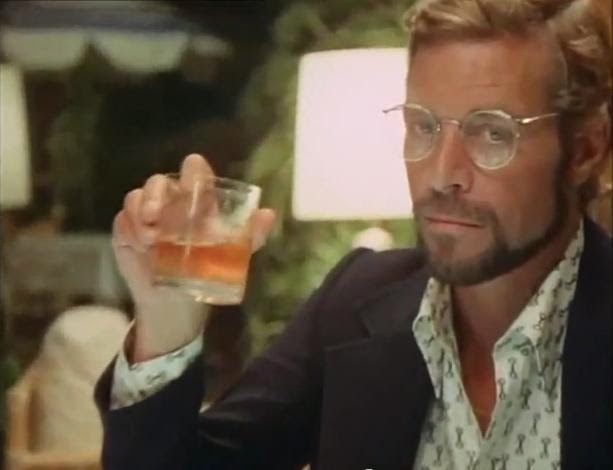
CANNIBAL APOCALYPSE aka INVASION OF THE FLESH HUNTERS aka CANNIBALS IN THE STREETS
(Italy/Spain - 1980; US release 1982)
Directed by Anthony M. Dawson (Antonio Margheriti). Written by Jimmy Gould (Dardano Sacchetti) and Anthony M. Dawson (Antonio Margheriti). Cast: John Saxon, Elizabeth Turner, John Morghen (Giovanni Lombardo Radice), Cindy Hamilton (Cinzia de Carolis), Tony King, Wallace Wilkinson, Ray Williams (Ramiro Oliveros), May Heatherly, Joan Riordan, Venantino Venantini, Luca Venantini, Goffredo Unger, Walter Patriarca, Edoardo Margheriti, Paul Costello. (Unrated, 96 mins)
Throughout his long career, journeyman Italian director Antonio Margheriti dabbled in everything from post-HERCULES peplum, sci-fi space operas, gothic horror, 007 Eurospy knockoffs, gialli, spaghetti westerns, family comedies, crime thrillers, JAWS ripoffs, Indiana Jones imitations, commando action explosion movies, and whatever YOR: THE HUNTER FROM THE FUTURE is. 1980's CANNIBAL APOCALYPSE was his only stab at the graphically gory, extreme Italian horror made famous by the likes of Lucio Fulci in the wake of George A. Romero's DAWN OF THE DEAD. He didn't really care for that style of horror, and CANNIBAL APOCALYPSE reflects that by trying to go for something a little different than the post-DAWN zombie flicks and the flesh-munching jungle cannibal films of Ruggero Deodato (CANNIBAL HOLOCAUST) and Umberto Lenzi (CANNIBAL FEROX, aka MAKE THEM DIE SLOWLY). Despite the horrific elements and the overt zombie/cannibal influence, CANNIBAL APOCALYPSE actually fits more in the post-TAXI DRIVER, "crazed Vietnam vet" subgenre popularized by ROLLING THUNDER, THE EXTERMINATOR, FIRST BLOOD, and any number of lesser B-movie actioners. Like those other films, we have soldiers coming home from Vietnam, unable to re-adjust to civilian life, cast aside, and, for varying reasons, going on a rampage. Cannibalism is a rather extreme metaphor for the PTSD turmoil felt by shattered combat vets, but it shows some more thematic ambition than is generally seen in such exploitation films of the time. And, as Roger Corman and others have noted for decades, exploitation films are where filmmakers can sneak in the hardest-hitting messages, because nobody's looking for it amidst the blood & guts and the T&A.
Released to US grindhouses and drive-ins in 1982 by Almi Pictures under two different, equally lurid titles--first as INVASION OF THE FLESH HUNTERS in a version cut by several minutes to avoid an X rating, and a later relaunch later that year and into 1983 in its uncut form as CANNIBALS IN THE STREETS--CANNIBAL APOCALYPSE has Vietnam War PTSD manifesting itself in the form of a dormant cannibal virus infecting a trio of Atlanta-area Vietnam vets: crazed sergeants Tommy Thompson (Tony King), the improbably-named Charlie Bukowski (Giovanni Lombardo Radice, billed as "John Morghen"), and their C.O. Capt. Norman Hopper (John Saxon), who had a chunk taken out of his right arm by a feral Thompson in 'Nam. Hopper is still haunted by nightmares and some thawing, raw meat in the fridge is starting to look appetizing even before he, Bukowski, and Thompson can no longer resist the slowly-building craving for human flesh. Hopper comes to Bukowski's rescue after the latter bites a young woman in a movie theater (showing Umberto Lenzi's 1979 WWII drama FROM HELL TO VICTORY, conveniently from this film's executive producer Edmondo Amati) and instigates a police standoff in a flea market.
When Bukowski is arrested, Hopper, who's already put the bite (and probably more, offscreen) on the aggressively flirty, seductive, and underage girl next door (Cinzia de Carolis, credited as "Cindy Hamilton" and a long way from her role as Karl Malden's young ward and sidekick in Dario Argento's THE CAT O'NINE TAILS) in a cringey scene that can best be described as "incredibly uncomfortable" even though little is shown (some of Margheriti's crasser contemporaries would've left nothing to the imagination), busts him and Thompson out of the mental ward, taking an infected nurse (May Heatherly, best known as the nudie jigsaw puzzle-hating mom in the beginning of PIECES) along with them on a cannibal rampage through Atlanta that culminates in a police manhunt through the sewers. In pursuit are Hopper's news reporter wife Jane (Elizabeth Turner of BEYOND THE DOOR and WAVES OF LUST) and her friend Dr. Mendez (Ramiro Oliveros), who carries a blazing torch for her and is constantly trying to goad her into ditching Norman. There's also irate, foul-mouthed, trenchcoat-wearing Capt. McCoy (local Atlanta actor Wallace Wilkinson, also seen as Glenn Ford's captain in the insane THE VISITOR, another Atlanta-shot Italian horror film made around the same time) who barks orders at everyone after arriving at the flea market standoff and yelling "Is he a subversive, a queer, a black, a commie, or a 'Moslem' fanatic?" Wallace Wilkinson: canceled.
Just out on Blu-ray in its uncensored version in a 4K restoration from Kino Lorber (because physical media is dead), CANNIBAL APOCALYPSE looks better than it ever has in this pristine new transfer, an upgrade that's leaps and bounds over the 2002 Image Entertainment DVD. Though it's not as consistently over-the-top as a Fulci or Lenzi gorefest, CANNIBAL APOCALYPSE is still no slouch in the splatter department. From intermittent flesh-munching to tongues being ripped out to eyes being gouged out to one hapless victim's limbs being buzzsawed off to the legendary scene filmed through the gaping hole in Bukowski's shotgunned belly, Margheriti, however reluctant he may have been about dabbling in this subgenre, delivers a sufficient level of the goods. The Kino Blu includes a nearly hour-long retrospective ported over from the old Image DVD, featuring interviews with Saxon, Lombardo Radice, and Margheriti, who died in 2002. It also has a new commentary by film historian and former Video Watchdog publisher Tim Lucas, plus a new interview with Canton, OH-native King, a forgotten Buffalo Bills receiver whose brief NFL career ended in 1968 after one season. King soon drifted into movies (he had a small role in SHAFT and a bit part as a stablehand grooming Jack Woltz's doomed horse in THE GODFATHER), most notably in a memorable foot chase in what should've been a star-making supporting turn in 1975's REPORT TO THE COMMISSIONER. By 1980, he was finding steady employment in Italy, doing two more Margheriti films after CANNIBAL APOCALYPSE (1980's Namsploitation outing THE LAST HUNTER and 1982's TIGER JOE), as well as Ruggero Deodato's insane 1983 sci-fi actioner THE RAIDERS OF ATLANTIS. Several years after his Italian sojourn, King changed his name to Malik Farrakhan and became head of security for Public Enemy.
DEATH RAGE (Italy - 1976; US release 1978) Directed by Anthony M. Dawson (Antonio Margheriti). Written by Guido Castaldo and Giacomo Furia. Cast: Yul Brynner, Martin Balsam, Barbara Bouchet, Massimo Ranieri, Giancarlo Sbragia, Giacomo Furia, Sal Borgese, Loris Bazzocchi, Rosario Borelli, Luigi Williams (Luigi Bonos), Renzo Marignano, Tomasso Palladino. (R, 96 mins) A rather routine and formulaic Eurocrime outing from well-traveled Italian journeyman Antonio Margheriti, 1976's DEATH RAGE was a fixture on late-night TV and in video stores in the '80s and since has appeared on countless "50 Action Hits!" public domain DVD sets over the years, always looking like garbage and usually presented in a butchered 76-minute cut culled from an ancient TV print. It hit US theaters in 1978 at 85 minutes courtesy of short-lived S.J. International Pictures, but has just been issued on Blu-ray by Dark Force Entertainment--imagine, if you can, Code Red's less stable cousin--in a best-it-can-possibly-look transfer sourced from the original 96-minute Italian version, because physical media is dead. It's still got some print damage and scratches, but visually, it's a drastic improvement over every other version that's out there. The English soundtrack covers the 85 minutes that comprised the US release, with the eleven extra minutes scattered throughout presented in Italian with hit-or-miss subtitling, but it's doubtful you'll miss any important information. DEATH RAGE isn't really a standout in either the Eurocrime subgenre or in Margheriti's filmography, but it is of some historical significance as the big screen swan song of the great Yul Brynner (1920-1985), who would spend the remaining years of his life constantly touring with stage productions of THE KING AND I, arguably his most famous role and the one that won him the Best Actor Oscar for the 1956 film version.
Brynner played the villainous "Deaf Man" in the 1972 Burt Reynolds cop movie FUZZ and enjoyed a surprise box-office hit riffing on THE MAGNIFICENT SEVEN with his memorable turn as the robotic gunslinger in 1973's WESTWORLD, but those were rare highlights in an ongoing slump dating back to the late 1960s. 1975's post-apocalyptic THE ULTIMATE WARRIOR was a minor hit at drive-ins, but by 1976, his brief resurgence was over. He was reduced to an embarrassing cameo reprising his role as the Gunslinger in the lackluster WESTWORLD sequel FUTUREWORLD, and after heading to Italy to star in DEATH RAGE, he decided he was done with movies. It isn't exactly a Brynner classic, but it's a better one to go out on than FUTUREWORLD. He at least gets to spend the whole movie looking like a stone-cold badass: dressed in black, doing hardcore shit like throwing a guy under a speeding train and shooting another right in the gut with no hesitation and letting him bleed out even after the guy cooperates and gives him the info he demanded, and perhaps most importantly, spending long stretches of screen time with a frequently nude Barbara Bouchet. Hey...it's good to be the King.
DEATH RAGE in Toledo, OH on 9/29/1978
Far more convoluted than it needs to be in its original version--a problem that was actually rectified by the US cut with hired-gun editor and "creative adviser" Fima Noveck streamlining the opening 15 minutes and relaying the clunky exposition in a much more concise fashion that really improves the film overall--DEATH RAGE (shot as CON LA RABBIA AGLI OCCHI, or ANGER IN HIS EYES) was misleadingly sold in America as a vigilante thriller in the vein of DEATH WISH, with the poster art screaming "Bronson started it...Brynner finishes it!" However, it's really just a conventional Italian crime flick with Brynner as Peter Marciani, a retired and still-feared hit man summoned from NYC to the old country when he's informed that a mob hit at a racetrack in Naples was commissioned by Gennaro Gallo (Giancarlo Sbragia), the same top capo who ordered the death of his younger brother in NYC years earlier. He heads to Naples and meets up with Angelo (Massimo Ranieri, looking a lot like MEAN STREETS-era Harvey Keitel), an ambitious young hood who witnessed the racetrack hit and is eager to make his name under the tutelage of feared legend such as Marciani, who's been out of the game but whose lethal exploits are still whispered about in mob circles. The cops--headed by a perpetually irate commissario (Martin Balsam, who likely worked on Franco Prosperi's 1976 polizia MEET HIM AND DIE during the same trip to Italy)--also know that Marciani is in town and they desperately want to avoid an all-out mob war. Of course, it happens anyway with multiple botched attempts on Marciani's life--including acid in place of the eye drops he uses for a psychosomatic vision issue that he's had since witnessing his brother's murder-- that inevitably lead to him launching a one-man war on Gallo's organization.
DEATH RAGE in Toledo, OH on 9/29/1978
He also finds time for romance with stripper Anny, played by Bouchet, whose nude scenes were significantly trimmed in the US cut. Quentin Tarantino screened his print of DEATH RAGE at the New Beverly in L.A. in 2007 and flew Bouchet over from Europe for the occasion, hosting an audience Q&A where she told several stories about not getting along with Brynner and how unpleasant he was with the crew. Regardless of his alleged boorish behavior behind the scenes, he appears to be having a good time here. He has no chemistry with Bouchet but establishes a nice rapport with Ranieri (the two also appeared together in 1971's THE LIGHT AT THE EDGE OF THE WORLD), even though the younger actor's "eager protege" role seems completely superfluous and he really has nothing consequential to do until the very end. Margheriti was as much of a journeyman as every other Italian genre director of his day, and like all of them, he had his specialties, like his 1960s space operas and his 1980s commando jungle explosion movies. He just doesn't seem as engaged with DEATH RAGE, the type of post-GODFATHER Eurocrime/polizia offshoot more in the wheelhouse of a Fernando Di Leo (CALIBER 9, THE ITALIAN CONNECTION) or an Umberto Lenzi (ALMOST HUMAN, ROME ARMED TO THE TEETH), though he would follow it with one of his best films, 1978's wonderfully grimy, slushy, NYC-blizzard-shot Lee Van Cleef heist thriller THE SQUEEZE. DEATH RAGE does have an effective score by Guido and Maurizio De Angelis, though the fast tempos and blaring horns during the action sequences sound a lot like Franco Micalizzi cues from a Lenzi polizia. There's also a long mid-film car chase, and it's too bad Margheriti never finds a use for the apparently mandatory stock footage shot from Sergio Martino's THE VIOLENT PROFESSIONALS, with a car crashing though a stack of cardboard boxes engulfed in flames.
THE LAST HUNTER (Italy - 1980; US release 1984) Directed by Anthony M. Dawson (Antonio Margheriti). Written by Dardano Sacchetti. Cast: David Warbeck, Tisa Farrow, John Steiner, Tony King, Bobby Rhodes, Margi Eveline Newton (Margie Newton), Massimo Vanni, Alan Collins (Luciano Pigozzi), Dino Conti, Gianfranco Moroni, Edoardo Margheriti. (Unrated, 96 mins) Veteran Italian journeyman Antonio Margheriti became synonymous with jungle explosion movies in the 1980s with RAIDERS OF THE LOST ARK ripoffs like THE HUNTERS OF THE GOLDEN COBRA, THE ARK OF THE SUN GOD and JUNGLE RAIDERS, and a WILD GEESE-inspired commando trilogy with British TV star Lewis Collins (CODENAME: WILDGEESE, COMMANDO LEOPARD, THE COMMANDER), but it was his partnership with New Zealand-born David Warbeck that initially got the ball rolling. Shot in the Philippines on some of the same locations and abandoned sets from APOCALYPSE NOW, 1980's THE LAST HUNTER (belatedly released in the US in 1984 by World Northal) was the first teaming of the director and star and the first of countless Namspoitation actioners to come from Italy throughout the decade. Filmed under the title IL CACCIATORE 2 in response to the Oscar-winning THE DEER HUNTER being known there as IL CACCIATORE (from Lucio Fulci's ZOMBI 2 to Ciro Ippolito's ALIEN 2: ON EARTH, unofficial bogus sequels were a trend in Italian exploitation at the time), THE LAST HUNTER is more of gritty, down-to-the-basics riff on APOCALYPSE NOW. In January 1973, burned-out Capt. Henry Morris (Warbeck) is given a top secret assignment. Dropped in an area swarming with VietCong, he meets up with a small group of soldiers--Sgt. George Washington (Tony King), Carlos (Bobby Rhodes), and Stinker Smith (Edoardo Margheriti, the director's son and assistant)--who are accompanied by war correspondent Jane Foster (Tisa Farrow) as they make their way toward a destination known only by Morris, who's haunted by the recent suicide of his best friend. They're ambushed by VC along the way, and Stinker is ripped apart by a spiked booby trap, but they eventually find refuge at a rowdy outpost run by the very Kilgore-like Major Cash (John Steiner), who sends daredevil Phillips (Massimo Vanni) on dangerous coconut runs outside the camp's perimeter that are in no way meant to remind you of Lance's surfing during a bombing raid in APOCALYPSE NOW.
Morris' mission is to terminate (with extreme prejudice) a traitorous voice broadcasting anti-American, "Charlie" propaganda over the airwaves in Saigon. The voice is that of an American woman who turns out to be someone close to Morris (making this mission...wait for it...personal) and the embodiment of every enraged, right-wing "Hanoi Jane" caricature you've heard for the last 50 years. Cash complains that the voice is turning his officers against him with statements like "Don't obey your commander...he's only sending you out to die. Go home to your girl, American boy..." while the deeper into the jungle they go, the more Morris and the others start to question why they're even there. It all leads to one of the more downbeat finales in Italian Namsploitation, which was a common theme as these went on. More often than not (Margheriti's TORNADO, Fabrizio De Angelis' COBRA MISSION aka OPERATION NAM), the Italians avoided the revisionist, flag-waving "This time we're gonna win!" mythology of the American Namsploitation movies and went for full-on bleak hopelessness. Of course, in 1980, Sylvester Stallone and Chuck Norris had yet to embark on one-man missions to bring the POWs back home and as such, THE LAST HUNTER is certainly more in line with the grim elements of APOCALYPSE NOW and THE DEER HUNTER, particularly Washington's memorable death scene and Morris' final decision at the end. It's also quite brutal and often incredibly gory, so much so that it earned a spot on the UK's infamous "Video Nasties" list. Margheriti wasn't one to indulge in the graphic gore of his contemporaries like Lucio Fulci and Umberto Lenzi, but 1980 saw him going all in on the splatter. The same year, he directed CANNIBAL APOCALYPSE, his lone entry into the Italian cannibal cycle. Also known as CANNIBALS IN THE STREETS and INVASION OF THE FLESH HUNTERS, the film fuses the cannibal subgenre with Namsploitation, as Vietnam vets John Saxon, Giovanni Lombardo Radice ("John Morghen") and THE LAST HUNTER's Tony King return home infected by a cannibal virus, their PTSD manifesting itself as an insatiable craving for human flesh that sends them on a rampage through Atlanta.
Typically, Margheriti would use gore sparingly to focus more on action, of which THE LAST HUNTER--written by frequent Fulci collaborator Dardano Sacchetti--has plenty. Displaying more explosions and firefights than perhaps the rest of Margheriti's filmography combined, THE LAST HUNTER is old-school and has a cut-the-bullshit attitude, especially in the way it shows off the kind of dangerous stunt work that would never fly today (there's one shot of an explosion going off near Warbeck and Farrow that's pretty ballsy on the part of both actors). You can feel the sweltering heat and humidity in the obviously unpleasant shooting conditions. Of course, this being an Antonio Margheriti film, there's also the usual display of Margheriti miniatures as well as some explosions in the opening sequence that's mostly recycled footage from 1978's THE SQUEEZE and 1979's KILLER FISH. But overall, THE LAST HUNTER is one of the great Namsploitation offerings and a masterpiece from the glory days of the Italian Ripoff. It helped set the course for Margheriti's output for the rest of the decade and established Warbeck as an action star in Italy. Known for some UK TV roles and small parts in British horror films like TROG, TWINS OF EVIL, and CRAZE, as James Coburn's doomed friend in Sergio Leone's DUCK, YOU SUCKER, and as the male lead in Russ Meyer's BLACK SNAKE, Warbeck's status as a Eurocult legend would be cemented thanks to his work with Margheriti and Lucio Fulci in the 1980s. Warbeck's star would dim as the Italian exploitation cycle declined in the late '80s, but he did land one major A-list gig with a supporting role in the 1984 Tom Selleck vehicle LASSITER. Code Red/Kino Lorber's new LAST HUNTER Blu-ray (boasting the obligatory Code Red packaging typos as producer Gianfranco Couyoumdjian becomes "Grand Franco Couyoumdjian"--honesty, isn't "Gianfranco" the easy part of that name?) also features an interview with the well-traveled Tony King, who retired from the NFL after one season with the Buffalo Bills in 1967 before drifting into modeling and acting in the early '70s. His standout performance in 1975's underrated REPORT TO THE COMMISSIONER should've made him a star, but nothing happened, and by 1980, he was working in Italy, reteaming with Margheriti and Warbeck for 1982's TIGER JOE. He moved into social activism and upon changing his name to Malik Farrakhan in the late '80s, became well-known as the head of security for Public Enemy. King's life and career have gone down some unexpected paths, and he has some good stories about working in Italy, and fond memories of the cast and other films he's worked on, though the interview's most memorable moment is when someone starts banging on his door and shouting "Tony, open the motherfuckin' door!"
KILLER FISH (UK/Italy/Brazil/US - 1979) Directed by Anthony M. Dawson (Antonio Margheriti). Written by Michael Rogers. Cast: Lee Majors, Karen Black, Margaux Hemingway, Marisa Berenson, James Franciscus, Gary Collins, Anthony Steffen, Dan Pastorini, Roy Brocksmith, Frank Pesce, Charlie Guardino, Fabio Sabag, Chico Arago, Jorge Cherques. (PG, 101 mins)
A hybrid of heist thriller, disaster movie, and JAWS ripoff, KILLER FISH is a perfect example of the kind of international co-production insanity that only could've happened in the 1970s. Produced by the UK's Sir Lew Grade, Italy's Carlo Ponti, the Brazilian company Filmar do Brasil, and American TV power couple Lee Majors and Farrah Fawcett-Majors, the film was designed as a star vehicle for Lee Majors, whose successful five-season run on ABC's THE SIX MILLION DOLLAR MAN had just come to a close in 1978. Majors, a veteran of several past TV hits like THE BIG VALLEY, THE VIRGINIAN, and OWEN MARSHALL, COUNSELOR AT LAW, was trying to parlay his television success into a big-screen career and from 1978 to 1981, starred in several B-movies of usually dubious quality, while at the same time turning down an offer from Paramount to co-star with Nick Nolte in NORTH DALLAS FORTY (1979). Majors' role--a hard-partying, good ol' boy star quarterback--went to Mac Davis and the film is now regarded by many as the definitive serious football film. While NORTH DALLAS FORTY was a box office hit and opened to almost universal acclaim, Majors was making KILLER FISH and other films like THE NORSEMAN (1978), STEEL (1980), AGENCY (1981), and THE LAST CHASE (1981), all of which were out of theaters in a week, and by the end of 1981, he was back on ABC for another series, THE FALL GUY, which ran until 1986.
Of those five films Majors made before going back to TV, KILLER FISH has become a legitimate cult film, primarily for its loony plot and its unusual cast, and that it's directed by legendary Eurocult journeyman Antonio Margheriti, using his usual "Anthony M. Dawson" pseudonym. Margheriti was just coming off his NYC-shot heist thriller THE SQUEEZE and brought that film's suddenly slumming co-star Karen Black along to Brazil for another heist plot. Shot entirely in some stunningly beautiful locations, it's very likely that it was the idea of a working vacation in Rio that lured much of KILLER FISH's cast, which had an unusually large number of American actors for such trashy European-ish fare. While the Italian/West German co-production THE SQUEEZE is probably Margheriti's most American-looking film thanks to some effective location work in some grimy parts of Manhattan and just over the river in New Jersey, KILLER FISH is right alongside the US/Spanish blaxploitation western TAKE A HARD RIDE (1975) and the rainforest-set Italian RAMBO ripoff INDIO (1989) as the most American-feeling of Margheriti's vast output. Much effort was made to package KILLER FISH like a typical Hollywood disaster movie, with only one Italian actor in the cast (former DJANGO Anthony Steffen, best known for 1971's THE NIGHT EVELYN CAME OUT OF THE GRAVE), several Americans, including model Margaux Hemingway, part-time actor and soon-to-be talk show and Miss America host Gary Collins and, as usual in these types of movies, an off-season football star--in this case, Houston Oilers QB Dan Pastorini. KILLER FISH also sported its own Maureen McGovern-mandated disaster movie theme song, "Winner Takes All," performed by flash-in-the-pan disco queen Amii Stewart, who had a chart-topping, Grammy-nominated hit in early 1979 with "Knock on Wood."
KILLER FISH is great cheesy entertainment, but other than the outstanding location shooting by cinematographer Alberto Spagnoli, it can barely compete with the budget-conscious likes of Roger Corman, let alone the expensive product that Master of Disaster Irwin Allen was cranking out. The main reason is that Margheriti was too attached to his use of outdated miniatures, which he would be until the end of his career. Sloppy rearscreen projection work is one thing, but toy trains and model dams that look like Lionel factory irregulars aren't going to cut the mustard. Of course, now these laughable effects are part of KILLER FISH's charm, but Margheriti's continued insistence on using techniques that were antiquated in the 1960s would consistently undermine his work into the 1990s. Margheriti was adept at action scenes and shootouts and could stage an explosion as impressively as any director who ever stepped on to a movie set, but it's hard to get into the excitement of a car chase in something like CODENAME: WILDGEESE (1984) when you can clearly see in a few shots that it's a toy car with an immobile plastic action figure in the driver's seat. For all the big names involved in the financing, KILLER FISH often looks ridiculously cheap. It's more likely that most of money went to the actors, their hotel bills, their bar tabs, and their per diems than toward anything that ended up on the screen. KILLER FISH is so lacking in funds for special effects and spectacle that Ponti had Margheriti open it with a factory explosion lifted completely from THE SQUEEZE.
In Brazil, former mine executive and fanatical backgammon enthusiast Paul Diller (James Franciscus), pushed out of the company after a heart attack, has hired a team of professional thieves led by Lasky (Majors) to break into a secure part of the mine and make off with a large stash of diamonds and emeralds. Helping Lasky is Diller's girlfriend Kate (Black), and when the team stashes the diamonds in a weighed-down metal container at the bottom of a lake, tensions start to mount when Kate suggests they wait 60 days for the cops to give up looking for them or the loot. That doesn't sit well with Lasky, who's conspired with a pair of sibling mooks, Warren (Frank Pesce) and Lloyd (Charlie Guardino) to replace the container in the lake with another and make off with the goods. When Lloyd dives into the lake to retrieve the container, he's promptly devoured by something unseen, which Warren thinks is "a giant snake." Warren talks their getaway driver Hans (Pastorini) into diving into the lake to check things, and when he starts being eaten in a similar fashion, Warren falls in trying to rescue him and they're both dead. It seems that months before pulling off the heist, Diller introduced an especially vicious strain of piranha into the lake to breed ("There's probably tens of thousands of them by now," he sneers), completely altering the ecosystem of a major tourist destination just in case some criminal co-conspirators got greedy. When one of cinema's least convincing hurricanes hits and destroys a nearby dam, the piranha are let loose in the open water and almost everyone in the cast who hasn't been eaten ends up on a small, damaged, dead-in-the-water charter boat captained by rugged local sea salt Max (Steffen, dubbed by Ted Rusoff), who's acting as a guide for a fashion shoot for supermodel Gabrielle (Margaux Hemingway), her manager Ann (Marisa Berenson), and portly, flamboyant photographer Ollie (Roy Brocksmith). As an untold number of hungry piranha surround the boat, Diller--after a backgammon showdown with Lasky--is willing to kill everyone if it means getting away and keeping his diamonds, and it's up to playboy pilot Tom (Collins) to rescue the stranded boaters.
The climax is quite hilarious at times, with Majors' Lasky and Steffen's Max indulging in heroics so stupid that you might even think they deserve to be piranha chow. Franciscus is appropriately dastardly and Black has one very convincing scene where her character is having a convulsing panic attack as she's being pulled out of the water after nearly being eaten. There's also a strange sexual undercurrent to the film, with Kate growing intensely jealous over Lasky's pre-mayhem resort romance with Gabrielle, and Gabrielle subtly suggesting to Lasky that they have a threesome with the bisexual Ollie. In addition, Margheriti and screenwriter Michael Rogers (probably a pseudonym for a committee of Italian writers, as this is "Rogers"' only IMDb credit) spend far too much time on Tom trying to get in Ann's pants. There's too many characters in KILLER FISH, with Tom and Ann's flirting, Ollie functioning as dual stereotypes of the raging queen and comic-relief fat guy, and even more extraneous characters turning up on the boat with no purpose at all. When KILLER FISH focuses on the heist, the piranha, and the janky special effects--the piranha swimming shots are priceless--it's a lot of fun.
Arriving not long after the definitive piranha movie, Joe Dante's PIRANHA (1978), KILLER FISH opened in US theaters in December 1979 and promptly bombed. It played on NBC a few times starting in 1981, under the title DEADLY TREASURE OF THE PIRANHA, and was released on VHS in 1986 as KILLER FISH, but has only now been released on DVD and Blu-ray, courtesy of Scorpion Releasing/Kino Lorber. The 1.78 transfer is pristine as can be, and the sole bonus feature is a nearly-hour-long informal dinner discussion between Frank Pesce and cult filmmaker William Lustig (MANIAC, MANIAC COP), who's known Pesce for decades and worked as a production assistant on the American location shooting of Margheriti's THE SQUEEZE. Pesce found work as an extra in THE GODFATHER (1972) and THE GODFATHER PART II (1974) and was hanging around the set of ROCKY (1976), lucking into acting after winning $6 million in the New York state lottery in 1976. He's appeared in many movies and TV shows over the years, usually B or straight-to-video titles, but he's occasionally turned up in big movies--he's the bolting cigarette buyer at the beginning of BEVERLY HILLS COP (1984) and returned to further incur Axel Foley's wrath in BEVERLY HILLS COP II (1987), and he played gangsters in MIDNIGHT RUN (1988) and DONNIE BRASCO (1997). His story was chronicled in the 1991 film 29TH STREET, with Anthony LaPaglia as Pesce, and the film produced and based on a story by Pesce and Franciscus, who became good friends after working together on KILLER FISH (Franciscus retired from acting in 1985 and died of emphysema at just 57 in 1991, a few months before 29TH STREET's release). Pesce and Lustig get sidetracked, as old friends do, and don't start talking about KILLER FISH until midway through the segment, but Pesce's got some priceless stories about his and Lustig's late friend Joe Spinell, and about working as a stand-in for Robert De Niro on TAXI DRIVER (1976), and Roy Scheider on MARATHON MAN (1976) and in the NYC scenes in SORCERER (1977). He also talks about Black trying to convert him to Scientology and tells a great story about some KILLER FISH cast and crew members going to a popular Rio disco, where Pesce's working his magic on an attractive blonde and was about to make his move when a bat flew into his hair, startling him and prompting him to scream loudly. The blonde immediately lost interest and Pesce later saw her leaving with Majors, who was "with her" for the rest of the shoot. Regarding Majors and his then-wife Farrah Fawcett-Majors, Pesce recalls that it was during the filming of KILLER FISH that Majors got word that Fawcett was involved with Ryan O'Neal, or as Pesce eloquently puts it, "Lee found out that whatsisname, Ryan O'Neal, was bangin' Farrah."
THE SQUEEZE aka THE RIP-OFF (Italy/West Germany - 1978; US release 1981) Directed by Anthony M. Dawson (Antonio Margheriti). Written by Simon O'Neill (Giovanni Simonelli), Marc Princi, and Paul Costello. Cast: Lee Van Cleef, Karen Black, Edward Albert, Lionel Stander, Robert Alda, Angelo Infanti, Peter Carsten, Antonella Murgia, Dan Van Husen, Roy Brocksmith, Ron Van Clief, Steve Burche. (R, 99 mins) Italian cult director Antonio Margheriti (1930-2002) was the consummate journeyman over the course of his career, dabbling in everything from muscleman epics, gothic horror, and 007 ripoffs in the '60s, spaghetti westerns and gialli in the '70s, and Namsploitation, commando, and INDIANA JONES-derived action films in the '80s. He's perhaps best known today for his "Gamma 1" quadrilogy of goofy and practically interchangeable far-out space operas THE WILD, WILD PLANET (1965), WAR OF THE PLANETS (1966), WAR BETWEEN THE PLANETS (1966) and SNOW DEVILS (1967) as well as the immortal YOR: THE HUNTER FROM THE FUTURE (1983) and his many actioners of the '80s, like THE LAST HUNTER (1980), HUNTERS OF THE GOLDEN COBRA (1982), CODENAME: WILDGEESE (1984), and INDIO (1989). Margheriti, aka "Anthony M. Dawson," dabbled in a little bit of everything and could stage an explosion with the panache of any Hollywood blockbuster.
With his 1975 spaghetti western/kung-fu hybrid THE STRANGER AND THE GUNFIGHTER, Margheriti worked with legendary badass Lee Van Cleef for the first time and the pair became good friends who would team up for five more projects before Van Cleef's death in 1989. After STRANGER, Margheriti cast Van Cleef as the bad guy squaring off against Jim Brown in the 20th Century Fox blaxploitation western TAKE A HARD RIDE, which would be Margheriti's only Hollywood studio gig. Van Cleef also turned up in Margheriti's RAIDERS OF THE LOST ARK knockoff JUNGLE RAIDERS (1985) and two of his WILD GEESE ripoffs with CODENAME: WILDGEESE (released in the US by New World in 1986), and the unreleased-in-the-US THE COMMANDER (1988). But the pinnacle of the Margheriti/Van Cleef alliance is 1978's THE SQUEEZE, a wonderfully grungy little heist flick that began production in December 1977, with extensive location work in the NYC metropolitan area in January and February 1978. According to Edoardo Margheriti, the director's son and regular production assistant, some of THE SQUEEZE's NYC shoot coincided with a major late January snowstorm that, given the time frame, would've been the tapered-off remnants of the Blizzard of '78 that hit Ohio during the last week of January. By the time it hit the east coast, it wasn't quite the monster that incapacitated Ohio, but it managed to dump heavily on the city, which also got hit with its own separate blizzard during the first week of February and you can see some of both storms in THE SQUEEZE. The brutal cold, the unplowed streets, the wet slush, the visible breath on the actors, and cars getting stuck in the snow all add to the harshly gritty ambience that makes it an essential NYC movie of the era, playing more like a street-tough American crime thriller rather than the generously budgeted, Carlo Ponti-backed Italian/German co-production that it was. Margheriti made a lot of films over his long career, but none boasted the bitterly cold and uniquely scuzzy verite atmosphere that he and cinematographer Sergio D'Offizi captured with THE SQUEEZE. They secured an American production office and permits to shoot in certain areas, but there's an unmistakable handheld immediacy to scenes set in fleabag hotels, bars, tenements, a police precinct, filthy cabs, and a ride on the Roosevelt Island tram, and enough gawking onlookers throughout to suggest that Margheriti caught a lot of footage on the fly in the guerrilla-style of many Italian filmmakers shooting in the city without permits in the 1970s and 1980s. The only mistake Margheriti makes in his depiction of the city's sublime grime of the time is not finding a reason to send any of the characters to Times Square.
THE SQUEEZE was written by veteran Italian screenwriter and frequent Margheriti collaborator Giovanni Simonelli (SEVEN DEATHS IN THE CAT'S EYE), Marc Princi (GREAT WHITE), and voice/dubbing actor Paul Costello, who was probably in charge of the English translation. The script is essentially another in the One Last Job heist subgenre, with legendary safecracker Chris Gretchko (Van Cleef) in self-imposed exile on a Mexican ranch under the name "Ray Sloan." He's tracked down by Jeff Olafson (Edward Albert), the son of an old criminal associate who told his son to find Chris if he ever got into a jam. Jeff is involved with some German mobsters led by Van Stratten (Peter Carsten), and he needs Chris to open a safe filled with diamonds or Van Stratten's goons will whack him. Chris is reluctant ("The last door I opened cost me eight years!"), but out of loyalty to Jeff's late father, agrees to help the kid out and heads back to NYC and secures the assistance of his old fence, grumpy pawn shop owner Sam (Lionel Stander). When Van Stratten tries to cut Jeff out of the deal, Jeff tells Chris that Van Stratten's going to kill him as soon as he opens the safe, prompting Chris to hatch a scheme to keep the diamonds for themselves and split the take. To do so requires Jeff being out of the picture so nobody knows about his involvement, so he gets himself arrested on a minor charge so he can spend a month in jail while Chris plans to wait it out at a safe house rented by Jeff. Chris gets the stones, but takes a bullet in the leg in the process, and is tended to at the safe house by ditzy, new age neighbor Clarisse (Karen Black), while Van Stratten's guys and the muscle for the safe owner (Roy Brocksmith) try to track down Jeff, figuring there's some kind of con game going on. All the while, irate police captain Donati (Robert Alda) is perpetually one step behind but closing in.
As the double and triple crosses ensue, Chris takes too long to realize that he's being played, and the script could do a better job of exploring that storyline. Once he knows Chris has the diamonds, Jeff is already figuring out a way to get rid of him. Chris is a smart enough guy that he should see this, but time and again, he lets his loyalty to Jeff's father blind him to what should be right in front of his face. These are interesting ideas that are never fully fleshed out, as Margheriti gets sidetracked with an extended action sequence and a series of explosions that were impressive enough for Ponti to have him recycle the footage for his 1979 PIRANHA ripoff KILLER FISH. THE SQUEEZE is one of the rare Margheriti films where dialogue scenes really come alive, and it's likely due in part to the abundance of American actors working together instead of European actors being post-synched later on. For instance, here's a very loose and improvisational feel to some of Van Cleef's and Stander's scenes together, with Stander even making fun of Van Cleef's earring at one point.
There's that same familiar feel in the conversations between Chris and Jeff. Albert was a promising actor in the early '70s, winning a Golden Globe for his breakout performance as a young blind man who falls in love with Goldie Hawn in BUTTERFLIES ARE FREE (1972), but while he remained busy until his death in 2006 at just 55, stardom eluded the son of GREEN ACRES star Eddie Albert. He turns in one of his best performances in THE SQUEEZE, but not long after, he was mainly doing TV guest spots and B-movies like GALAXY OF TERROR (1981) and THE HOUSE WHERE EVIL DWELLS (1982). His most high-profile gig after that was a recurring role as Linda Hamilton's love interest on the CBS series BEAUTY AND THE BEAST. But Albert was still getting major Hollywood work when he made THE SQUEEZE, which features an unusually strong cast for a Margheriti film--probably because Ponti could afford them--the most notable being the participation of Black. Black was nominated for an Oscar for 1970's FIVE EASY PIECES and was only a couple of years removed from films like THE GREAT GATSBY (1974), NASHVILLE, THE DAY OF THE LOCUST, the legendary TV-movie TRILOGY OF TERROR (all 1975), BURNT OFFERINGS, and Alfred Hitchcock's swan song FAMILY PLOT (both 1976). Black's fall from the A-list was alarmingly rapid--she worked for Margheriti again on KILLER FISH--though she remained a beloved B-movie figure until her death in 2013, her late-career cult status due in large part to shock rockers The Voluptuous Horror of Karen Black, and for her role as Mother Firefly in Rob Zombie's HOUSE OF 1000 CORPSES (2003), which she apparently disliked so much that she refused to do the 2005 sequel THE DEVIL'S REJECTS and was replaced by Leslie Easterbrook.
Many American actors did these sort of Eurotrash movies for quick paychecks and free vacations, but the ensemble of THE SQUEEZE brings their A-game. At the heart is a top-notch Van Cleef, who does everything he can to add deeper dimensions to the character. Chris is a guy who made his money and enjoyed the life, but he knew when to get out, especially now that the game is run by greedy bastards like Van Stratten and amoral shitbags like Jeff. It's only through his loyalty to Jeff's father that he inadvertantly allows himself to be manipulated by the young man. It almost takes too long for Chris to realize that Jeff isn't like his father (or Chris or Sam, for that matter), and Van Cleef's weary yet stone-cold Angel Eyes demeanor in the climax is some terrific acting. When he's forced to shoot Jeff and tells Sam with a resigned sadness "I had to kill the kid," both old men lament not just the loss of someone they trusted and that Chris came to regard like his own son, but the loss of another era when a man's word and his honor meant something. Chris doesn't even care about the diamonds at that point. He's already lost too much for the stones to even matter. As Sam's car drives down the unplowed, snowy, slushy streets with the NYC skyline in the background, there's an overwhelming sense of melancholy artistry that Margheriti rarely attempted. Throughout its duration, THE SQUEEZE, while containing some weak writing, some typically dubious Margheriti miniatures in the explosion sequence and boasting a cheesy yet oddly effective and infectiously catchy score by Paolo Vasile (Italian pop group I Nuovi Angeli performs the opening credits tune "Now"), comes dangerously close to being a genuine auteur statement by the guy who would go on to make YOR: THE HUNTER FROM THE FUTURE. It's almost a legitimately great movie.
On-set wardrobe malfunction or Lee Van Cleef
making unreasonable demands of Antonio
Margheriti? (photo from antoniomargheriti.com)
Even with its NYC shooting and the cast of American headliners, THE SQUEEZE wasn't released in the US until 1981, when it was acquired by the short-lived exploitation outfit Maverick Pictures International, whose distribution slate consisted of a whopping five films over 1980-81 before they threw in the towel. THE SQUEEZE was also released as THE RIP-OFF, and that was the title used when it aired on CBS in 1986 and on cable and in late-night syndication after that. The film fell into the public domain and is available on any number of budget DVD labels under those titles as well as the less common DIAMOND THIEVES. You could probably walk into any Wal-Mart and find it on one of those VHS-transfer multi-film DVD sets in the $5 bin. It's a film long overdue for a proper widescreen presentation and critical re-evaluation. THE SQUEEZE is a buried treasure of sorts--a solid thriller, a cinematic snapshot of a harsh 1978 winter in NYC, and an essential film for Lee Van Cleef fans--and it may be Margheriti's masterpiece.
Directed by Anthony M. Dawson (Antonio Margheriti). Written by Giovanni Simonelli. Cast: Christopher Connelly, Marina Costa, Lee Van Cleef, Alan Collins (Luciano Pigozzi), Mike Monty, Rene Abadeza, Protacio Dee (PG-13, 94 mins/101 mins)
The Italian exploitation scene wasted no time ripping off Steven Spielberg's 1981 blockbuster RAIDERS OF THE LOST ARK, with veteran journeyman Antonio Margheriti (YOR: THE HUNTER FROM THE FUTURE), aka "Anthony M. Dawson," becoming Italy's go-to director for contemporary and period jungle action movies. Going back to the early 1960s, Margheriti dabbled in everything: peplum, sci-fi, gothic horror, 007 ripoffs, spaghetti westerns, martial arts, crime thrillers, and even a ripoff of a ripoff with 1979's PIRANHA-inspired KILLER FISH, but he really found his niche in the 1980s with a near-constant stream of jungle/commando/explosion actioners. In quick succession, the busy Margheriti and his frequent star David Warbeck cranked out HUNTERS OF THE GOLDEN COBRA (1982; released in the US in 1984) and THE ARK OF THE SUN GOD (1984; released in the US in 1986), in addition to their ongoing Vietnam-themed outings like THE LAST HUNTER (1980; released in the US in 1984), and TIGER JOE (1982; released in the US in 1986). In 1985, without Warbeck, Margheriti made one more INDIANA JONES knockoff before turning his attention to a series of WILD GEESE imitations with British TV star Lewis Collins while his contemporaries like Bruno Mattei focused on ripping off RAMBO: FIRST BLOOD PART II. JUNGLE RAIDERS was produced by the Italian B-movie outfit L'Immagine, and was acquired by Cannon and given a very limited US theatrical run in the summer of 1985, making it one of the few Italian exploitation films to not wait anywhere from one to four years to get a token US release. JUNGLE RAIDERS turned up in US video stores not long after and could be found in most of them until the end of the VHS era.
In 1938 Malaysia, adventurer/con artist Duke Howard, better known to the locals as Captain Yankee (Christopher Connelly) and his affable sidekick Gin Fizz (Margheriti regular Luciano Pigozzi, dubbed by the gravelly Robert Spafford) run a scam where they take rich vacationers on a trek to find a rare piece of treasure. However, it's all a staged set-up between Howard and some locals pretending to be "natives," as Howard's pal, US government official Inspector Warren (Lee Van Cleef) looks the other way. Warren comes to Howard with a legit pursuit: lead a pair of academics--Maria Janez (Marina Costa, dubbed by Carolynn De Fonseca) and Professor Lansky (Mike Monty)--deep into the jungle and into a volcano to find the priceless Ruby of Gloom (the US trailer calls it the "Ruby of Doom," which sounds better). Howard isn't too keen on the idea, but agrees when Warren blackmails him with a report from American authorities over a Texas oil man being swindled by a Duke Howard on a search through Mexico for "Montezuma's diamond-studded toilet bowl." Howard, Gin Fizz, and their other pal Alain (the ubiquitous Rene Abadeza, in a rare instance of playing something other than a nameless native in an Italian jungle adventure) lead Maria and Lansky to the Ruby, with Borneo pirates led by the nefarious Tiger (Protacio Dee, dubbed by Ted Rusoff) in hot pursuit.
JUNGLE RAIDERS was made with a larger budget than most Italian copycats, though as he did until the end of his career, Margheriti still relies--perhaps too much--on obvious miniatures for the big explosion and chase sequences. You can clearly see immobile action figures sitting in model trucks in several shots during a big chase. Margheriti tries to be slick about it, but by 1985, it was harder to convincingly pull off these 1950s techniques. Unlike a major Hollywood movie, Margheriti's miniatures are so obvious that they only succeed in drawing attention to themselves rather then seemlessly blending. And the less said about the precocious child who can communicate with his lovable pet cobra (!), the better. Still, it's a fun and fast-paced B-movie, with enjoyable performances by Connelly, Van Cleef, and Pigozzi.
JUNGLE RAIDERS wasn't Cannon's first RAIDERS/INDIANA JONES ripoff: Menahem Golan and Yoram Globus also had their in-house Allan Quatermain franchise kick off in 1985 with J. Lee Thompson's remake of KING SOLOMON'S MINES, with Richard Chamberlain and Sharon Stone, which was followed by a 1987 sequel ALLAN QUATERMAIN AND THE LOST CITY OF GOLD. Additionally, Golan & Globus handled Ferdinando Baldi's 1983 3D Italian/Spanish co-production TREASURE OF THE FOUR CROWNS, with forgotten American-born '60s spaghetti western third-stringer Tony Anthony as one J.T. Striker (in his introduction to FOUR CROWNS on The Movie Channel's Drive-In Theater, Joe Bob Briggs called it "the first hit in a series of one for Tony"). By the time JUNGLE RAIDERS was released, RAMBO: FIRST BLOOD PART II happened and, using the same Filipino locations, most of the Italians gradually moved on to RAMBO ripoffs and other Namsploitation, most notably Bruno Mattei's infamous STRIKE COMMANDO, which co-starred Connelly, Pigozzi, and Monty (in 1987, a badly-dubbed Connelly also took on the mandatory professor role in another Italian RAIDERS ripoff, Mino Guerrini's rock-bottom THE MINES OF KILIMANJARO). Margheriti belatedly joined the RAMBO game with 1989's INDIO (featuring the once-in-a-lifetime pairing of Marvelous Marvin Hagler and Brian Dennehy, the latter inexplicably slumming in an Italian knockoff at the height of his Hollywood character actor fame) and its 1991 sequel INDIO 2: THE REVOLT, but mainly stayed busy with his WILD GEESE ripoffs: 1984's CODENAME: WILDGEESE (given a decent-sized US release in 1986 by New World), 1985's COMMANDO LEOPARD, and 1988's THE COMMANDER, with the latter two never given official US distribution.
The US release of JUNGLE RAIDERS was uncut and ran 101 minutes, receiving a PG-13 rating from the MPAA, with the VHS print cropping the 2.35 image to the full-frame 1.33. The German print available on the bootleg and torrent circuit, titled DIE JAGER DER GOLDENEN GOTTIN (translated: THE HUNTERS OF THE GOLDEN GODDESS), dubbed in English, omits some of the violence and other minor bits and comes in at 94 minutes, but it's the full 2.35 image, and seeing as its one of Margheriti's and L'Immagine's more generously-budgeted '80s films, obviously benefits greatly from the intended framing.
YOR: THE HUNTER FROM THE FUTURE (Italy/Turkey, 1983)
Directed by Anthony M. Dawson (Antonio Margheriti). Written by Robert Bailey and Anthony M. Dawson. Cast: Reb Brown, Corinne Clery, John Steiner, Carole Andre, Alan Collins (Luciano Pigozzi), Ayshe Gul, Marina Rocchi, Sergio Nicolai, Paul Costello, Nello Pazzafini. (PG, 88 mins)
In a summer movie season ruled by RETURN OF THE JEDI, it's hard to believe that Columbia Pictures put YOR: THE HUNTER FROM THE FUTURE on 1400 screens nationwide on August 19, 1983. Much like THE ROAD WARRIOR gave birth to an endless parade of Italian post-nuke ripoffs, CONAN THE BARBARIAN was a huge hit in 1982 and kickstarted a string of muscleman and musclewoman barbarian movies (a few came from Roger Corman, but most came from Italy), each new one cheaper than the last, that flooded theaters, drive-ins, and video stores for the next couple of years. Likely a relatively inexpensive bid by Columbia to beat the highly-publicized Lou Ferrigno take on HERCULES, which opened a week later, YOR began life as IL MONDO DI YOR (THE WORLD OF YOR), a four-part, four-hour miniseries for Italian TV, directed by veteran journeyman Antonio Margheriti under his "Anthony M. Dawson" pseudonym. Originally running 200 minutes, the miniseries was re-edited into an 88-minute feature and an English dub was prepared for US export. Normally, this kind of venture would be picked up by an indie or grindhouse outfit and dumped in drive-ins, but for some reason--maybe a lack of their own in-house barbarian movie--Columbia thought this had potential, picked it up, and decided to make it a major theatrical release in late summer. It opened in 7th place at the box office but disappeared quickly once HERCULES opened a week later, and by that point, audiences got wise to the fact that these were cheesy, low-budget, badly-dubbed affairs, and by the time big-budget, major-studio Hollywood offerings like CONAN THE DESTROYER (1984) and RED SONJA (1985) rolled around, interest had waned and most of the Italian knockoffs either got very small releases or went straight to video. But YOR: THE HUNTER FROM THE FUTURE has held on to become an endearingly bad, undeniably entertaining cult film over the years, even airing once at 2:00 am ET on Turner Classic Movies (!). YOR! On TCM! I'm not making that up.
Yor, Ka-Laa, and Pag!
Opening with the Razzie-nominated anthem "Yor's World" by Guido & Maurizio De Angelis (a duo that also went by "Oliver Onions," and were responsible for numerous catchy, English-as-second-language ditties in many Italian cult movies), YOR finds the affable barbarian hero (Reb Brown, formerly TV's CAPTAIN AMERICA in the late '70s) rescuing Ka-Laa (Corinne Clery) and Pag (Luciano Pigozzi/"Alan Collins") from a dinosaur attack. A tribal elder (Nello Pazzafini) tells Yor that his medallion matches one worn by the "Daughter of the Gods," who lives among the desert people. After battling some cavemen, Yor, Ka-Laa, and Pag go off in search of this Daughter of the Gods, much to the consternation of the catty Ka-Laa, who immediately gets all clingy like Yor's her man. They run afoul of more cavemen, one of whom steals Yor's medallion, but Yor manages to rescue Ka-Laa by hang-gliding from the carcass of a giant bat.
In a sign of continuity errors that are bound to happen when you cut a 200-minute miniseries down to an 88-minute feature, Yor is suddenly and without explanation sporting his medallion once more, and they finally meet the Daughter of the Gods, Roa (Ayshe Gul), when Yor rescues her from a pack of angry mummies. Roa's presence, and Yor's clear attraction to her, as evidenced by one of Margheriti's many cuts to Reb Brown's stupid grin, immediately makes Ka-Laa jealous and she starts acting like a kid showing off to show Yor how hot she is. The scowling Ka-Laa challenges Roa to a duel to the death, but then they're both attacked by (the same?) cavemen. Roa dies as a result of her wounds, but more importantly, Ka-Laa now has Yor all to herself.
US opening credits
Italian opening credits
After burying Roa, the heroes are lounging on a beach when they rescue some children from another attacking dinosaur. As a show of gratitude, the head of the village (Sergio Nicolai) announces "The women have prepared a feast in your honor!" Really? How? They just got there. How did the women know that their children would be saved by Yor? Or do they usually just not pay attention to their children and prepare feasts for passing strangers who risk their lives to save them? And how did Yor and his friends not see this village? It's on the same beach! This is also the kind of film where villages consistently appear out of nowhere and rampaging dinosaurs manage to sneak up on people. The villagers keep watch on the skies because of a "god" that periodically appears. This "god" is a spaceship, and soon, androids appear and take Yor to another dimension ruled by the maniacal Overlord (an expectedly hammy John Steiner), who wants to use Yor's genetic design to create a master race of super-intelligent androids to help him rule the world. Some space rebels appear and take Ka-Laa and Pag to Overlord's realm to find Yor, and Yor leads the rebels in a battle to take down the malevolent Overlord, whose stronghold appears to be the same abandoned factory that's used in most Italian post-nuke films of the era.
John Steiner as Overlord
I can't imagine YOR making a whole lot of sense even in its IL MONDO DI YOR incarnation, but the nonsensical stupidity is indeed a lot of its charm. In its quest to rip off everything, YOR is a standard barbarian adventure, a prehistoric monster movie, and an outer space sci-fi epic with spaceships, a Darth Vader-inspired villain and an army of androids. Surprisingly, despite the choppy editing and some obviously mismatched, cobbled-together scenes in the theatrical YOR (when Ka-Laa and Pag are attacked by a dinosaur in a forest, Yor's reaction shot shows him standing in a desert, clearly taken from another, unrelated section of IL MONDO DI YOR), whoever put it together and dubbed it managed to keep (or perhaps instill) a vague sense of coherence. It's a ridiculous story, but it makes some kind of sense as long as you don't examine it too closely.
If only we could hear Reb doing this "YAAAAAAH!!"
Reb Brown became a bit of a B-movie star in the '80s after his two-TV movie stint as Captain America ended. He did some TV and co-starred in a couple of serious films (1983's UNCOMMON VALOR and 1986's DEATH OF A SOLDIER), but after YOR and 1985's disastrous HOWLING II, he found himself in another Italian actioner, Bruno Mattei's hilariously awful RAMBO ripoff STRIKE COMMANDO (1987) and the die was cast. For the next several years, Brown bounced back and forth between straight-to-video Italian and South African action movies, and in them, patented his own hyper-macho persona where he was constantly barking orders or emitting some shrieking battle cry. The cult of Brown didn't really happen until MST3K aired his 1988 sci-fi film SPACE MUTINY ("Crunch Buttsteak!" "Big McLargeHuge!"), and then it took off. Now there's a ton of fan-made Reb Brown highlight reels all over YouTube. Now 64, Brown quit acting in the late '90s, but recently began appearing on the convention circuit, indicating that he seems to be a good sport about things. He also just completed the low-budget DTV horror film NIGHT CLAWS, his first starring role in a film since 1994's CAGE II. Brown fans who go back to YOR are invariably disappointed--not in the film, but in that Brown's performance is dubbed by Gregory Snegoff, so you don't get to hear his voice or the signature battle cry made famous in STRIKE COMMANDO and SPACE MUTINY. The choice to dub YOR in English was probably made well after filming ended and the dubbed-in-Italian version aired on TV, and it's likely that they didn't want to pay Brown to fly back to Rome to record his dialogue, as Italian films were still being shot without direct sound, the intention always being to dub them later on. Judging from some of YOR's publicity shots, it certainly appears as if Columbia had Brown put his YOR loincloth back on, but on the US theatrical poster and in this shot below, it's Brown's own hair and not his YOR wig.
Margheriti was an endlessly busy genre-hopper and special effects craftsman with a career going back to the late 1950s. He was best known in the 1960's for his sci-fi space operas, but he also made various peplum, 007 ripoffs, and gothic horrors, followed in the '70s by several westerns and crime thrillers, but it was in the '80s that he found a niche with a string of junglesploitation potboilers inspired by films as varied as THE WILD GEESE, APOCALYPSE NOW, RAIDERS OF THE LOST ARK, and the RAMBO films. Margheriti died in 2002, and a few years before his death, he mentioned in an interview with Video Watchdog that he more or less felt YOR was junk and didn't really care for it. But oddly, it's YOR that's become one of his most recognized films. Known as much for his special effects and miniature construction as he was for directing, Margheriti uses his signature methods on YOR, often embarrassingly so as in this scene where a Yor action figure is clearly subbed in for Reb Brown during a stunt shot. You can't really miss it.
Margheriti's use of miniatures worked in the '50s and '60s, but was getting pretty stale by the '70s (a badly-designed tornado destroying a miniature dam in 1979's KILLER FISH was particularly laughable). While miniatures were still being used by the likes of George Lucas in the STAR WARS films and Ridley Scott in ALIEN and BLADE RUNNER, both took painstaking efforts to make them look as believable as possible. I'm pretty sure Margheriti just used a Conan doll for the above clip. Margheriti continued making films into the late 1990s, at which point Italian cinema was largely in decline and older, experienced directors were having a hard time finding work. That may very well be the case, but with Margheriti, it's also possible that his (and other aged, old-school Italian directors who are still with us but haven't worked in years) was a situation of a set-in-his-ways craftsman who was unwilling--or unable--to change with the times. Margheriti could stage a huge explosion as well as any director who ever stepped on a movie set, but even his most ardent supporters and/or CGI-haters would be hard-pressed to defend his use of toy cars and models on what looks like a Hot Wheels tabletop racetrack in his last film, 1997's VIRTUAL WEAPON.
YOR: THE HUNTER FROM THE FUTURE is a bad movie. But it's a gloriously fun bad movie. And for all his talk of not really caring for it, Margheriti's style is too apparent throughout for him to have not cared what was going on. He loved his models and miniatures, and he stuck with them until the bitter end. Margheriti didn't live long enough to see the rejuvenated interest in Italian cult cinema that started just a year or two after his passing (I'm glad guys like Enzo G. Castellari, Sergio Martino, Ruggero Deodato, and Umberto Lenzi, to name just a few, are still with us to see how revered their films have become to cult fans). He'd probably be shocked to find that YOR aired on TCM. The cult of YOR was strong enough to prompt Sony to release it as part of their "Columbia Classics" made-to-order DVD line, available online or from Warner Archive in a surprisingly pristine anamorphic widescreen transfer.