DOCTOR SLEEP (US - 2019) Written and directed by Mike Flanagan. Cast: Ewan McGregor, Rebecca Ferguson, Kyliegh Curran, Cliff Curtis, Carl Lumbly, Bruce Greenwood, Zahn McClarnon, Emily Alyn Lind, Robert Longstreet, Carel Struycken, Jocelin Donahue, Zackary Momoh, Alex Essoe, Henry Thomas, Jacob Tremblay, Nicholas Pryor, Selena Anduze, Catherine Parker, Roger Dale Floyd, Dakota Hickman, Violet McGraw, Michael Monks, Hugh Maguire, Sadie Heim, KK Heim, Danny Lloyd. (R, 152 mins) There are no shortage of reasons to be apprehensive about a sequel to Stanley Kubrick's 1980 classic THE SHINING. It's been almost 40 years since it opened to middling reviews and disappointing box office (and got Razzie nominations for Kubrick and co-star Shelley Duvall) only to become one of the most iconic masterpieces of cinema and a ubiquitous pop culture touchstone, even though Stephen King, the author of the 1977 source novel, still hates it. The sequel is based on King's own 2013 follow-up Doctor Sleep, and isn't considered one of his better books. Mike Flanagan, who did as good as job as he could turning King's almost unfilmable GERALD'S GAME into a Netflix film a couple of years ago, opted to fashion the movie version of DOCTOR SLEEP as both a King adaptation and a direct sequel to Kubrick's film. Flanagan (OCULUS, HUSH, Netflix's THE HAUNTING OF HILL HOUSE) is one of the top contemporary horror genre craftsmen, but to say DOCTOR SLEEP is a daunting task is an understatement. He seems to realize the gravity of this endeavor and the time and thought he put into his screenplay and his choices as a director are ample proof that the need to do right by both King and Kubrick was a responsibility that he absolutely did not take lightly.
To put this on a more personal level, THE SHINING is my all-time favorite film. I first saw it at the drive-in with my parents in 1980 when I was seven years old. Maybe they couldn't find a sitter, maybe they assumed I'd go to sleep, but all I know is, once the plot kicked into gear, I started paying attention and I was riveted from the backseat of the car. Partially because it was obvious that I shouldn't be watching it ("Close your eyes!" my mom said as the woman in room 237 got out of the tub; I didn't), and partially from the story, which I probably didn't fully get, but also from the look of it. My dad started taking me to movies a couple of years earlier, around the time I was five, and I remember seeing JAWS, JAWS 2, SUPERMAN, and ROCKY II on the big screen and I remember watching the good parts of THE GODFATHER SAGA (the re-edited network TV version of the first two GODFATHER films) with him, but they didn't look like THE SHINING. I didn't realize it at the time, but Stanley Kubrick would be the first instance where I was actively aware of who the director was and that it was a person of importance. I've seen THE SHINING countless times since. I stopped keeping track at 100 and that was probably 20 years ago. I've been obsessed with it since the summer of 1980. It was one of the defining moments of my life. The dialogue is committed to memory. I could recite the whole thing for you. My point is, for someone whose love of THE SHINING is somewhere in the vicinity of the maniacal, it would be a small victory if DOCTOR SLEEP simply managed to not be terrible, and even that's only because Flanagan's involvement meant approaching it with cautious optimism instead of immediate dismissal.
Running an epic 152 minutes (eight minutes longer than THE SHINING), DOCTOR SLEEP occasionally feels like it should be an HBO or Netflix limited series, but works just fine as a feature film. Flanagan paces it like an engrossing novel, cutting back and forth between three different narratives that eventually intersect. That's following an opening prologue set in 1980, just after young Danny Torrance (Roger Dale Floyd) and his mom Wendy (Alex Essoe, doing a spot-on Shelley Duvall) have relocated to Florida following their horrific winter at the Overlook Hotel. Danny still "shines" and is still haunted by the ghosts of the hotel, particularly the rotting woman in the bathtub in room 237, and is frequently counseled by the spirit of Overlook chef and fellow shiner Dick Hallorann (Carl Lumbly in place of the late, great Scatman Crothers), who was killed in Kubrick's film but survived in King's novel, and whose presence is a perfect example of creative ways Flanagan does his best to stay true to both Kubrick and King.
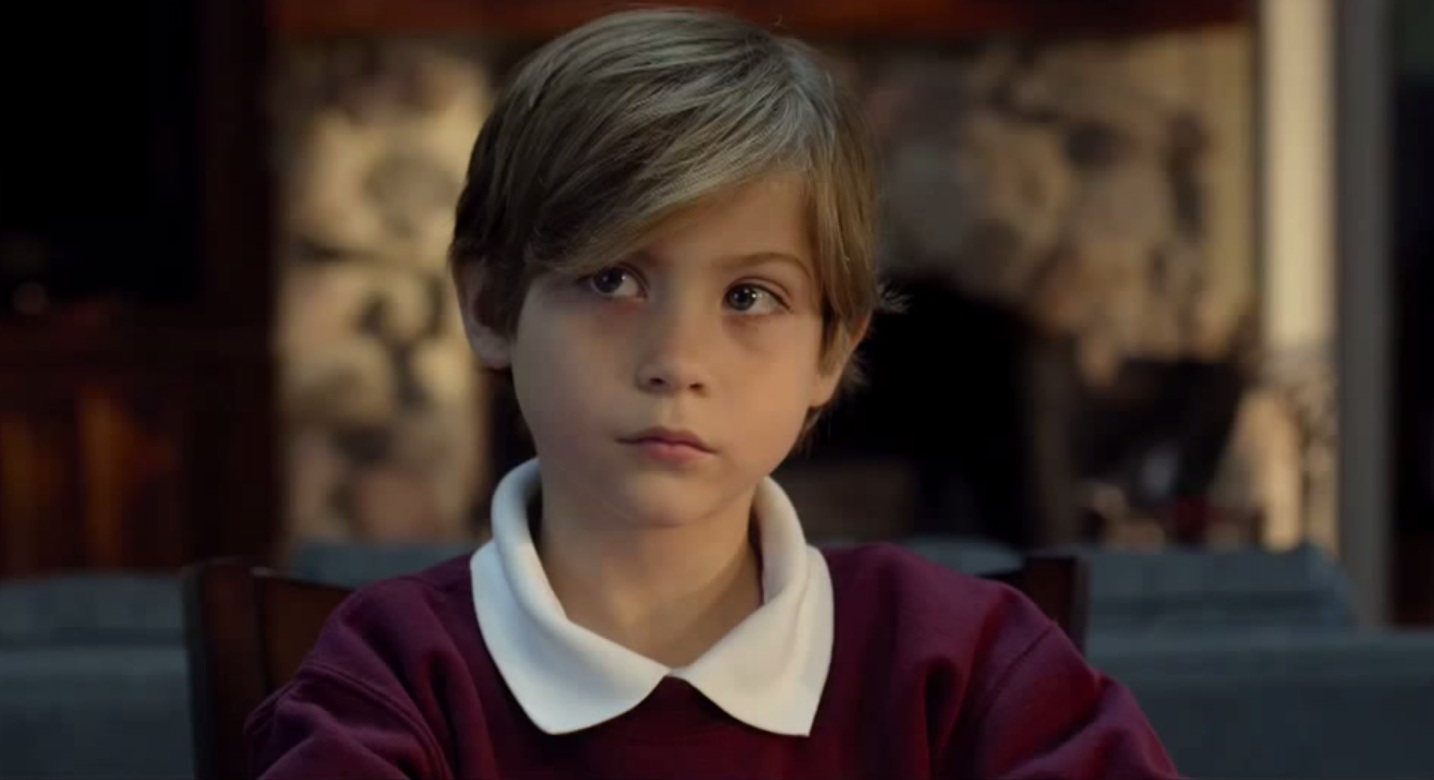
Cut to 2011, and adult Dan (Ewan McGregor) hasn't dealt with the trauma of his childhood and is now an alcoholic drifter some years after his mother has passed on. At the same time, a nomadic cult known as "True Knot," led by Rose the Hat (Rebecca Ferguson), moves around the country seeking recruits as well as victims, psychically-gifted children that they kill to absorb their life force--"steaming," as they ingest the steam that exits their mouths as they die, thus healing wounds and holding off the aging process, enabling them to live hundreds of years and adapt to a changing society. Dan ends up in a small town where he befriends Billy (Cliff Curtis), a recovering alcoholic who knows one when he sees one. He sponsors Dan in AA and helps him achieve sobriety and get a job as an orderly at a local hospice, where he earns the nickname "Doctor Sleep" for his ability to sense, via his psychic abilities, when a resident is about to die. At this same time, Dan starts getting vague "shining" messages from a young girl named Abra, who then goes silent for seven years. Cut to 2018, Dan is still sober and still working at the hospice. True Knot is still on a quiet rampage undetected, though their latest victim is a child (Jacob Tremblay) who shines to a now-13-year-old Abra (Kyliegh Curran), who then tries to alert Dan. She even tracks him down, and while he offers sympathy and describes his experiences with The Shining, he advises her to keep her head down and ignore it. But as Abra continues to psychically connect in a dangerous game with Rose the Hat and her minions, the stakes increase and Dan has no choice but to help her, especially when Rose realizes Abra's abilities far exceed her own.
After the 15 minute opening sequence taking place in 1980, DOCTOR SLEEP settles into its own groove and the overt SHINING references are dialed down, at least in terms of the developing plot (check out the visual shout-out to the Overlook manager Stuart Ullman's office when Dan meets with the head of the AA group, played by Bruce Greenwood in a rare sympathetic role). This gives Flanagan enough opportunities to make the film his own, and during this majority of its duration, it sticks generally close to King's book (the "True Knot" cult is very reminiscent of the RV-travelling vampire clan in NEAR DARK). One of King's major gripes about Kubrick's film is that he felt it lost the humanity and the central themes of alcoholism, violence, and the traumatic effects of abuse on a family in exchange for the "coldness" that typified Kubrick's work. Flanagan keeps those ideas intrinsic to the heart of DOCTOR SLEEP, with McGregor very believable as a man still haunted by ghosts both literal and figurative, whether it's the woman from room 237 or the psychological specter of an abusive father who tried to kill him and his mother, eventually using alcohol and self-destruction as the quickest coping mechanism. DOCTOR SLEEP resonates on a more emotional level than THE SHINING ever could, especially in the few scenes where the spirit of Hallorann appears (it should be mentioned that Lumbly is just terrific here). A SHINING fan might actually get a little choked up when Hallorann tears Danny a new one over his reluctance to help Abra, telling him "You was just a kid when you wandered into my kitchen all those years ago and here I am, still on the hook." As good as those dramatic elements are, it's Ferguson who creates the most indelible character with Rose the Hat, who's quirky and terrifying at the same time ("Well, hi there!").
It's not until about the two-hour mark that Flanagan has a Kubrickgasm and takes a deep dive into full-on SHINING worship. Some may feel it's an awkward shift in style and tone, but I found the transition to be handled in an effective way that, in lesser hands, would've seemed like a tacked-on compromise akin to the out-of-nowhere, studio-mandated exorcism finale in THE EXORCIST III. On the run with Abra, Dan decides to lure Rose the Hat to the long-shuttered, boarded-up, moldy-walled ruins of the Overlook, where he's been mentally locking away the spirits that have haunted him all these years. It's giddily, dizzyingly surreal to see McGregor's Dan wandering through almost perfect recreations of those legendary sets at England's Elstree Studios (except for one thing--there were steps going into the Torrance apartment). Everything is as it was left in 1980, looking like a combination of a crime scene and a SHINING museum (plus there's that droning, rhythmic beat, a crescendoing "Dies Irae," and a little "Midnight, the Stars and You"). The attention to detail is actually breathtaking at times (even after Steven Spielberg's tribute in READY PLAYER ONE), and it results in what should be one of the most crowd-pleasing comeuppances in recent memory once Rose the Hat shows up for the big showdown in the Colorado Lounge.
But something unexpected has happened: DOCTOR SLEEP flopped its opening weekend. Nobody cares. There's a million ways this could've shit the bed, and almost any other filmmaker would've been content to play it safe and rely on easy SHINING fan fiction. Flanagan doesn't cave to the lowest common denominator, and maybe that's why it's not playing well or bringing in the crowds despite acclaim from critics and hardcore SHINING fans. IT kickstarted a King renaissance a couple of years ago, but are we already suffering from fatigue and burnout? The inferior IT: CHAPTER TWO made a lot of money a couple of months ago but it definitely didn't have the fan adoration or the lasting impact of its predecessor (and does anyone remember we had a new PET SEMATARY earlier this year?). Or do the kids just not know THE SHINING like Warner Bros. assumed? I saw the 4K restoration of THE SHINING theatrically in September and there were a lot of younger people in attendance, and "Here's Johnny!" didn't even register with them. They don't know who Johnny Carson is. Has it been too long between films to attract anyone but the most devout--and likely middle-aged and older--superfans? A similar fate befell the 35-years-later sequel BLADE RUNNER 2049, which opened big with devotees of the 1982 Ridley Scott classic but dropped nearly 66% in its second weekend after everyone who wanted to see it saw it immediately. DOCTOR SLEEP is an entirely different beast than THE SHINING, but speaking as someone who regards the Kubrick film as sacrosanct, it surpasses all expectations and is the most worthwhile sequel that a Shining and SHINING fan could hope to get, and maybe the best big-screen Stephen King adaptation since 1994's THE SHAWSHANK REDEMPTION. Like THE SHINING, DOCTOR SLEEP will stand the test of time and hopefully find an audience on streaming and cable. In the meantime, I just don't know what the hell moviegoers want anymore.
BEFORE I WAKE (US - 2018) Directed by Mike Flanagan. Written by Mike Flanagan and Jeff Howard. Cast: Kate Bosworth, Thomas Jane, Jacob Tremblay, Annabeth Gish, Dash Mihok, Topher Bousquet, Lance E. Nichols, Jay Carnes, Courtney Bell, Michael Polish, Natalie Roers, Kyla Deaver, Antonio Romero, Hunter Wenzel. (PG-13, 97 mins) For a while, it was looking like American audiences were never going to see BEFORE I WAKE. Filmed in late 2013 and generating some buzz once director/co-writer Mike Flanagan's OCULUS opened in the spring of 2014 to acclaim from critics and horror fans, BEFORE I WAKE found itself a casualty of Relativity's financial problems. After shuffling the film's release date numerous times while attempting to avoid bankruptcy, Relativity eventually threw in the towel in 2015, leaving BEFORE I WAKE and several other films--including COLLIDE, THE DISAPPOINTMENTS ROOM, and MASTERMINDS--stuck in legal limbo. While those films were eventually acquired by other distributors, BEFORE I WAKE was left behind, released everywhere else in the world except the US. In the meantime, Flanagan moved on and made three more movies: HUSH, OUIJA: ORIGIN OF EVIL, and GERALD'S GAME. HUSH and GERALD'S GAME were two of the more successful Netflix Originals and as a result, Netflix did Flanagan a solid by picking up BEFORE I WAKE for its extremely belated release more than four years after it was completed and still sporting a 2014 copyright. One of the very few of the current crop of "masters of horror" who might actually be worthy of the title, Flanagan kept his OCULUS mojo going with BEFORE I WAKE, a horror fantasy that's thoughtful and ambitious if a bit uneven. There's one subplot that doesn't really go anywhere and there's a stretch in the second half where the pace really lags but it culminates in a climax that's raw and emotionally devastating. Flanagan cares about his characters. He's especially adept at writing strong female characters (Karen Gillan in OCULUS and Carla Gugino in GERALD'S GAME), and that's the case here with Kate Bosworth turning in the best performance of her career.
BEFORE I WAKE opens with a man (Dash Mihok) pointing a gun at a child as he sleeps. Cut to Jessie (Bosworth) and Mark Hobson (Thomas Jane), a couple looking to become foster parents. They're still grieving the tragic loss of their young son Sean (Antonio Romero) in a bathtub drowning. They're unable to have more children and still wish to provide a loving home to a child in need. They get their wish with Cody Morgan ("introducing" a very young-looking Jacob Tremblay, two years before his breakthrough as Brie Larson's son in ROOM), the sleeping child in the opening scene. Cody is a quiet, sensitive orphan with an intense interest in butterflies. He warms to the Hobsons quickly, though he has contraband stashed away in a closely-guarded shoebox: after he's put to bed each night, he guzzles energy drinks and pops No-Doz to keep from falling asleep. Jessie finds out, and assuming it's because of the trauma he's endured, assures him he can sleep safe and sound in their home. What Jessie and Mark soon discover is that Cody can manifest his dreams in reality. After he falls asleep, they're visited by numerous butterflies fluttering around the living room that vanish into thin air as soon as Cody wakes. Seeing a picture of Sean, the curious Cody asks if he's in Heaven like his mother. That night, as Cody sleeps and dreams, Sean appears in the living room to greet his parents. He's physically there, smiling, hugging them, and then he disappears once Cody is awake. "I didn't mean to...I'm sorry," Cody tells them, powerless against his dreams and his ability to make them real. Of course, if his dreams are real, then genre logic must dictate that his nightmares are as well, and that becomes apparent with the arrival of a demonic figure Cody calls "The Canker Man" (Topher Bousquet), who comes into his room at night and terrorizes him with the ominous promise that "I'll always be a part of you!"
While Flanagan goes for Blumhouse-style jump scares with the sudden appearances of The Canker Man and some ghostly-looking, eyeless kids, he's got other things in mind. He explores issues of the cycle of abuse, with the ability to see and hold Sean causing Jessie to use Cody's gift to her advantage, knocking him out with Ambien every night and making sure to talk about Sean and show Cody pictures and DVDs of him to ensure that he'll dream about him and return her dead son to her once again. An outraged Mark is quick to point out that drugging Cody and using him as her personal "home movie projector" is the definition of abuse. There's an unexpected occurrence 2/3 of the way through and a developing mystery centered on what happened to Cody's mother and all of his subsequent foster parents, and in the home stretch, Flanagan does a good job of channeling elements of Steven Spielberg, M. Night Shyamalan, and Guillermo del Toro (it's really surprising that Doug Jones isn't playing the Canker Man) without it coming off like a hackneyed ripoff. But it's the unexpected, gut-wrenching emotional impact of the final act, and the outstanding performances by Bosworth and Tremblay (Flanagan seeing long before ROOM that this is a remarkable young actor) that really separate BEFORE I WAKE from its jump-scare genre brethren, even if all of its disparate elements don't quite come together (that bully subplot is underdeveloped, to put it mildly). Finally seeing BEFORE I WAKE and putting it in its proper context as far as Flanagan's filmography is concerned, you can see recurring themes and obsessions popping up time and again (specifically, family ties and strong women triumphing over traumatic pasts). It's a flawed but powerful and ultimately quite moving film that further, even if retroactively, establishes Flanagan as one of the top genre filmmakers working today.
GERALD'S GAME (US - 2017) Directed by Mike Flanagan. Written by Mike Flanagan and Jeff Howard. Cast: Carla Gugino, Bruce Greenwood, Henry Thomas, Chiara Aurelia, Kate Siegel, Carel Struycken. (Unrated, 103 mins) Based on Stephen King's 1992 novel of the same name, the Netflix Original film GERALD'S GAME comes at a particularly zeitgeisty moment in pop culture: Andy Muschietti's IT, from King's 1986 novel, is a bona fide blockbuster and the biggest horror hit in years, and with its themes of sexual abuse and toxic masculinity, GERALD's GAME is a film practically tailor-made for the era of the woke thinkpiece. It's probably taken this long for Gerald's Game to be made into a movie because it's usually cited as one of King's less filmable works, though director/co-writer Mike Flanagan, one of horror's most promising voices of the last decade (OCULUS, HUSH, OUIJA: ORIGIN OF EVIL, and still-shelved BEFORE I WAKE), gives it his best shot. Gerald's Game was the first novel in what could retroactively be termed King's "woke" phase. It was followed the same year by the acclaimed Dolores Claiborne (made into a movie in 1995) and the middling Rose Madder in 1995 (not yet adapted for the big or small screen, and probably even less filmable than Gerald's Game). GERALD'S GAME works best when it stays focused in the here and now, with its heroine in an increasingly doomed situation. Fatigue sets in and her mind starts playing tricks on her. She begins hallucinating manifestations of long-suppressed traumas of her past that have influenced every decision she's ever made. She summons a degree of inner resolve she never thought possible and King believes in her, and fortunately for Flanagan, he has a game lead actress giving it everything she's got in what should be the role of her career.
GERALD'S GAME is anchored by a gutsy and absolutely fearless performance by Carla Gugino, a jobbing actress who's been a familiar face in movies and TV since the late 1980s, though she first gained notice with her breakout role opposite Pauly Shore in 1993's SON IN LAW. Gugino is Jessie, the beautiful trophy wife of older, wealthy attorney Gerald (Bruce Greenwood). Their marriage has gone stale, and Gerald arranges a weekend getaway at an isolated cabin to reignite the spark. Jessie buys some sexy lingerie, while Gerald packs Viagra and handcuffs. He wastes no time, handcuffing Jessie to the reinforced bedposts and cajoling her to engage in a rape fantasy. Things quickly turn uncomfortable as his play gets a little more rough than Jessie's willing to indulge. She bites his lower lip to get him off of her and in the middle of the ensuing argument, Gerald clutches his arm and his chest, dropping dead of a heart attack right on top of her. She kicks him off the bed and onto the hardwood floor where the fall cracks his head open. There's no one around, Gerald's phone and the keys to the handcuffs are just out of reach, and the design of the bedposts makes it impossible to slide the cuffs off of them to allow freedom. On top of that, Gerald left the front door open in his excitement to get between the sheets, allowing a hungry stray dog inside, who almost immediately helps himself to Gerald's corpse on the bedroom floor. Then the hallucinations start.
Jessie sees herself in the room, giving herself advice and guidance that goes against the vision of Gerald that keeps belittling her and reminding her of her place. The image of Jessie starts bringing up horrific events of her childhood, all centered on an instance of sexual molestation by her father (Henry Thomas in flashbacks) during a solar eclipse while the family was vacationing at a lake when she was 12 (Chiara Aurelia plays Jessie in these scenes). While "Jessie" pushes her to fight, "Gerald" tells her to give in to Death, who will come at night at take her in the form of The Moonlight Man (Carel Struycken), a monstrous specter who collects souvenirs of the dead. When GERALD'S GAME stays in the room, it works, and that's due almost entirely to Gugino's performance. She's ably supported by Greenwood, riffing on his now-standard "Bruce Greenwood" persona (he really is the go-to guy for smug, asshole husbands), but the film falls apart at roughly the same place the book does. Flanagan makes some changes--the book version of Gerald is a unattractive and slovenly, while Greenwood is handsome and impressively buff at 61--but remains faithful to King to a fault. The finale of the novel wasn't a disaster, but on the screen, it doesn't work at all, and not knowing how to end things has been just one problem that's plagued King's inconsistent output since right around the time he wrote Gerald's Game (this was also glaringly apparent with Rose Madder, which starts great but shits the bed and never recovers the moment its battered wife heroine dives into a mirror and enters a fantasy realm, and the issue of whether we're at the point where King's mediocre and forgettable work outnumbers his classics is a valid discussion to have). Flanagan has been a Gerald's Game superfan since he read it as a teenager and has cited it as a dream project that was a main inspiration in his wanting to become a filmmaker. But in the end, his movie adaptation will stand as an example of something not quite translating from page to screen. Stories work differently depending on the medium, and mileage may vary, but the last ten minutes of GERALD'S GAME feel anticlimactic and tacked-on, and the book's ending should've been the first thing to go when Flanagan began outlining the script. Yes, he should be commended for tackling a difficult adaptation and succeeding more often than not (and there's one grisly moment that will make even the most experienced gorehounds grimace and look away), but despite a great performance by Gugino, this aims for the fences but doesn't quite make it.
HUSH (US - 2016) Directed by Mike Flanagan. Written by Mike Flanagan and Kate Siegel. Cast: John Gallagher Jr, Kate Siegel, Michael Trucco, Samantha Sloyan, Emma Graves. (R, 82 mins) In an era when hardly a week goes by without some new indie horror movie being an alleged game-changer that causes The Fanboy Who Cried Classic to overhype a completely unworthy film and anoint its writer and/or director the next "Master of Horror," Mike Flanagan has very quietly become one of the very few (Adam Wingard is also a big talent to watch) who deserves the fawning accolades. After a couple of little-seen festival titles in the early 2000s and the 2011 indie fright film ABSENTIA, Flanagan broke out with the 2014 sleeper OCULUS, an imaginative supernatural horror film co-produced by Blumhouse and, of all companies, WWE Studios. While not a blockbuster, it managed to generate a nice profit for distributor Relativity Media, who picked it up for next to nothing. OCULUS has already become a cult film, and it led to Flanagan being handed OUIJA 2, the sequel to the 2014 WITCHBOARD pseudo-remake. It's probably not the best venue for his talents, but it's a major-studio movie and everybody's got bills to pay. Prior to OCULUS' release, Flanagan was already at work on two other films: BEFORE I WAKE, which was shot in late 2013 and has been left in limbo due to Relativity's financial woes, and HUSH, an ultra low-budget Blumhouse production shot in secret over three weeks in 2014. HUSH--not to be confused with the late '90s Jessica Lange/Gwyneth Paltrow bomb--generated a lot of buzz at this year's SXSW and was acquired by Netflix, where it's just premiered as a streaming exclusive.
Co-written with his wife and OCULUS co-star Kate Siegel and shot in such a stealth manner to avoid the meddling of a studio they feared would make too many demands, starting with replacing Siegel in the lead role, Flanagan conceived HUSH after a dinner conversation with Siegel where they both expressed their love for the classic 1967 thriller WAIT UNTIL DARK. Wanting to make the kind of nailbiter with a protagonist in a similar situation as Audrey Hepburn as a blind woman terrorized by three criminals led by a drug-addled and insane Alan Arkin, Flanagan and Siegel conceived a story centered on a deaf-mute woman stalked by vicious killer. On the surface, HUSH might seem like a late-to-the-party home invasion thriller that should've come out around the time of THEM (ILS) or THE STRANGERS, or at the very latest, THE PURGE, but it's the best film of its type since Adam Wingard's surprisingly great YOU'RE NEXT back in 2013. By making the target unable to hear or speak the filmmakers are able to approach things from a different perspective. As blocked mystery writer Maddie Young (Siegel) struggles to complete her second book (for which she has seven possible endings and hates all of them), Flanagan establishes several things: the layout of her house, in a secluded area well off the main road; the brief flashes of seemingly minor details, every one of which will be important by the time the end credits roll; and what it's like to be in Maddie's head. Deaf and mute since a bout of meningitis when she was 13, Maddie is a year out of a bad relationship and seemingly accepting of being alone. In a signed and subtitled Facetime chat with her sister (Emma Graves), Maddie explains "Isolation chose me." As Maddie goes about her routine, unsuccessfully trying to cook a new dish and unable to come up with the words to finish her book, Flanagan frequently lets the sound drop out to experience Maddie's world from her POV. In a way, Netflix picking this up spares viewers from watching it in theater, where idiot audiences would no doubt be gabbing away during these important, mood-establishing expository scenes, though with an attentive and appreciative audience, this would be a hell of a crowd movie.
Silence is all Maddie has come to know, and it prevents her from hearing her nearest neighbor (Samantha Sloyan) screaming for help and banging on the doors and windows while Maddie has her back turned, doing the dishes. As Maddie obliviously cleans, her neighbor is stabbed multiple times by a masked killer (10 CLOVERFIELD LANE's John Gallagher Jr), who quickly figures out that Maddie is deaf and decides to have some sadistic fun with her. He sneaks into the house while she's on her laptop, lounging on the couch. He grabs her phone from the kitchen counter and sends her text messages on her laptop consisting of photos he's just taken of her sitting on the couch. Terrified, she gets up to see the sliding door going outside is open. Getting up to close it, she sees him standing on the back patio. He shuts off the power going into the house, leaving Maddie with no wi-fi, no electricity, and no way to text or message anyone for help. With no rhyme or reason for his actions ever established--and the film works just fine without any--he has made it his mission to terrorize her. He reminds her from outside that it doesn't matter where she hides, she'll never hear him breaking in and he can come in anytime he wants. He's just gonna fuck with her by making her wait.
The hopelessness of Maddie's situation is frightening enough, but what makes HUSH work so well is that she refuses to be a victim. In what should be a star-making performance (she gets a possibly inside-jokey "introducing" credit even though she's been in several movies, including a previous one from Flanagan), Siegel immediately establishes herself as a the next-in-line to the Jamie Lee Curtis scream queen crown without even uttering a peep (except for one brief scene where she's playing out her escape options using the voice in her head). Siegel's Maddie in an instantly iconic horror heroine, one who's perhaps withdrawn from the world to an extent but finds it deep within herself to fight like hell, and the various ways she gets the edge on the killer over the course of HUSH's relentless 80 minutes are smart and plausible. Flanagan never asks the audience to make ridiculous leaps in logic or plot convenience. His mapping out of HUSH is precise and methodical and the occasional bursts of gore and splatter are practical, squishy, and wet. Even the few bits of humor are dark and merciless (watch the cruel way Flanagan has Maddie inadvertently screw up her chance to be rescued). He lays down the ground rules and sticks to them, chiefly the way much of the film plays out dialogue-free in order to experience it as Maddie does. Every bit the top-shelf nailbiter like the one that inspired it, HUSH is a terrific thriller, one of 2016's best films, and one that's going to find a huge audience on Netflix. There's too much ball-cradling sycophancy in horror fandom these days, and it's too hard to take people seriously every horror movie causes them to break out into another rendition of "Everything is Awesome!" So bestow all the accolades you want on the Eli Roths and the Ti Wests, and the V/H/Ss, THE ABCs OF DEATHs, the STARRY EYESs and the GOODNIGHT MOMMYs: Mike Flanagan is the real deal.