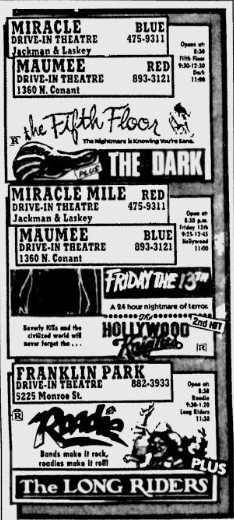
THE FIFTH FLOOR (US - 1980) Directed by Howard Avedis. Written by Meyer Dolinsky. Cast: Bo Hopkins, Dianne Hull, Patti D'Arbanville, Sharon Farrell, John David Carson, Julie Adams, Robert Englund, Mel Ferrer, Anthony James, Pattie Brooks, Earl Boen, Betty Kean, Alice Nunn, Cathey Paine, Udana Power, Michael Berryman, Marie Marq, M.G. Kelly, Tracey Walter. (R, 90 mins) A late-night cable fixture in the early '80s, THE FIFTH FLOOR has largely disappeared from view in the decades since. Just out on Blu-ray from Code Red (because physical media is dead) in a transfer that;s only acceptable but oddly appropriate given its exploitative nature, the film was just scuzzy enough for the perpetually shady Film Ventures International to release on the drive-in and grindhouse circuit over the spring and summer of 1980, but it's tamer than you might think, and it even aired on CBS in 1983. Its plot has several similarities with 1979's grungier HUMAN EXPERIMENTS and 1985's exponentially more tacky HELLHOLE, all three films combining staples of the women-in-prison potboiler with a quasi-SNAKE PIT tropes with a nice young woman thrown into a mental institution. After she suffers a seizure at a disco that's eventually determined to be caused by strychnine poisoning and considered by the ER doc to be a botched suicide attempt, college girl Kelly (Dianne Hull), who just broke up with her boyfriend Ronnie (PRETTY MAIDS ALL IN A ROW's John David Carson), is deemed a risk to herself and ordered to spend 72 hours in observation in the mental ward on the fifth floor, referred to as "Psycho City" by the other patients.
Distraught and unable to convince anyone that someone poisoned her and that she wasn't attempting suicide, Kelly is incredulously dismissed by everyone charged with her care, and no one--Ronnie, attending shrink Dr. Coleman (Mel Ferrer), head Nurse Hannaford (Julie Adams), and especially leering orderly Carl (an unhinged performance by Bo Hopkins)--seems very eager to hear her out, let alone release her. She makes friends with some of the other patients, like pregnant Cathy (Patti D'Arbanville), unstable Melanie (Sharon Farrell), who lost it after her husband's affair with a younger woman, and kooky Benny (Robert Englund), the fifth floor's resident class clown, but her defiant attitude keeps inevitably extending her stay. She also has to contend with the unwanted attention of Carl, who makes her shower while he watches and insists on soaping her back, and when she runs away, he tells Nurse Hannaford and Dr. Coleman that she grew violent and had paranoid breakdown, which forces Coleman to keep her confined for another 90 days.
THE FIFTH FLOOR was allegedly based on a true story, but that claim seems pretty suspect. Director Howard Avedis (THE TEACHER SCORCHY, MORTUARY, THEY'RE PLAYING WITH FIRE) was no stranger to trashy B-movies before or after THE FIFTH FLOOR, and the film marked one of the rare big-screen scripting efforts by veteran TV scribe Meyer Dolinsky, whose journeyman career included stops on shows like BONANZA, THE OUTER LIMITS, WAGON TRAIN, DAKTARI, STAR TREK, MISSION: IMPOSSIBLE, HAWAII FIVE-0, and MARCUS WELBY, M.D. Though it's generally lumped in with the horror genre, THE FIFTH FLOOR is more of a suspense drama, closer in spirit to ONE FLEW OVER THE CUCKOO'S NEST than anything inherently "scary." It was probably easy to sell it as a horror film ("Once the door closes here, it never opens!"), but if you remove some profanity, Hull's nudity and a surprisingly gory comeuppance for the villain, it could've easily been a made-for-TV movie. It's more uncomfortable than anything, especially with Hopkins' genuinely repellent performance, though even entertaining the notion that standards may have been lax 40 years ago compared to now, it's hard to believe any hospital would've kept this creep on the payroll. Avedis and Dolinsky also completely lose track of the whole "Who poisoned Kelly?" plot thread, addressing it in a throwaway line late in the film that should've gotten her released from the hospital weeks earlier but no one seems to be doing their job. It's possible that was the whole point (Adams' Nurse Hannaford clearly doesn't trust Carl, but Ferrer's Dr. Coleman is absolutely useless), but it's doubtful Avedis was crafting this as some kind of hard-hitting, SHOCK CORRIDOR-style statement.
Toledo, OH, 6/27/1980
The charms of THE FIFTH FLOOR lie mainly in nostalgia for its era and with its cast, which also includes such recognizable faces as Anthony James (the chauffeur in BURNT OFFERINGS), Earl Boen (the disbelieving police shrink in THE TERMINATOR), Michael Berryman (THE HILLS HAVE EYES), Tracey Walter ("Bob the Goon" in Tim Burton's BATMAN), and Alice Nunn (whose place in pop culture is cemented thanks to her work as Large Marge in PEE-WEE'S BIG ADVENTURE) as fifth floor patients. Film Ventures somehow managed to corral the services of Casablanca Record & Filmworks (known primarily as a disco label thanks to Donna Summer and the Village People, but also the home of rock bands like Kiss and Angel) to handle the soundtrack, though the only performer they could get to contribute anything was Pattie Brooks, who just had a huge hit in 1978 with THANK GOD IT'S FRIDAY's "After Dark" and is seen onscreen singing "Fly Away." THE FIFTH FLOOR has an appropriately grimy feel that's matched by Hopkins and the performance of Hull, if you can overlook her borderline Elaine Benes dance moves in the opening sequence. Born in 1949, she had a few prominent roles--as Kirk Douglas and Deborah Kerr's daughter in 1969's THE ARRANGEMENT, as Rose in 1975's ALOHA, BOBBY AND ROSE, and as John Savage's wife in 1979's THE ONION FIELD--but her career never took off. She has no IMDb credits after 1991 and her last big-screen role was as Mrs. Settigren in 1988's THE NEW ADVENTURES OF PIPPI LONGSTOCKING. THE FIFTH FLOOR was a minor hit at drive-ins and found a cult following on VHS and cable, but even the poster art did nothing to sell it as Hull's movie, since it's adorned with the image of distraught Sharon Farrell.
THE FIFTH FLOOR opening in Toledo, OH on 6/27/1980
MCQ (US - 1974) Directed by John Sturges. Written by Lawrence Roman. Cast: John Wayne, Eddie Albert, Diana Muldaur, Colleen Dewhurst, Clu Gulager, David Huddleston, Al Lettieri, Jim Watkins (Julian Christopher), Roger E. Mosley, William Bryant. (PG, 111 mins) 67-year-old John Wayne tried to belatedly hop on the post-BULLITT/DIRTY HARRY bandwagon with this cop thriller from MAGNIFICENT SEVEN and GREAT ESCAPE director John Sturges, the first of two such contemporary departures for the screen icon. The Duke moves a little slow and his rug is terrible, but he's a lot of fun as Lon McQ, a plays-by-his-own-rules Seattle detective out to nail drug kingpin Santiago (Al Lettieri, best known as the treacherous Sollozzo in THE GODFATHER) after his partner (William Bryant) gets ambushed and later dies. What follows is a pretty standard cop movie material, with corrupt cops, McQ getting info from a Huggy Bear-like informant named Rosey (Roger E. Mosley), and eventually quitting the force in disgust when he's busted down to desk duty by his boss (Eddie Albert).
A couple of great car chases (with one spectacular wreck performed by future Burt Reynolds BFF Hal Needham), and a lively performance by a machine-gunning Duke help get you by the more mechanical elements of the story and a midsection that drags a bit. And it's the only time you'll see the Duke about to close the deal on his second lay of the movie only to be cockblocked by Clu Gulager. Also with Diana Muldaur, Colleen Dewhurst, Julie Adams, Julian Christopher (billed as "Jim Watkins"), and David "The Big Lebowski" Huddleston. MCQ was only a moderate success for Wayne, who had the similar BRANNIGAN in theaters a year later.
BRANNIGAN
(UK - 1975)
Directed by Douglas Hickox. Written by Christopher Trumbo, Michael Butler, William P. McGivern and William Norton. Cast: John Wayne, Richard Attenborough, Judy Geeson, Mel Ferrer, John Vernon, Ralph Meeker, Daniel Pilon, Lesley-Anne Down, John Stride, James Booth, Barry Dennen, Arthur Batenides, Brian Glover. (PG, 111 mins)
A year after MCQ, John Wayne starred in another contemporary cop actioner, the British-made BRANNIGAN, directed by Douglas Hickox (SITTING TARGET, THEATRE OF BLOOD) and written by an eclectic committee of screenwriters including Dalton Trumbo's son Christopher, Michael Butler (THE GAUNTLET, CODE OF SILENCE, PALE RIDER), William P. McGivern (THE BIG HEAT, I SAW WHAT YOU DID), and William Norton (BIG BAD MAMA, NIGHT OF THE JUGGLER). Brannigan isn't all that different from Lon McQ, other than he's in Chicago instead of Seattle. Sent to London to extradite mobster Larkin (John Vernon), who's hired a deadly assassin (Daniel Pilon as a second-string Helmut Berger) to off him, Brannigan has some good-natured culture-clashing with Scotland Yard's affable but uptight Cmdr. Swann (Richard Attenborough). But the pair have to work together--if they don't kill each other first!--when Larkin is kidnapped and his shady attorney (Mel Ferrer, cast radically against type as a smirking, duplicitous prick) arranges a ransom.
BRANNIGAN is much more lighthearted than MCQ, with a mid-film pub brawl that's played completely as a comedy set piece. Wayne, sporting a toupee that's somehow worse than the one he had in MCQ, is once again enjoying himself and has a terrific camaraderie with Attenborough and with Judy Geeson as a young female officer charged with driving Brannigan around and keeping him out of trouble. BRANNIGAN was a box-office disappointment as the Duke's fans made it clear they didn't like seeing him doing this geriatric DIRTY HARRY routine, even with a requisite smartass catchphrase ("Knock knock!"). Wayne returned later in 1975 with the western ROOSTER COGBURN, where he reprised his Oscar-winning TRUE GRIT character, and finished his career with 1976's THE SHOOTIST before retiring from the screen. He died in 1979. A few decades removed from the shock of seeing an aged, slow-moving Wayne try to be Steve McQueen or Clint Eastwood, MCQ and BRANNIGAN aren't Duke classics by any means, but they're entertaining departures that are well worth seeing, particularly BRANNIGAN, which is much better than its reputation.
THE PYJAMA GIRL CASE (Italy/Spain - 1977) Written and directed by Flavio Mogherini. Cast: Ray Milland, Dalila Di Lazzaro, Mel Ferrer, Michele Placido, Howard Ross, Ramiro Oliveros, Rod Mullinar, Eugene Walter, Fernando Fernan Gomez, Vanessa Vitale, Giacomo Assandri, Luis Barboo. (Unrated, 102 mins)
The Italian giallo craze, popularized in the early 1970s by, among many others, Dario Argento's THE BIRD WITH THE CRYSTAL PLUMAGE and DEEP RED and other films by Mario Bava, Lucio Fulci, and Sergio Martino, was dying down by the latter part of the decade. Though gialli were still being produced (Antonio Bido's THE BLOODSTAINED SHADOW is a solid offering from 1978) and would still be made into the 1980s (Argento's TENEBRE in 1982, Lamberto Bava's A BLADE IN THE DARK in 1983), the filmmakers were moving into other areas, as evidenced by the supernatural element woven into Argento's DEEP RED as early as 1975. He would soon go into the realm of the overtly supernatural with SUSPIRIA (1977) and INFERNO (1980), while Fulci would find his niche with his 1979 classic ZOMBIE. During this giallo downturn, some films were being produced that were classified as giallo, but didn't strictly adhere to all of the genre tropes and expectations, like Pupi Avati's dark, bleak THE HOUSE WITH LAUGHING WINDOWS and Paolo Cavara's sordid giallo/polizia hybrid PLOT OF FEAR (both 1976). Flavio Mogherini's THE PYJAMA GIRL CASE (1977), despite sporting a title that sounds like a lost Hardy Boys/Nancy Drew mystery, is one of the most unconventional offerings in the giallo subgenre for a variety of reasons, starting with it being set and shot in Australia even though it's an Italian/Spanish co-production. Basing his film on a 1934 murder case in Australia, where the pajama-clad body of 28-year-old Linda Agostini was found mutilated and partially burned beyond recognition, Mogherini wasn't interested in making a typical giallo, and by subverting the expectations that came with that label, he created a haunting and very unusual film that was ahead of its time in some ways. It never scored a US theatrical release and was probably a hard sell considering its unorthodox construction that's admittedly confusing and seems choppy and disorienting for a first-time viewer. I didn't like THE PYJAMA GIRL CASE the first time I saw it, but it's a rare mystery that actually plays better a second and third time through, once you know its trickery and its final revelation and can admire the sleight of hand of Mogherini and editor Adriano Tagliavia (Pieter Jan Brugge's little-seen 2004 thriller THE CLEARING, with Robert Redford and Willem Dafoe, plays out in a similar fashion). Mogherini, occasionally to the film's detriment, is so concerned with the how of his gimmick that he often glosses over or outright neglects the what and the why, sometimes cramming key plot points into place to force the twist to work. It's a flawed film with its share of stumbles along the way, and its structure was probably a lot more innovative in 1977 before fractured timelines and the ubiquity of twist endings became more commonplace, but THE PYJAMA GIRL CASE is one of the most ambitious gialli of its time. Even though it doesn't quite knock it out of the park, it constantly aims for the fences and has deservedly--and quietly--become a cult item after being rescued from decades of obscurity by Blue Underground's 2006 DVD.
After a woman's body is found on a Sydney beach, wearing yellow pajamas and with her face burned beyond recognition, the police are baffled. This prompts crotchety, retired Inspector Timpson (Ray Milland in one of his best late-career roles), who misses the action and has grown bored spending his days tending to his flower garden, to offer his services on his own time ("Don't expect to get paid!" the chief yells). Timpson is an old-school sleuth who follows his gut instinct and has no time for the psychological analyses of college-educated cops like Inspectors Taylor (Ramiro Oliveros) and Morris (Rod Mullinar), who have been put in charge of the case. They initially have no leads since they don't even know the victim's identity, resulting in the film's most memorable scene, a desperation decision to publicly display the woman's mutilated corpse in the hopes that someone might recognize her (this actually happened in the 1934 source case). After Taylor and Morris beat a confession out of local pervert Quint (Giacomo Assandri), the case is closed despite Timpson's protestations otherwise. Meanwhile, Linda (Dalila Di Lazzaro, best known as the "female zombie" in FLESH FOR FRANKENSTEIN) has recently been seduced by a bisexual female friend who wore yellow pajamas very similar to the murder victim. With the woman gone on a trip and temporarily out of the picture, Linda goes back to juggling the three men in her life: her Italian immigrant husband Antonio (Michele Placido), his buddy Roy (Howard Ross), and Prof. Douglas (Mel Ferrer), her elite, upper-class sugar daddy. The parallel narratives intersect on occasion until fusing in a way that should've landed with more oomph than Mogherini gives it, but once you rewatch it knowing how it all plays out, it's fascinating to observe the way he obfuscates and intentionally misdirects the audience. It's easy for a first-time viewer to leave THE PYJAMA GIRL CASE feeling gypped and disgruntled, but there's a lot more going on in it than just a simple murder mystery or a cookie-cutter giallo, and its rewards might only manifest on subsequent viewings. That's more work than most people might wish to devote to a movie, which is why this film has flown so under-the-radar for so many years, with its cult growing as those who are pulled back to it discover its intricacies and what Mogherini was really doing.
Though some interiors were shot in Rome, most of the film was done on location in Sydney, and the presence of future PATRICK and BREAKER MORANT co-star Mullinar gives it some legitimate Aussie/Ozploitation credentials. Mogherini uses the downtown, business district of Sydney in ways that make it seem as barren, desolate, and unwelcoming as the intimidating Outback of something like WAKE IN FRIGHT (1971). There's an unmistakable Antonioni chilliness to some of the location work as Mogherini frequently sets exterior shots in vast, empty spaces--often with the Sydney Opera House in the shot to establish scale--emphasizing the isolation and loneliness of the characters. Antonio's introduction is one of the film's most striking moments as Mogherini has Placido wandering through an empty downtown Sydney business district, surrounded by the concrete and steel of towering skyscrapers as he eats lunch alone on a bench without a soul in sight. It's a scene that, taken out of context, could easily be mistaken for a new version of THE LAST MAN ON EARTH or THE OMEGA MAN. That sense of isolation is a key theme for Mogherini: Italian Antonio, German Roy, and Dutch Linda are all immigrants who have ended up in Sydney. They often complain that they're second-class citizens, intimating that Australians aren't particularly hospitable to outsiders. I don't see the film making this claim overtly as a knock on Australia specifically, as one could say that immigrants could feel that way anywhere. Linda gets dealt even worse as she's constantly leered at and objectified by men, whether she's stopping at a bar or working her shift at a restaurant, where every male customer checks her out as she walks away and makes no effort to be subtle about it. Even the men who line up at the public viewing of the corpse seem to be doing it more for the chance to ogle another naked woman. With the exception of Timpson, the men in THE PYJAMA GIRL CASE are a sad and immature lot. Almost all of them have homes lined with nudie magazine pics on the walls, and Quint is introduced vigorously and openly masturbating to his neighbor as she hangs laundry in her yard, only to be rudely interrupted by Timpson and Taylor barging into his shack of a house (the sight of 70-year-old Oscar winner Milland making the "jerk off" motion in mockery of Quint is itself worth the price of admission). Roy claims Antonio is his friend but thinks nothing of sleeping with Linda. Even the seemingly mature Prof. Douglas is a self-centered bastard, wooing Linda with promises of a life together only to bail when she finally takes him up on his offer, almost as if he suddenly remembered they met while he was on a business trip to Amsterdam, where Linda was working as a prostitute before following him to Sydney (there's also another love triangle involving the professor, Linda, and her bisexual lover with the yellow pajamas). It's the rejection by Prof. Douglas that sends Linda on a self-loathing, self-destructive downward spiral that eventually starts bringing the dual narratives together.
Mogherini (1922-1994) didn't direct anything else of note other than the minor Marcello Mastroianni comedy LUNATICS AND LOVERS (1976). He spent most of his career in art direction and production design on films like Mario Bava's DANGER: DIABOLIK (1968) and Federico Fellini's FELLINI SATYRICON (1969). With his unique depiction of Sydney as harsh and almost alien world (almost none of the Australian characters sound Australian, which effectively adds to the sense of detachment even if it's just a happy accident courtesy of a fast-working Nick Alexander-led dubbing crew), supplemented by a Riz Ortolani score that often sounds like a dry run for Giorgio Moroder disco (the songs croaked by Amanda Lear, however insidiously they burrow into your head, are an acquired taste regardless of how relevant their lyrics are), Mogherini created an uneven yet inventive and melancholy giallo like no other, offering a unique view of Australia through an Italian lens to tell a story of lost souls adrift, strangers in a strange land who left home out of a sense of not belonging only to arrive at a place that was even less welcoming. Perhaps THE PYJAMA GIRL CASE was ahead of its time in more ways than plot structure.
SCREAMERS aka SOMETHING WAITS IN THE DARK (Italy/US - 1981) Directed by Sergio Martino and Miller Drake. Written by Sergio Donati, Cesare Frugoni, Sergio Martino, and Miller Drake. Cast: Barbara Bach, Claudio Cassinelli, Richard Johnson, Beryl Cunningham, Joseph Cotten, Mel Ferrer, Cameron Mitchell, Franco Javarone, Roberto Posse, Giuseppe Castellano, Francesco Mazzieri, Eunice Bolt, Tom J. Delaney, James Alquist, Bobby Rhodes. (R, 90 mins)
The story of how the 1979 Italian fantasy adventure ISLAND OF THE FISHMEN became the 1981 Roger Corman drive-in splatter movie SCREAMERS is one of the more entertaining examples of hucksterism in the annals of exploitation cinema. Just out on Blu-ray and DVD in its SCREAMERS incarnation courtesy of Scorpion Releasing, the circumstances surrounding the metamorphosis of ISLAND OF THE FISHMEN into SCREAMERS are covered in great detail in the set's bonus features. Contrary to popular belief, Roger Corman didn't have anything to do with the changes despite SCREAMERS being released by his New World Pictures. It came to him with the changes already in place. Richard Kay and Harry Rybnick were two veteran B-movie producers of such titles as 1956's CURUCU, BEAST OF THE AMAZON, and both had a hand in bringing Ishiro Honda's GOJIRA (1954) to the US and its restructuring into GODZILLA in 1956. By 1980, Kay and Rybnick were still eking out a living on the fringes of Hollywood, with their company United Producers picking up foreign exploitation fare and frequently retitling them for their second and third runs through American drive-ins and grindhouses (for instance, Pete Walker's 1974 imprisoned-fashion-models thriller HOUSE OF WHIPCORD was twice relaunched via United Producers, first as PHOTOGRAPHER'S MODELS and then as the even more lurid STAG MODEL SLAUGHTER). Kay and Rybnick acquired Sergio Martino's ISLAND OF THE FISHMEN, a bizarre aquatic Italian ripoff of THE ISLAND OF DR. MOREAU that blended elements of Edgar Rice Burroughs and H.P. Lovecraft, and approached PIRANHA director Joe Dante about beefing it up with some American actors and gory killings. Dante was busy with THE HOWLING at the time and sent the guys to his buddy Miller Drake, a trailer editor at New World who had been wanting to branch out into directing. Drake took the job, recruited cinematographer Gary Graver, a longtime exploitation fixture whose main claim to fame among his friends was working on Orson Welles' shelved and never-released THE OTHER SIDE OF THE WIND in 1972, and assembled a crew comprised mainly of moonlighting New World staffers looking for some quick cash and some additional experience (future TERMINATOR producer and eventual James Cameron ex-wife Gale Anne Hurd is credited on SCREAMERS as "Maui location manager," even though no scenes were shot on Maui). Drake wrote and directed a prologue to be added to the beginning of FISHMEN with Mel Ferrer and Cameron Mitchell, aging warhorses who had been in the business long enough to remember the glory days of Hollywood but were now taking any job that came along if it paid enough, being stalked and killed by slimy creatures that didn't really look like the ones in FISHMEN. Drake was supplied with a $50,000 budget for the prologue and the additional footage was shot in four nights at the caves at Bronson Canyon in Los Angeles' Griffith Park, a favorite location of Corman's going back to the 1950s.
Though Dante, who paid his dues at New World and clearly had bigger fish to fry by this time as he was about to break into the big leagues after THE HOWLING, declined the offer to shoot the new footage and wanted to keep his involvement under the radar, he did help Drake out by editing the footage and overseeing the overhaul of FISHMEN into SCREAMERS. Using the pseudonym "Giuseppe Dantini," Dante worked with Drake to streamline the 99-minute FISHMEN down to its basics, cutting it down to about 75 minutes to work in approximately 12-13 minutes of Drake's footage and a couple of other changes sprinkled throughout, like the addition of one character (James Alquist) who appears briefly only to get killed by one of the fishmen, and a later shot in a laboratory where Drake and soon-to-be-revered makeup effects maestro Chris Walas (THE FLY) replaced a shot of one of Martino's fishmen in a tank with their own, more CREATURE FROM THE BLACK LAGOON-ish monster--shot in a makeshift tank in Dante's garage--and the seams barely show until they're pointed out to you by Drake in his interview segment. The film, now running 90 minutes (75 minutes from FISHMEN, 13 minutes of Drake's material, plus new credits) was retitled SOMETHING WAITS IN THE DARK, given a new English dub (star Claudio Cassinelli dubs himself in FISHMEN, Italian accent intact, but has been revoiced by someone else for SCREAMERS) and even though it wasn't a slasher film, that's how Kay and Rybnick wanted it marketed, and they began shopping it around to distributors. Because of their knowing Dante and Drake having used a number of off-the-clock New World guys, Corman was happy to take it off their hands. And that's where things got really interesting.
Original 1979 Italian ISLAND OF
THE FISHMEN poster art.
Using United Producers' artwork and assorted promo material, Corman sent SOMETHING WAITS IN THE DARK out to ten drive-ins in Virginia for a test run and it bombed. Refusing to lose money on an investment, he pulled the film from distribution for a marketing overhaul that was assigned to New World advertising honcho and future filmmaker Jim Wynorski. With SCANNERS being an early 1981 hit, Wynorski proposed the title SCREAMERS and it stuck. He devised an ad campaign that made it look completely American, with Cassinelli renamed "Charles Cass," FISHMEN producer Luciano Martino changed to "Lawrence Martin," and a non-existent "Dan T. Miller" credited as director (the original Italian names remained intact in the film itself). Most importantly, the new one-sheet boasted "Be warned: You will actually see a man turned inside out!" and on a Sunday afternoon, Wynorski quickly shot a TV spot that featured just one quick opening shot of actress Eunice Bolt screaming from the new SOMETHING WAITS IN THE DARK scenes and no footage whatsoever from ISLAND OF THE FISHMEN. Instead, it featured Wynorski's then-girlfriend running around the still-standing sets from the same year's GALAXY OF TERROR and a quick shot of a monster thrown together by his pal Rob Bottin (soon to make his mark with his makeup work on THE HOWLING and John Carpenter's THE THING) for free as a favor to Wynorski. A few weeks later, Corman picked Georgia for the new test run, and blitzed Atlanta and the surrounding areas with Wynorski's TV spot and sent out ten prints of the newly-christened SCREAMERS and its second test run was a smash hit. But there was a problem: exhibitors and customers were furious that there was no scene of a man being turned inside out. Word got back to Corman, who told Wynorski that the scene needed to be there. The prints were recalled, and the shot of the Bottin monster from the TV spot and a couple of additional test footage shots were spliced into the fourth reel when Cassinelli is peeking in some various doors in a hallway. More prints were struck, and SCREAMERS became a decent drive-in and grindhouse hit in the summer of 1981. Unless you saw SCREAMERS on the big screen in 1981, you've never seen the complete "man turned inside out" footage. When Corman had the Bottin monster from the TV spot spliced into the existing prints, no one bothered splicing it into the negative. The prints are long gone. The footage isn't in the negative, and it was the negative that was used for the Embassy Home Entertainment VHS release in the '80s and the subsequent interpositive utilized for the new Scorpion release (Dante, in his interview segment, is under the mistaken impression that the footage has been restored).
"Look, do you understand that I was
in CITIZEN KANE?"
SCREAMERS is definitely an improvement over the lethargic ISLAND OF THE FISHMEN. Opening in 1891 with the prologue as broke fortune hunter Radcliffe (Ferrer) charters a boat to a Caribbean island captained by wily old sea salt Decker (Mitchell) only to have the entire party offed by rampaging fishmen in an orgy of throat-slashing, disemboweling, and decapitations, the action quickly shifts to Martino's original film, also set in the Caribbean in 1891, after the sinking of a prison ship, with a small band of survivors led by the doc in charge, Lt. Claude de Ross (Cassinelli). They end up on the titular island of the fishmen, which is home to the fortress-like compound of the dastardly Edmund Rackham (a hammy Richard Johnson). Rackham believes the island lies over the ruins of Atlantis, and tells de Ross that the Fishmen are the amphibious descendants of the original inhabitants of Atlantis. Of course, he's lying. The fishmen are actually mutants created from the remains of dead men by doddering, senile mad scientist Professor Marvin (Joseph Cotten), who believes he's doing altruistic work in abetting humanity's adaptation to the world's future (perhaps the insane doc was an early proponent of climate change?). In reality, Marvin and his daughter Amanda (Barbara Bach) are being held prisoner as Marvin's gill-man creations are being used to raid Atlantis--depicted in miniatures that would make Antonio Margheriti turn away in shame--for the endless buried treasures desired by the despicable Rackham.
This is the original fishman-in-progress creature discovered
in a tank in Prof. Martin's laboratory in ISLAND OF THE FISHMEN, but
Richard Kay and Harry Rybnick didn't like the design, so
it was replaced with...
...this creature, designed by Chris Walas, for an insert shot
done by Miller Drake in a makeshift tank in Joe Dante's garage
In its original form, ISLAND OF THE FISHMEN was a harmlessly goofy adventure with a little violence but minimal gore. It would've easily gotten a PG rating in America, but Kay and Rybnick told Drake they wanted R-rated gore and splatter but, being the old-schoolers that they were, weren't interested in nudity (Drake says he could've easily gotten Bolt, as Radcliffe's female companion, to go topless, but the old-timers shot it down). The SCREAMERS prologue delivers splatter and then some, with Mitchell getting his gut sliced open, Ferrer's throat being ripped out, and another guy getting his head torn off in graphic detail. The biggest cuts Dante and Drake made to FISHMEN in their streamlining it into SCREAMERS was cutting out a good chunk of Beryl Cunningham's screen time as Shakira, a priestess who spends most of FISHMEN blathering on about voodoo and accomplishing little more than slowing the movie down until Martino and co-writers Sergio Donati and Cesare Frugoni finally find a use for her in the climax.
Bach may have been a minor factor in whatever success was enjoyed by SCREAMERS. It's surprising New World didn't play up her involvement a little more, considering that in the summer after John Lennon's murder, anything involving the Beatles was big news, and right around the time of SCREAMERS' release, Bach was a ubiquitous media presence thanks to her marriage to Ringo Starr after the two became an item while shooting the surprise hit comedy CAVEMAN, which hit theaters a couple months before SCREAMERS. Bach's potential breakout role as a Bond girl in 1977's THE SPY WHO LOVED ME got her the global notoriety that came with being a Bond girl, but like many of her predecessors, it evaporated quickly, and by 1979, she was back doing the same European B-movies she was prior to her time with 007, starting with back-to-back aquatic horrors with Martino, first FISHMEN and then THE BIG ALLIGATOR RIVER, which debuted in America on CBS in 1982 as THE GREAT ALLIGATOR. At the ripe old age of 37, Bach retired from acting after she and Starr appeared in Paul McCartney's 1984 vanity project GIVE MY REGARDS TO BROAD STREET. In the early 1990s, she enrolled in UCLA to get a Master's in Psychology, and in the years since, the now 66-year-old Bach has been involved in humanitarian work for numerous charities, generally staying out of the public eye but almost always seen accompanying Starr at red carpet events. Most of FISHMEN's main cast returned in ALLIGATOR, including Bach, Cassinelli (whose tragic 1985 death on the set of another Martino film is discussed here), Johnson, and Bobby Rhodes, who appeared in FISHMEN as a servant and would later go on to cult movie glory for his roles in Lamberto Bava's DEMONS and DEMONS 2. ALLIGATOR also featured Mel Ferrer, who had no idea he'd inadvertently be part of the FISHMEN reunion in a roundabout way thanks to the SCREAMERS additions. Johnson and Cotten were both busy hamming it up in Eurotrash at the time, with Johnson also starring in Lucio Fulci's ZOMBIE the same year as the Martino films. Cotten, who appears to have been granted the privilege of live-on-set sound, really dives into his mad scientist role with the utmost enthusiasm--he only has two or three scenes, but judging from his work here, you'd think he was as invested in this as he was CITIZEN KANE, SHADOW OF A DOUBT, and THE THIRD MAN decades earlier. That's a pro.
Mel Ferrer collecting an easy
$10,000 for his work on SCREAMERS
ISLAND OF THE FISHMEN was never officially seen in its original form in the US until Eurocult outfit Mya Communication released it on DVD in 2009. The Mya transfer is acceptable for the most part, with some very murky bits and various rough spots. Scorpion's SCREAMERS presentation essentially makes the FISHMEN DVD obsolete--not only is the quality better (except for one exterior scene with Bach offering some blue potion to the fishmen that's still quite murky, which must just be the way it was shot), but SCREAMERS, even with its patched-together nature, is the far more entertaining and fast-paced film. The Blu-ray also offers reversible artwork if you prefer the SOMETHING WAITS IN THE DARK poster design (both one-sheets can be spotted adorning the walls of the Civic TV offices in David Cronenberg's VIDEODROME). Corman knew how to make a movie play, and he obviously taught guys like Dante and Drake well, not to mention Wynorski, whose carnival barker act of an ad campaign upped the hyperbole factor past a point where even Corman was left bewildered. In the bonus features, Wynorski talks of getting the call from Corman on Saturday morning after he received word of the Friday night debacle of drive-in owners and audiences furiously voicing their outrage at not seeing a man turned inside out. "Jim, is there a man turned inside out in the picture?" the always soft-spoken Corman asked. "No, Roger. There isn't," Wynorski sheepishly replied, expecting to hear the words "You're fired." Instead, Corman told him to get down to the office so they could figure out what they were going to do to fix it. "You mean I'm not fired?" Wynorski asked. "No, Jim. You put people in seats. I'll never fire anyone for putting people in seats. But we need the inside out man." Roger Corman: a man who always knows what his audience wants.
THE ANTICHRIST aka THE TEMPTER (Italy - 1974; US release 1978) Directed by Alberto De Martino. Written by Gianfranco Clerici, Vincenzo Mannino, and Alberto De Martino. Cast: Carla Gravina, Mel Ferrer, Arthur Kennedy, George Coulouris, Alida Valli, Umberto Orsini, Mario Scaccia, Anita Strindberg, Remo Girone, Ernesto Colli, Lea Lander. (Unrated, 112 mins; R-rated US theatrical cut, 96 mins) When THE EXORCIST opened in December 1973 and became a worldwide phenomenon well into the next year, it gave birth to a seemingly endless parade of imitations and blatant ripoffs, some from the US, but mostly from Europe, and Italy in particular. As they would later demonstrate with zombies, CONAN, and RAMBO ripoffs, the Italians latched on to the EXORCIST formula and beat it to death with films like 1974's BEYOND THE DOOR, 1974's THE TORMENTED (also released as THE SEXORCIST but best known under its 1978 ROCKY HORROR-inspired US release title THE EERIE MIDNIGHT HORROR SHOW), and the subgenre's absolute nadir, 1975's pathetic NAKED EXORCISM, aka THE RETURN OF THE EXORCIST (it was later shamelessly retitled THE EXORCIST III: CRIES AND SHADOWS for its UK video release), which showcased a possessed teenage boy howling "I've had it up to here with your mumbo-jumbo!" to an exorcist played by visibly embarrassed GODFATHER co-star Richard Conte, looking very frail in his final screen appearance (he was dead for two years when the film was released in the US in 1977 as THE POSSESSOR). Even the legendary Mario Bava's then-shelved 1973 pet project LISA AND THE DEVIL was infamously retooled with new footage featuring Robert Alda as an exorcist for its 1976 release as THE HOUSE OF EXORCISM. BEYOND THE DOOR was a surprise box office hit when it was released in the US in 1975, and even prompted an unsuccessful lawsuit from Warner Bros., though they did manage to get AIP's 1974 blaxorcist take ABBY (with BLACULA's great William Marshall as the exorcist) yanked from screens. The ripoffs weren't limited to Italy: Spain got into the game with the Paul Naschy-starring EXORCISM (1975) and BLIND DEAD mastermind Amando de Ossorio's DEMON WITCH CHILD (1975), released in the US in 1976 as THE POSSESSED. And Walter Boos took a break from SCHOOLGIRL REPORT installments to direct the West German MAGDALENA: POSSESSED BY THE DEVIL (1974), released in the US in 1976 as BEYOND THE DARKNESS and featuring THE EXORCIST's Rudolf Schundler (who played the servant Karl) as--go figure--the exorcist.
Where THE EXORCIST dealt with evil reaffirming the faith of troubled Father Damien Karras, THE ANTICHRIST is much more fervently Catholic in its presentation and its faith never in doubt, which makes its many transgressions all the more shocking. Wheelchair-bound Ippolita Oderisi (Carla Gravina) has been unable to walk since a childhood car accident that claimed the life of her mother. Around 30 years of age, Ippolita still lives in the family home with her father, Prince Massimo (Mel Ferrer), and seems well on her way to spinsterdom, telling her high-ranking Bishop uncle Ascanio (Arthur Kennedy) that no man has ever taken an interest in her and that a part of her would sell her soul to the devil just for the experience of intimacy. She's furiously possessive of her father and insanely jealous over his relationship with his secretary Gretel (Anita Strindberg). Offering to say a mass for her, Bishop Ascanio tells Ippolita that her jealousy is "absurd" and that she needs to realize that her widower father needs to move on with his life as well. He also hyperbolically expresses his concern to his brother Massimo that Ippolita may have fallen in with a sect of devil worshippers. Oh, it's way worse than that: thanks to some hypnosis sessions with parapsychologist Dr. Sinibaldi (Umberto Orsini), who believes her disability to be psychosomatic, horny Ippolita has been possessed by a spirit that has been lying dormant in her subconscious, an Inquisition-era Oderisi ancestor, also named Ippolita, who ran off with a Satanic cult the night before she was to be sent to a convent. She was branded a witch and burned, though she renounced Satan and pledged herself to God at the last moment. The demon that possessed the past Ippolita has taken over the present-day Ippolita, taking advantage of her secret feelings for her father (she writhes around on her bed, rubbing a photo of her father over her crotch) and her intense sexual frustration. Ippolita has an out-of-body experience where she goes through the same ritual as her ancestor, which involves a black mass/orgy where, among countless copulating Satanists, she eats the severed head of a toad, drinks toad's blood, and performs analingus on a goat before being sexually violated by the devil himself.
Things go from bad to worse as the demonic Ippolita now takes over as De Martino (HOLOCAUST 2000, THE PUMAMAN) and the screenwriters bring things more in line with the usual EXORCIST shenanigans: there's the requisite projectile green vomit, both in the face of family caregiver Irene (Alida Valli) and a handful that she force-feeds a bogus faith healer (Mario Scaccia). Ippolita goes an astonishingly profane tirade at dinner, seduces her playboy brother Filippo (Remo Girone), and tries to strangle her father. She taunts Ascanio, croaking "She's a big whore, your Ippolita...she'd lay you as well! She'd pluck gladly from under your tunic that innocent little nestling that never has flown," before exposing herself and bellowing "Dip your limp bird in holy water and bless me!" After all that, authorization is finally given for a formal exorcism, and, arriving out of the shadows Father Merrin-style is Austrian monk Father Mittner (George Coulouris), who has popped up on the fringes throughout, usually shaking a can for change, and is also seen in the Inquisition flashbacks and may be the reincarnation of the priest who saved the older Ippolita's soul.
THE ANTICHRIST is much more devout in its religious aspects than THE EXORCIST. There's much debate over theology vs. science, and though he considers Sinibaldi a fine doctor, Ascanio dismisses him as a "skeptic and a non-believer." Eventually, Prince Massimo relieves Sinibaldi of his duties, more or less admitting that only the power of Christ can compel Ippolita. The bluntly religious messages throughout are a bizarre mix with some of the blasphemous imagery and graphic sexuality, not to mention the unexplored plot point that Ippolita and Filippo clearly did some messing around together when they were teenagers (Ippolita: "Remember when we were children...how you made me feel special?"). The possessed Ippolita spills the beans to Massimo ("My brother and I fucked!") and Irene has witnessed it (she also deliberately doesn't tell Ippolita about Massimo and Gretel, so she's good at keeping secrets), but it's never again addressed, unless Massimo gives them a "devil made them do it" pass. And what about Ippolita's obvious designs on her father? Here lies the difference in the culture that produced THE EXORCIST and the one to which THE ANTICHRIST was born: the Oderisi family is one that's been waiting to have its ass handed to it by a scandalous past long buried. The past Ippolita has come to collect payment for generations of Oderisi hypocrisy and bourgeois decadence, not to mention weakness, represented by Ascanio' procrastination and cowardice in addressing his niece's ordeal. But it sort-of lets them all off the hook by the end--all sins forgiven--and emerging through the plethora of perversion on display throughout THE ANTICHRIST is a film that's perhaps too rooted in centuries-old reverence and tradition when it comes to its kid-gloves treatment of both the Catholic church and Italian nobility. Improbably enough, De Martino made a film that includes a scene of a goat having its ass eaten out, yet somehow still finds a way to pull its punches.
The production design in THE ANTICHRIST is spectacular and the ornate interiors (Bishop Ascanio's office is a sight to behold) beautifully shot by Aristide Massaccesi/Joe D'Amato. The score by Ennio Morricone and Bruno Nicolai is a piercing cacophony of screeching violins and organ music, augmented by eerie hisses, whispers, and deep gasps. It's a cut above the usual slapdash, exploitative EXORCIST ripoff, with a committed, vanity-free performance by Gravina, whose intensity comes through even though she's dubbed even prior to the possession scenes (SPEED RACER completists will be interested to know that the English dub was supervised by Peter Fernandez, who also voiced the possessed Ippolita; Ferrer, Kennedy, and Coulouris dub themselves) and would likely be taken a lot more seriously if the special effects weren't so terrible. The levitation scenes and the visual effects involving the moving furniture and Ippolita's disembodied hand strangling the faith healer are some of the most bush-league traveling mattes ever committed to celluloid. As an aside, I wonder if some of the more tawdry elements of THE ANTICHRIST were kept from the old pros in the cast (it's doubtful Ferrer and Kennedy ever envisioned reuniting on this after Fritz Lang's 1952 classic RANCHO NOTORIOUS). I can't imagine George Coulouris--the same year he co-starred in MURDER ON THE ORIENT EXPRESS--getting the script for this and thinking "OK, possession, levitation, green vomit, and uh, what? Rimjob on a goat? Well, I was in CITIZEN KANE...why not?"
THE NIGHT CHILD (Italy - 1975; US release 1976) Directed by Max Dallamano (Massimo Dallamano). Written by Max Dallamano (Massimo Dallamano) and Jan Hartman. Cast: Richard Johnson, Joanna Cassidy, Lila Kedrova, Evelyn Stuart (Ida Galli), Edmund Purdom, Nicole Elmi (Nicoletta Elmi), Richard Garrone, Dana Ghia, Tom Felleghy. (R, 89 mins)
WHAT HAVE YOU DONE TO SOLANGE? director Massimo Dallamano's THE NIGHT CHILD is often lumped in with the string of Italian EXORCIST knockoffs, but it's more like a DON'T LOOK NOW ripoff with subtle EXORCIST elements. That didn't stop Edward L. Montoro and Film Ventures International from selling it as such for its 1976 US release, where they really played up the success of BEYOND THE DOOR ("Beyond the door of madness..."), emphasizing the presence of that film's star Richard Johnson and even using very similar font in the one-sheet design. In fact, THE NIGHT CHILD is rather low-key and surprisingly restrained as far as these things go--it's almost more of an art film than an outright horror film--and with no child turning monstrous and no levitation or any of the standard possession histrionics on display, it had to thoroughly bore grindhouse audiences expecting another barf-happy, "Let Jesus fuck you!" EXORCIST clone. Widower BBC documentary filmmaker Michael Williams (Richard Johnson) gets into all sorts of devilish trouble when he decides to take his daughter Emily (FLESH FOR FRANKENSTEIN and DEEP RED's Nicoletta Elmi, the marvelously expressive, red-haired child actress who had the Creepy Kid market cornered in '70s Italian horror) and her nanny Jill (Ida Galli) to Italy with him for his latest project, a documentary entitled "Diabolical Art." His focus is a mysterious painting depicting a young girl who died 200 years earlier, and it has a profound effect on Emily, who also wears an allegedly cursed medallion that once belonged to her late mother. A local psychic (ZORBA THE GREEK Oscar-winner Lila Kedrova), senses that Emily is the reincarnation of Emilia, the girl's whose death is depicted in the painting, and that Michael's wife was killed by a hateful supernatural force with a connection to the medallion.
Also complicating matters is Michael's romance with his production manager Joanna, played by Joanna Cassidy, pulling some surprise Eurotrash duty, taking this gig after she was fired from THE STEPFORD WIVES and replaced by Paula Prentiss. Like Ippolita's fixation on Massimo, Emily is overly possessive of her father, in ways that a doctor (Edmund Purdom, with about a minute and a half of screen time) says "has all the elements of a neurosis." Like Ippolita's rage at Gretel, Emily wants nothing to do with Joanna, but THE NIGHT CHILD adds some unrequited love with the unspoken feelings Jill has for Michael. While Johnson's O-face as Cassidy disappears out of frame to go down on him is arguably as disturbing as anything in THE ANTICHRIST, you can see some similar themes developing between it and THE NIGHT CHILD: widower father, jealous daughter, reawakening of a vengeful spirit from centuries past, and useless doctors unable to do anything helpful. Both films take place in lush palazzos (though THE NIGHT CHILD makes greater use of some natural lighting in Franco Delli Colli's cinematography), both films feature characters dying in falls against amateurishly-integrated rearscreen matte work, and both films climax with the possessed females being chased out of their residence and through the streets by their desperate fathers. It's interesting that THE ANTICHRIST ends on an uplifting note thanks to divine intervention, the acceptance of God, and letting the pillars of society off the hook while things take a more agnostic turn in THE NIGHT CHILD, which doesn't feature an exorcism or even a priest, and its conclusion is downbeat, depressing, and godless. You can fuck your brother, try to kill your father, regurgitate some devil-cum, and enthusiastically toss a goat's salad in THE ANTICHRIST, but all is forgiven if you just believe and accept. There is no such salvation for the doomed protagonists of THE NIGHT CHILD.
Directed by Michael J. Paradise (Giulio Paradisi). Written by Lou Comici and Robert Mundy. Cast: Mel Ferrer, Glenn Ford, Lance Henriksen, John Huston, Joanne Nail, Franco Nero, Sam Peckinpah, Shelley Winters, Paige Conner, Wallace Wilkinson, Elizabeth Turner. (Unrated, 109 mins)
(Note: for a more in-depth review of the film, click here; this is a follow-up piece specifically covering the 2013 re-release by Drafthouse Films and the just-released Blu-ray)
A couple of years back, Drafthouse Films, the distribution offshoot of cinehipster mecca The Alamo Drafthouse, managed to create a legitimate cult movie sensation out of the delirious 1988 martial arts actioner MIAMI CONNECTION (and lest you think they're only showcasing "bad" movies, they also did a fine job of resurrecting the legendary, semi-lost 1971 Outback nightmare WAKE IN FRIGHT). Late last year, they tried to go for another MIAMI CONNECTION with the original 109-minute uncut version of the insane 1979 Italian horror film THE VISITOR. While the re-release wasn't greeted with the same level of enthusiasm as MIAMI CONNECTION, it did bring some increased notoriety to an utterly batshit, singularly unique film that's been patiently awaiting its day in the sun. Released on the drive-in and grindhouse circuit in America in a truncated 90-minute version in 1980, THE VISITOR was quickly consigned to late-night TV and video stores to be discovered by cult movie aficionados, Eurotrash addicts, and insomniacs who, for the most part, kept it to themselves for the next 30 or so years. With its perfect storm of past-their-prime actors, an incoherent script, and Italian filmmakers ripping off blockbuster American hits like THE OMEN and CLOSE ENCOUNTERS OF THE THIRD KIND, it's the kind of B-movie that only could've happened in the late 1970s. Perhaps one reason that the re-release of THE VISITOR didn't catch on like MIAMI CONNECTION did was that, while completely bonkers, it's not as MST3K hilarious as MIAMI CONNECTION, and also because it wasn't quite as obscure. Code Red released a fine DVD special edition of the uncut version (1.85:1 anamorphic) in 2010, with a great transfer and a wealth of extras, including two commentary tracks--one with star Paige Conner, moderated by filmmakers and VISITOR superfans Scott Spiegel (co-writer of EVIL DEAD II) and Jeff Burr (director of LEATHERFACE: TEXAS CHAINSAW MASSACRE III), and another with star Joanne Nail, moderated by cult movie expert Marc Edward Heuck.
None of those Code Red-produced extras (which included interviews with Conner, Nail, producer Ovidio Assonitis, and Atlanta location manager and future John Carpenter associate Stratton Leopold) are carried over to the new Drafthouse Blu-ray, so if you bought that DVD in 2010, you better hang on to it. The Conner and Nail commentaries are essential listening for VISITOR nerds, even if Conner has to repeatedly tell Spiegel and Burr that the movie was shot over the summer and she didn't need permission to be out of school, that Spiegel is incredulous over "no writers being credited," despite a "Written by Lou Comici and Robert Mundy" credit at the beginning of the film, and, in a real whopper, Spiegel declaring "Mel Ferrer and Jose Ferrer are brothers." Burr: "Are they?" Spiegel: "They're at least first cousins." No. Wrong and wrong. No relation. Drafthouse's Blu-ray (again framed at 1.85:1) may not have the extensive bonus features that Code Red offered but it does make itself unique with a great Lance Henriksen interview. A relative unknown at the time with small roles in DOG DAY AFTERNOON, NETWORK, and DAMIEN: OMEN II under his belt, Henriksen recalls the film as a "hodgepodge...with space babies, birds, and Jesus Christ," and often asked himself "What were they thinking? Where was the narrative in this thing? I had no idea what I was doing." He says that shooting was sometimes problematic because director Giulio Paradisi refused to speak English and the dialogue sometimes felt like it hadn't been translated accurately. He doesn't think very highly of the film itself but has fond memories of working with the veteran actors and thought it unusual that Assonitis actually showed up at his agent's office and told him "You're going to sign this contract and you're going to Rome, and you're going have a good time." Henriksen also recalls dragging a group of his friends to Times Square to see the movie in a 42nd Street grindhouse, where someone in the balcony yelled "I want my money back!" (Henriksen: "There were 30 people in the audience, and 15 of them were my friends").
In addition to a short segment with cinematographer Ennio Guarnieri, where he discusses some locations and visual effects, co-writer Comici is also interviewed and has some even more wild stories. Initially hired because he spoke both English and Italian, Comici's main responsibility was taking Paradisi's ideas and forming them into a story ("Giulio didn't have a story, he just had scenes"). Paradisi, a former assistant to Federico Fellini who primarily worked in TV commercials and nature documentaries, had some insane ideas (Comici: "He wanted elephants in one scene because he thought people liked elephants..." and "He was always trying to work in scenes of people on the toilet") and was even fired at one point during pre-production before (and Comici stresses that he heard this second-hand) "one of Giulio's relatives put a gun to the producer's head and told him to hire Giulio back." Comici's involvement in the film ended when he showed up at Assonitis' office with a complete script and handed it to Paradisi who, without even looking at a single page, dismissed it and threw it out of the fourth-story window.
If Comici's memories seem slightly embellished, then wait until you read the Blu-ray's accompanying booklet, written by Zack Carlson, featuring an interview with Assonitis. Assonitis has been prone to hard-to-swallow statements in the past, like saying he never saw THE EXORCIST before making the blatant EXORCIST ripoff BEYOND THE DOOR, and while it's not impossible to believe that other writers--including Oscar-nominated SERPICO and SATURDAY NIGHT FEVER screenwriter Norman Wexler--made some uncredited script contributions, you can't help but question the producer's claim that, upon visiting an ill John Huston a week before his death in 1987, he noticed a VHS copy of THE VISITOR on a table near the cinema icon's sickbed. Carlson's essay is nicely-done and he obviously displays a great affinity for the film, which he describes as a "distinctly European skull-wrecker," and "disorienting, uncomfortable, misanthropic, and a genuine masterpiece." Code Red's DVD looked superb and they deserve a significant amount of credit for making this available before the hipsters had the chance to embrace it. But Drafthouse's Blu-ray, an HD upgrade from the same materials provided by Assonitis, takes it a slight step further, and I'm in favor of anything that makes this one-of-a-kind, looney-tunes mindfuck as accessible as possible, and I have no doubt that anyone who's cherished THE VISITOR for as long as I have finds the idea of this being on Blu-ray almost as nuts as the film itself.