THE DEVIL ALL THE TIME (US - 2020) Directed by Antonio Campos. Written by Antonio Campos and Paulo Campos. Cast: Tom Holland, Bill Skarsgard, Robert Pattinson, Mia Wasikowska, Riley Keough, Jason Clarke, Sebastian Stan, Haley Bennett, Harry Melling, Eliza Scanlen, Douglas Hodge, Kristin Griffith, Pokey LaFarge, David Atkinson, Michael Banks Repeta, Gregory Kelly, David Maldonado, Michael Harding, Lucy Faust, Abby Glover, Zack Shires, Ivan Hoey Jr, Drew Starkey. (R, 138 mins) Based on a 2011 novel by Donald Ray Pollock, whose bleak rural noirs set in the colorfully-named southern Ohio town of Knockemstiff have often been termed "hillbilly gothic" by literary critics, THE DEVIL ALL THE TIME presents a relentlessly grim, fatalistic tableau that, despite the change in medium, unfolds with the precision and patience of a riveting page-turner. There's enough going on here that director/co-writer Antonio Campos (2016's criminally underseen CHRISTINE, a haunting biopic of Florida news reporter Christine Chubbuck, who infamously committed suicide on live TV in 1974) could've easily turned it into a Netflix miniseries instead of a Netflix original film, but it manages to cover everything it needs to in its never-dull 138 minutes. THE DEVIL ALL THE TIME jumps around for much of its first half, going back and forth from 1945 to 1957 to 1965 in a way that can be initially disorienting but eventually works everything out as the various characters, their connections, and their situations are put into play. The main character--troubled loner Arvin Russell (Tom Holland)--doesn't even take center stage until 45 minutes in, and to get a grasp on who he is, we must first learn about his father Willard (Bill Skarsgard), a quietly shell-shocked WWII vet who fought in the South Pacific, haunted by the mercy-killing of an American soldier he found crucified, barely alive, and being slowly devoured by flies. Discharged and en route to his home in the podunk West Virginia town of Coal Creek, the shy Willard stops at a diner in Knockemstiff and is immediately smitten with kind-hearted waitress Charlotte (Haley Bennett). They eventually marry and live in a house on a hill above Knockemstiff, and she soon gives birth to Arvin.
Willard remains troubled by his wartime experiences, and despite his devoutly Christian ways, he teaches nine-year-old Arvin (Michael Banks Repeta) that if anyone starts something with you, be sure to finish it, which he demonstrates by nearly beating two local yokels to death after they make derogatory comments about Charlotte. Rapidly going off the deep end, Willard builds a large cross on the back of his property, where he takes Arvin on nightly trips of emphatic prayer, which increase in frequency and intensity when Charlotte is diagnosed with inoperable cancer. Arvin will eventually be sent to Coal Creek to live with his grandmother Emma (Kristin Griffith) and his uncle Earskill (David Atkinson), who have adopted an orphaned baby named Lenora. Cut to 1965 as Vietnam is beginning dominate the news, with Arvin (Holland takes over the role at this point) and now-teenage Lenora (LITTLE WOMEN's Eliza Scanlan) sharing a close sibling bond that's tested with the arrival of new preacher Preston Teagardin (a reptilian Robert Pattinson), who opens his first Sunday service by passive-aggressively insulting the fried chicken livers prepared by an embarrassed Emma for a potluck dinner, the only meat she could afford at the butcher shop. Other characters drift in and out of the narrative, including Carl (Jason Clarke) and Sandy Henderson (Riley Keough), husband-and-wife serial killers who pick up male hitchhikers (calling them "models") and stage sexually explicit photos before Carl kills them; corrupt sheriff Lee Bodecker (Sebastian Stan); Lenora's birth parents, insane fire-and-brimstone religious fanatic Roy Laferty (Harry Melling) and his demure, wallflower wife Helen (Mia Wasikowska); and Knockemstiff pimp and white trash crime lord Tater Brown (Douglas Hodge), who's got Bodecker's nuts in a vice.
At some point early in the third act, you'll see where the story is taking Arvin, who takes his father's lessons to heart in the way he's hellbent on finishing shit that other people start. Not only does Campos do a masterful job of vividly capturing the atmosphere of rural southern Ohio from the '40s to the '60s, but THE DEVIL ALL THE TIME also shows characters in a perpetual cycle of hopelessness, almost imprisoned by fate. Repeated cycles of violence and tragedy are handed down like family curses, and a propensity for always making the worst decisions seems like a genetic pre-disposition for everyone. Campos has created what plays a lot like a Derek Cianfrance downer that's particularly reminiscent in tone and structure to 2013's THE PLACE BEYOND THE PINES, especially with a lead character switch and a main star's unexpected exit around the 45-minute mark.
Skarsgard's taciturn, tightly-wound performance echoes the kind of peculiar eccentricity of the Michael Shannon of a decade ago, while Holland keeps Arvin's rage at a constant low boil, never exploding but always letting you see it growing in his eyes. Some of the ensemble--Bennett and Wasikowska, for example--aren't onscreen long enough to make a big impression, but whoever cast the unique-looking Melling and Scanlen as father-and-daughter is a genius. The biggest impression left by the supporting cast comes from Pattinson, who continues to establish himself as one of the most versatile and chameleon-like actors around with his loathsome, manipulative preacher, seducing a teenage parishioner and smugly trying to skate out of an unintended consequence with "How can you be pregnant when all we did was spend time with the Lord?" THE DEVIL ALL THE TIME is certain to provoke divisive reactions and one can argue that it has a couple more subplots than it really needs, but the degree of detail and characterization are testaments to Campos' dedication to the world-building essential to Pollock's writing, and it gets an added bit of authenticity from having the author narrate as well.
PROJECT POWER (US - 2020) Directed by Henry Joost & Ariel Schulman. Written by Mattson Tomlin. Cast: Jamie Foxx, Joseph Gordon-Levitt, Dominique Fishback, Rodrigo Santoro, Courtney B. Vance, Amy Landecker, Colson Baker, Allen Maldonado, Tait Fletcher, Andrene Ward-Hammond, Kyanna Simpson, CJ LeBlanc, Jazzy De Lisser, Corey DeMeyers, Casey Neistat. (R, 112 mins) If you can imagine Michael Mann directing a hard-R comic book movie, you'll have some idea what to expect with at least the visual and stylistic elements of the Netflix Original film PROJECT POWER. Scripted by Mattson Tomlin (also a co-writer of the forthcoming THE BATMAN) and directed by the "Henry & Rel" team of Henry Joost and Ariel Schulman, best known for the documentary CATFISH and the third and fourth PARANORMAL ACTIVITY entries (they're the ones behind that memorable "fan cam" in the third one), PROJECT POWER scratches that big-budget, VFX-driven summer blockbuster itch that we've been deprived of on the big screen and likewise, its story doesn't hold up under much scrutiny.
New Orleans is the epicenter of a new drug epidemic in the form of Power, given out for free to the city's biggest dealers by severely-scarred criminal Biggie (Rodrigo Santoro). Six weeks later, the city is reeling over the effects of Power, which grants its users unlimited strength and superhuman capabilities in five minute bursts per dose. Everyone's reaction to Power is different--you might become impervious to bullets, you might be set ablaze like Ghost Rider, you might turn into a variation of The Incredible Hulk, it might give you the chameleon-like power of camouflage, or you might have a bad reaction and just melt or explode. Hard-nosed NOPD cop Frank (Joseph Gordon-Levitt) plays by his own rules and goes out on his own sting operations with the help of informant and aspiring freestyle rapper Robin (THE DEUCE's Dominique Fishback), a high-school student who deals Power to pay for her mother's (Andrene Ward-Hammond) cancer treatments. Frank thinks New Orleans' criminal element will use Power to wipe out the cops, but his boss Capt. Crane's (Courtney B. Vance) hands are tied, since every time there's a major bust involving Power, government mystery men in suits and military vehicles show up to pull rank and cut the cops out of the equation.
Frank, Crane, and the government goons are all after "The Major" (Jamie Foxx), a fugitive vigilante who's just arrived in town to track down the source of Power. He immediately has a throwdown with high-on-his-own-supply Power dealer--and Robin's cousin--Newt (Hollywood still trying to make Colson "Machine Gun Kelly" Baker happen) that results in the dealer's explosive death. The cops are led to believe The Major is behind all the mayhem, but he's really after his daughter Tracy (Kyanna Simpson), who appears to have fallen victim to the Power epidemic and has disappeared. But there's more to the story, namely a government conspiracy involving a Tuskegee-type military experiment called "Teleios" that went south in a botched attempt to create the next stage in humanity's evolution. They've been unable to control the results and instead partnered with the criminal element to use the residents of New Orleans as lab rats. Eventually, The Major, Frank, and Robin will join forces, with a nefarious government agent (Amy Landecker) in hot pursuit, and it all ends up--where else?--at an industrial dockyard with cargo ships and stacks of shipping containers.
As far as high concepts go, PROJECT POWER has an intriguing one, but it's a concept that relies too heavily on plot convenience, as almost everyone who takes a dose of Power ends up having it provide exactly the kind of indestructibility they need at that moment (Frank secretly doses on it, and takes a pill right before he gets shot in the head and of course, the bullet leaves a mark but bounces right off of him). With a synth-driven score by Joseph Trapanese and its use of garish color schemes, PROJECT POWER is always fun to watch and it moves fast enough that you won't really question its flaws until it's over. But like Netflix's recent THE OLD GUARD, it's an assembly-line product that won't really stick with you afterward. Not that it really matters, but the closing credits containing a separate "additional photography" crew, cast members, and stunt personnel for just the shipyard climax could be an indication of some hasty eleventh-hour reshoots.
THE OLD GUARD (US - 2020) Directed by Gina Prince-Bythewood. Written by Greg Rucka. Cast: Charlize Theron, KiKi Layne, Chiwetel Ejiofor, Matthias Schoenaerts, Marwan Kenzari, Luca Marinelli, Harry Melling, Van Veronica Ngo, Anamaria Marinca, Joey Ansah, Natacha Karam, Mette Towley, Michael Ward, Shala Nyx. (R, 125 mins) Based on the comic book by Greg Rucka (Whiteout) and Leandro Fernandez, the Netflix Original film THE OLD GUARD is a high-concept superhero saga, an origin story of sorts that, at the end of the day, feels like a two-hour pilot for a streaming series. Charlize Theron is Andy, the leader of a quartet of mercenaries that includes Booker (Matthias Schoenaerts), Joe (Marwan Kenzari), and Nicky (Luca Marinelli). They're contacted by ex-CIA official Copley (Chiwetel Ejiofor) for an assignment in South Sudan rescuing a group of young girls who have been abducted. They arrive to pull off the job only to find there are no kidnapped girls and it's a set-up. They're ambushed and all four are mowed down in a hail of machine gun fire. But wait...it takes a minute or two, but the bullets begin to pop out, the wounds begin to close, and they regain consciousness, catching their killers off guard and massacring the whole lot. Yes, there's the hook: they're immortal and they've been there at crucial moments throughout history, often silently saving humankind in the process.
At the same time, US Marine Nile Freeman (KiKi Layne of IF BEALE STREET COULD TALK) is part of a unit in Afghanistan apprehending a wanted insurgent who proceeds to slash her throat. She's presumed dead but by the next day, is fine and there isn't even a scratch on her neck. She's shunned by everyone at the base and she's given transfer orders to be observed at a hospital in Germany. As she's waiting to leave, she's apprehended by Andy who, along with others, sensed her newfound immortality in their dreams. It happens suddenly, without warning, and they've all experienced the process. Booker was the last one, and he joined the team shortly after the War of 1812. Joe and Nicky hail from the Crusades, and Andy, once revered as Andromache of Scythia, is in the ballpark of 6000 years old. There have been others over time, most notably Quynh (Van Veronica Ngo), who formed a bond with Andy as their immortality led to accusations of witchcraft, resulting in Quynh being chained up, locked in an iron maiden and dropped to the bottom of the ocean, where she's remained, alive and trapped, for 500 years. Their superpowers have a limit--they can live centuries upon centuries and their wounds will heal, but they can't escape a situation such as that if captured. Even the immortality has its limits: Andy's wounds and injuries are starting to take longer to heal, and while they may live thousands and thousands of years, they still won't live "forever."
A lot of THE OLD GUARD is dedicated to establishing the rules and the extent of their immortality (Booker: "Just because we keep living doesn't mean we stop hurting"), and to Andy becoming a reluctant mentor to stubborn Nile, who takes a long time to accept her new reality. The villain is Merrick (Harry Melling, best known as Dudley Dursley in the HARRY POTTER films), a dickish, Martin Shkreli-like pharma bro CEO who wants to capture The Old Guard and run tests to crack their genetic code so he can unlock the key to immortality. Director Gina Prince-Bythewood (LOVE AND BASKETBALL) keeps things moving at a fast clip, and there's plenty of well-crafted action sequences, but at the same time, its essential story structure doesn't really differ from what's really just a slightly tweaked X-MEN formula at its core. Where THE OLD GUARD does stand out from the crowd is that it's the first comic book movie of its kind to be directed by a black woman, and that Joe and Nicky are a couple, some welcome and refreshingly nonchalant inclusivity that would've caused a shitstorm of outrage even as recently as even a decade ago. Those factors aside, it's pretty standard-issue stuff. Seemingly arbitrary factors keep coming into play, and characters are prone to barking things like "This is what we do!" and "This is who you are now!" Of course, one of The Old Guard will betray the group, though the reasoning and the outcome are different than what you expect. The actors are fine, and Theron is always solid in MAD MAX: FURY ROAD and ATOMIC BLONDE action mode. THE OLD GUARD is fine, I guess. It's an enjoyable enough Netflix stream if you're sitting inside with the AC on an oppressively hot day or just avoiding the general public since there's too many dumbshits walking around without masks.
THE LAST DAYS OF AMERICAN CRIME (US - 2020) Directed by Olivier Megaton. Written by Karl Gajdusek. Cast: Edgar Ramirez, Michael Carmen Pitt, Anna Brewster, Sharlto Copley, Patrick Bergin, Brandon Auret, Tamer Burjaq, James Richard Marshall, Terence Maynard, Sean Cameron Michael, Nathan Lynn, Neels Clasen, Leandie Du Randt Bosch, Johann Vermaak, Tiyler Kriel, Johnny Pienaar, Robert Hobbs, Daniel Fox. (Unrated, 148 mins) Despite having the most bomb-ass name in action movies, French director Olivier Megaton can't quite back it up. After helming a passable Luc Besson ripoff with 2002's RED SIREN, he was recruited by Besson himself, but most of Megaton's products that rolled off the EuropaCorp assembly line were among its least memorable, including TRANSPORTER 3 and TAKEN 3, the worst films in their respective franchises. Megaton split from his mentor and has been MIA for the six years since TAKEN 3, but he's back with the Netflix Original film THE LAST DAYS OF AMERICAN CRIME, written by Karl Gajdusek (OBLIVION, THE NOVEMBER MAN) and based on a 2009 graphic novel by Rick Remender and Greg Tocchini. Megaton appears to have abandoned his shaky-cam/quick-cut style that made some of his Besson films so difficult to watch, but unfortunately, LAST DAYS is boring, derivative, hopelessly muddled, and punishingly overlong at a thoroughly unjustified 148 (!) minutes. There's absolutely no credible reason on God's Green Earth for this to be two minutes longer than GOODFELLAS and still somehow feel like huge chunks of it are missing, plus it even has to rely on early (and quickly-abandoned) narration to help clear up loose ends and move things along and it can't even do that. The kind of film that thinks simply acknowledging its plot holes and narrative inconsistencies is sufficient enough to excuse them, THE LAST DAYS OF AMERICAN CRIME is a pointlessly bloated fiasco that can't decide what it is, what it's doing, or who it's even for.
Set in 2025 Detroit (the Motor City played--quite unconvincingly--by Johannesburg, South Africa), THE LAST DAYS OF AMERICAN CRIME deals with just that: America has become a dystopian, crime-infested hellhole, with jackbooted cops patrolling the streets with military hardware and shooting criminals on sight. It's five days until the government unveils, through its so-called American Peace Initiative, the "API signal," which alerts a synaptic blocker in the human brain that produces a high-pitched signal designed to incapacitate people and prevent them from committing acts they know to be unlawful. Crime will be instantly wiped out and unnecessary police departments will fall under government control, and advocates of civil liberties are making a run for the Canadian border, where the US military stands guard and shoots those trying to cross. Career criminal Graham Bricke (Edgar Ramirez) is recruited by scuzzy Kevin Cash (Michael Pitt, billed as "Michael Carmen Pitt," and doing a feature-length Jason Mewes impression) and his seductive fiancee Shelby Dupree (Anna Brewster, straight out of a Besson film) to become a partner in a planned heist of $1 billion from the US government's "Money Factory" currency facility (stationed right by the Canadian border, for some reason). The idea is to get in and have ace hacker Shelby jam the ATI signal just as it goes live at midnight, thus giving them several minutes free of the piercing "brain rape" and allow them time to get out and get to the border. Cash manipulates Bricke into taking part because he's knows he's got an ax to grind with the government: he was in prison with Bricke's younger brother, who allegedly committed suicide but Cash reveals that the inmates were being used in ATI signal test runs (which happened to Bricke on a bank robbery a year earlier) that eventually caused his brother's death. Cash has his own reasons for the heist--he's the black sheep son of powerful Detroit crime boss Rossi Dumois (Patrick Bergin sighting!), and he wants to create his own legacy by pulling off the last crime in American history. And Shelby may not be who she claims to be, as she's periodically hassled by a pair of corrupt FBI agents (James Richard Marshall, Terence Maynard) who have kidnapped her little sister (Tiyler Kriel) to ensure her cooperation with whatever it is they need her to do.
LOST GIRLS (US - 2020) Directed by Liz Garbus. Written by Michael Werwie. Cast: Amy Ryan, Gabriel Byrne, Thomasin McKenzie, Lola Kirke, Oona Laurence, Dean Winters, Miriam Shor, Reed Birney, Kevin Corrigan, Stan Carp, Molly Brown, Ana Reeder, Grace Capeless, Jimi Stanton, Matthew F. O'Connor, Brian Adam DeJesus, James Liao, Jared Johnston. (R, 95 mins) Between HBO's THE WIRE and supporting roles in acclaimed films like CAPOTE and BEFORE THE DEVIL KNOWS YOU'RE DEAD, Amy Ryan was already on the radar when her breakout performance in 2007's GONE BABY GONE earned her a Best Supporting Actress Oscar nod (she lost to Tilda Swinton in MICHAEL CLAYTON). She had a recurring role on THE OFFICE, co-starred in 2014's Best Picture Oscar winner BIRDMAN and has appeared in numerous smaller indie films, but A-list stardom never happened for her, and the Netflix Original film LOST GIRLS is one of the very few times post-GONE BABY GONE where she's been given a substantive lead role. Of course, there's some surface similarities with her GONE BABY GONE character, which was probably instrumental in getting her the part after Sarah Paulson dropped out during pre-production. LOST GIRLS, subtitled "An Unsolved American Mystery," deals with the Long Island Serial Killer case over 2010-2011, which had several persons of interest who were questioned, but to this day, no one has been charged. The disappearance of Jersey City escort Shannan Gilbert--last seen running from a client's house in a private beachfront community in Oak Beach in Suffolk County, when she called 911 and it took the cops nearly an hour to arrive--inadvertently leads to the discovery of four bodies (none of them Shannan's) buried in burlap sacks along a remote stretch of Ocean Parkway on the outskirts of the area. The cops on the case, led by the useless Bostick (Dean Winters, cast radically against type as "Dean Winters") aren't really taking any of it seriously, essentially sweeping it under the rug because the victims are "just hookers," which obviously doesn't sit well with Shannan's mother Mari (Ryan), who lives two and a half hours away in Ellenville. Police commissioner Dorman (Gabriel Byrne, previously teamed with Ryan on HBO's IN TREATMENT and in 2016's little-seen LOUDER THAN BOMBS) is facing a PR nightmare and his own possible dismissal after some previous mishandled cases, and isn't prepared to deal with Mari, a blunt woman with no fear of confrontation, but with plenty of her own flaws that end up coming out during the investigation.
A single mother of three, Mari made some questionable decisions during Shannan's childhood, including giving her up when she unable to cope with her then-12-year-old daughter's diagnosis of bipolar disorder while still working two jobs, paying the bills, and raising her two younger girls. She now puts Shannan on a pedestal, despite being frequently blown off for planned dinners, always giving her a pass because she floats some money Mari's way when she's short. Mari never asks where the money comes from, and prefers to be in denial over Shannan being a sex worker, though the younger girls--Sherre (Thomasin McKenzie of LEAVE NO TRACE and JOJO RABBIT) and Sarra (Oona Laurence)--know more than they let on. Mari's own investigation comes about after a mysterious phone call from a Dr. Hackett, who claims to run a home for "wayward girls" and said he treated Shannan on the night she disappeared. She's stonewalled time and again by apathetic cops who don't seem very interested in checking security cameras in the area or looking into the fact that Dr. Hackett (Reed Birney) has a bunch of burlap sacks in a shed behind his house, a tidbit of info brought to her attention by his neighbor Joe Scalise (Kevin Corrigan), whose tips are dismissed by Dorman when he finds out Scalise is a paranoid conspiracy theorist who's had numerous property disputes with Hackett.
Much of LOST GIRLS focuses on Mari's reluctant bond with a group of women whose sisters and daughters were among the four unearthed bodies, all escorts and prostitutes and thus, viewed with scornful derision by the cops and the upright citizens of Oak Park, who look the other way, pull their shades, and close their curtains when Mari comes snooping around. One of the women is Kim (Lola Kirke), who also works as an escort and comes to be viewed by Mari as a surrogate for Shannan, which leads to McKenzie being forced into a somewhat hackneyed "I'm still here!" speech by Sherre. LOST GIRLS is the first narrative project for veteran documentary filmmaker Liz Garbus (GIRLHOOD, BOBBY FISCHER AGAINST THE WORLD), and even with a powerful performance by Ryan, the subject cries out for a true-crime-style examination. There's simply too much to the case to condense it all down to 95 minutes, giving it a rushed feel that has to cut too many corners in the early going to push the story along.
The way it's presented here, it looks like the four bodies are found right after Shannan disappears. In reality, it was seven months later. And Mari's transformation into a dogged sleuth ten minutes into the film seems a little unlikely. More remains are found in another area of Suffolk County, including a pair of dismembered legs tied to remains found elsewhere in 1996 (!), and there's significant hints of police corruption and some kind of cover-up, but LOST GIRLS doesn't have the time or space to go into it. Nor does it have time to delve into a part of the story that broadens the scope of this unspeakable tragedy: Sarra Gilbert, whose psychological troubles are mentioned in passing here and only grew worse following Shannan's disappearance and the later discovery of her remains in a marsh adjacent to Hackett's property, was later diagnosed as schizophrenic, and in 2016, killed Mari after going off her meds. That's only mentioned in almost "yadda yadda" fashion in an onscreen text at the end of the film. There's a larger story here that would best be served by Garbus' proven skills as a documentarian. What's here is the kind of actor's showcase that a jobbing pro like Ryan deserves, and she's absolutely convincing unleashing her fury at the do-nothing cops (Bostick: "Look, honey, why don't you let the police do their job?" Mari: "Why don't you suck my dick?"). And it's suitably compelling on its own terms, with a meeting between a nervous Mari and the overly folksy Hackett kinda sorta reminding you of that incredibly intense basement sequence in ZODIAC, but as is happening more and more with today's trend of serialized binge-watching, LOST GIRLS probably would've been more effective as a multi-episode documentary series.
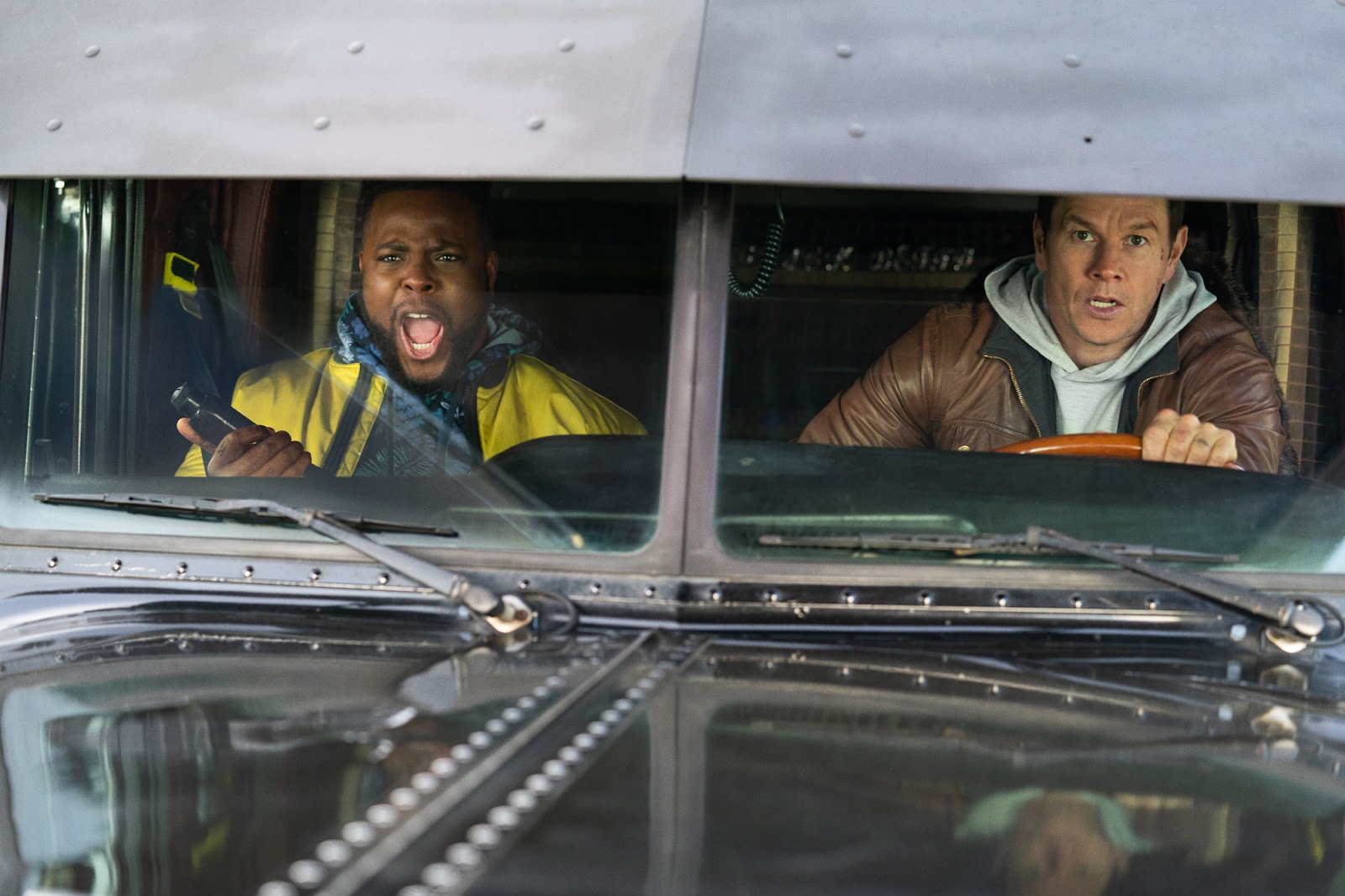
SPENSER CONFIDENTIAL (US - 2020) Directed by Peter Berg. Written by Sean O'Keefe and Brian Helgeland. Cast: Mark Wahlberg, Winston Duke, Alan Arkin, Iliza Shlesinger, Michael Gaston, Bokeem Woodbine, Marc Maron, James Dumont, Austin Post, Colleen Camp, Hope Olaide Wilson, Kip Weeks, Brandon Scales, Ayana Brown, Dustin Tucker, Rebecca Gibel, Alexandra Vino. (R, 110 mins) Mononymous Boston private eye Spenser was the subject of 40 novels by Robert B. Parker published from 1973 to 2011, as well as the inspiration for the 1985-1988 ABC series SPENSER FOR HIRE with Robert Urich in the title role and Avery Brooks as his buddy and partner Hawk, later followed by a trio of 1999-2001 A&E TV-movies with Joe Mantegna and Ernie Hudson. Following Parker's death in 2010, his estate commissioned mystery writer Ace Atkins to continue the Spenser series. Atkins has since written another eight Spenser novels, and it's his second, 2013's Wonderland, that's the basis of the Netflix Original film SPENSER CONFIDENTIAL, a very loose adaptation repurposed as an origin story, using little aside from the character names, incidental details, and the Boston setting, which is probably the biggest reason Mark Wahlberg and Peter Berg were attracted to the project. Yes, it's another chance for Wahlberg, in his fifth collaboration with Berg, to indulge in his feckin' "Say hi to your mother for me" act, along with obligatory shout-outs to Dunkin and classic rock bands Boston and Aerosmith.
As the film opens, disgraced Boston cop Spenser is about to be paroled after serving a five-year stretch for beating the shit out of his asshole captain Boylan (Michael Gaston), with whom he was already butting heads when he showed up at his house unannounced to discuss a case and walked in on him in an act of domestic violence against his wife. Ex-boxer Spenser shacks up in Southie with his cranky, fatherly former trainer Henry (Alan Arkin) and has to share a room with Henry's latest protege Hawk (Winston Duke of BLACK PANTHER and US). It's a temporary arrangement, as he just wants to leave Boston behind, get a license to drive a big rig, and move to Arizona with his beloved, elderly dog Pearl (who's giving him the cold shoulder and has bonded with Hawk during her human's five-year absence), but fate intervenes. The next morning, breaking news reports reveal that now-Chief of Police Boylan has been killed and in no time at all, Spenser's former partner Driscoll (Bokeem Woodbine) is knocking at the door, checking his alibi. Spenser is persona non grata with all of his one-time colleagues and the first obvious suspect, though Boylan's killer is quickly revealed to be Terence Graham (Brandon Scales), a boy scout of a cop who had drugs and money stashed away in his home and his found dead from a self-inflicted gunshot wound. Graham's widow (Hope Olaide Wilson) insists her late husband is being framed and that his suicide was staged, and Spenser isn't buying the official Boston P.D. story either. He's almost instantly nosing around in places he doesn't belong, with an intimidating Hawk as an initially reluctant but soon enthusiastic sidekick as they uncover a tangled web of corruption involving drug trafficking, a shady racetrack land deal, some Aryan Nations assholes in the joint (among them Austin Post, aka Post Malone, really stretching as a guy named "Squeeb"), machete-wielding enforcers, a money-laundering hit man known as Tracksuit Charlie (James Dumont), and a ring of dirty cops that might...wait for it...goall the way to the top.
Co-written by Oscar-winning L.A. CONFIDENTIAL screenwriter Brian Helgeland (his first gig since 2015's Krays biopic LEGEND), SPENSER CONFIDENTIAL doesn't have an original idea in its head, but it's enjoyable-enough formulaic entertainment most of the way, with Wahlberg much more likable here than in his last two Berg films, with the ludicrous, pandering bullshit of PATRIOTS DAY and the abysmal, career-worst MILE 22. He and Duke make a fun team that's eventually joined by his hot-headed, tough-as-nails ex Cissy (Iliza Shlesinger, seemingly patterning her performance on Heidi Gardner's recurring SNL character "Angel, Every Boxer's Girlfriend from Every Boxing Movie Ever"). SPENSER gets some points docked for not giving a national treasure like Arkin something substantive to do, and Berg indulges in way too many classic rock needle-drops: it opens and closes with Boston's "Foreplay/Long Time," Aerosmith's "Sweet Emotion" plays during some destructive truck crashes and a subsequent shootout (the big rig Spenser drives is called "Black Betty," and the only surprise is that they didn't license Ram Jam), Foreigner's "Feels Like the First Time" blares when Spenser and Cissy have wild sex in a restaurant restroom, and Neil Diamond's 'Sweet Caroline" accompanies a brawl in a cop bar where Spenser is no longer welcome. SPENSER is an OK time-killer that moves fast, is never dull, has a handful of funny lines, and gets dumber the longer it goes on. Spenser's only been away for five years but he has no idea how computers and the cloud work? And don't miss one really hackneyed exposition dump when Spenser uncovers a secret recording made by Graham during a private conversation with Boylan, where Graham engages in the most "I'm clearly wearing a wire" line of questioning you'll ever hear, or later, when the criminal mastermind behind it all Facetimes Spenser and actually says "Be there in one hour...and bring me my drug shipment!" Who talks like that? C'mon, Helgeland. You're smarter than that.
THE LAST THING HE WANTED (US/UK - 2020) Directed by Dee Rees. Written by Marco Villalobos and Dee Rees. Cast: Anne Hathaway, Ben Affleck, Rosie Perez, Willem Dafoe, Toby Jones, Edi Gathegi, Mel Rodriguez, Onata Aprile, Carlos Leal, Ben Chase, Julian Gamble, Rob Sedgwick, Billy Kelly, David Vadim. (R, 115 mins) "You wanna see how a monkey drives? Buckle up. Follow the bananas." That's an actual line of dialogue from the new Netflix Original film THE LAST THING HE WANTED, and relatively speaking, it's one of its better ones. Based on a 1996 novel by Joan Didion, perhaps best known for scripting films like 1971's THE PANIC IN NEEDLE PARK, 1976's A STAR IS BORN, and 1996's UP CLOSE & PERSONAL, THE LAST THING HE WANTED utilizes much of the florid, purple prose coming directly from the source, which only serves to demonstrate just how Didion's acclaimed novel fails to translate to the screen in every possible way. We're talking unfilmable on a level of Alan Rudolph's catastrophic 1999 Kurt Vonnegut adaptation BREAKFAST OF CHAMPIONS. Think I'm exaggerating? Then take a spin with this voiceover monologue delivered in a hard-boiled, staccato fashion by Anne Hathaway like a vocal-fried HIS GIRL FRIDAY five minutes into the movie:
"For a while, we thought time was money. Find the time, the money comes with it. Moving fast. Get the suite, the multi-line telephones. Get room service on one, get valet on two, premium service, out by nine, back by one. Download all data, uplink Prague, get some conference calls going. Sell Allied Signal, buy Cyprus Minerals, work the management plays. Plug into the news cycle, get the wires raw, nod out on the noise. Somewhere in the nod, we were dropping cargo. Somewhere in the nod, we were losing infrastructure, losing redundant systems, losing specific gravity."
Is that a monologue from a serious geopolitical thriller or a rejected Geoff Tate spoken word section from the most pretentious outtake in the Queensryche songbook? I'm gonna memorize it and just blurt it out at random times to see how people react. Hathaway stars as Elena McMahon, a reporter for the fictional Atlantic Post, and as the film opens in 1982, she's embedded with the FMLN, covering the civil war in El Salvador with her photographer colleague Alma (Rosie Perez). She's getting wind of some secret deals going on with the Contras in Nicaragua that she traces back to D.C. only to get stone-walled by Secretary of State George Shultz (Julian Gamble). That gets her shitlisted in politico circles and when the paper caves to pressure and shuts down their Central American field office, she's reassigned to cover the 1984 Reagan/Bush re-election campaign. At the same time, her shady father Richard (Willem Dafoe, who puts forth some valiant effort in his few scenes) is suffering from the early stages of dementia and ends up in the hospital, at which point he clues her in that she needs to take care of some "business" for him, namely his secret gig as a gunrunner for the Contras.
What follows is an incoherent mishmash of Oliver Stone's SALVADOR and Michelangelo Antonioni's THE PASSENGER, with Elena taking a leave from her job to act in her ailing father's stead, which leads to unintentionally hilarious scenes of her making a gun drop on a Nicaraguan air strip and shouting "Is this the payment?" as guys in Jeeps with guns swarm around her. She travels from Florida to Salvadors El and San, Costa Rica, and eventually Antigua, where she ends up taking a job as a housekeeper for wealthy and flamboyant Paul (Toby Jones), who made his fortune in gay Costa Rican bathhouse getaways for rich, closeted American one-percenters. This somehow gets her close to...whatever it is she's searching for? Ben Affleck, looking alternately catatonic and confused, appears sporadically as Treat Morrison, a sinister Shultz State Department flunky who happens upon a despondent Elena eating chocolate ice cream and a plate full of bacon strips at a St. John's bar before they hop into bed and slog through some painfully arduous post-coital pillow talk (he talks about his dead wife, she quotes poetry). Hathaway is an excellent actress but she's just hopelessly miscast here, mistaking chain-smoking and a gravelly vocal affect for grit and toughness. The awful dialogue doesn't do anyone any favors--Hathaway is completely wrong for the part, but in her defense, how could anyone do anything with nonsensical, sub-James Ellroy word salads like "I covered many interesting things before my desk got froze and I was relegated to following around the circus filing white propaganda about all the elephant shit!" Suddenly, last year's SERENITY isn't looking so bad.
If this review seems all over the place, that's just because it's impossible to really discuss THE LAST THING HE WANTED. It feels like it's either unfinished or huge sections of it have been removed willy-nilly with no thought given to how it would impact the narrative. People appear then disappear before we can find out who they are. Elena just turns up in places with no explanation why she's there. Why does she take a job running errands for the bathhouse guy? Who is Jones (Edi Gathegi), some guy who just shows up after a weapons drop and gets ordered out of a car at gunpoint by Elena, only to turn up again much later and save her during a hotel shootout? There's endless talk about a gunrunning mystery man code-named "Bob Weir," and not only does no one make a Grateful Dead joke, but the ultimate revelation of his identity is tied to a sudden flashback that the film just pulls out of its ass very late in the game in maybe the laziest deus ex machina in recent memory, all leading up to what was clearly intended to be a devastating twist ending that just fails to land or tie together any loose ends because you have no clue what's even led up to it. Somehow, this dumpster fire was directed and co-written by Dee Rees, who earned significant acclaim and an Adapted Screenplay Oscar nomination for her 2017 Netflix film MUDBOUND, so it's obvious Netflix attached themselves to this sight unseen before filming even began. The buzz at Sundance in early 2020 was utterly toxic, so it's little wonder the streaming giant snuck this one online with little fanfare despite the prestigious cast. THE LAST THING HE WANTED is bound to go down as a cautionary tale of what happens when aggressively unfilmable novels are adapted to the wrong medium. Still think I'm exaggerating? Well, here's the rest of that early Hathaway monologue:
"Weightlessness seemed, at the time, the safer mode. Weightlessness seemed, at the time, the mode in which we could beat the clock and the affect itself. But I see now that it was not. I see now that the clock was ticking. I see now that we were experiencing not weightlessness, but what is interestingly described on page 1513 of the Merck Manual, 15th edition, as a sustained reactive depression, a bereavement reaction to the leaving of familiar environments. I see now that the environment we were leaving was that of feeling rich. I did not see it then."
THE KING (US/Australia/UK - 2019) Directed by David Michod. Written by David Michod and Joel Edgerton. Cast: Timothee Chalamet, Joel Edgerton, Ben Mendelsohn, Robert Pattinson, Sean Harris, Tom Glynn-Carney, Lily-Rose Depp, Thomasin McKenzie, Andrew Havill, Dean-Charles Chapman, Steven Elder, Edward Ashley, Stephen Fewell, Tara Fitzgerald, Tom Fisher, Ivan Kaye, Thibault de Montalembert, Philip Rosch, Lucas Hansen, Harry Trevaldwyn. (R, 140 mins) A revisionist, GAME OF THRONES-inspired take on three plays in Shakespeare's 15th century-set Henriad (Henry IV Part I, Henry IV Part II, and Henry V), THE KING eschews the Bard's prose in favor of straightforward dialogue scripted by director David Michod (ANIMAL KINGDOM, THE ROVER), and co-star Joel Edgerton. Edgerton takes the role of Falstaff, and the character as presented here is notably different from past HENRY V incarnations in the 1944 Laurence Oliver and 1989 Kenneth Branagh films, and particularly the gold standard that is Orson Welles in his own 1966 masterpiece CHIMES AT MIDNIGHT, which made Falstaff the central character. In Shakespeare, Falstaff, the bad influence, rough-around-the-edges guardian-turned-best friend of King Henry IV's wayward son Prince Hal, is rejected and left heartbroken by his beloved young charge upon his ascension to the throne. In the Michod/Edgerton take, Falstaff is left adrift on his own until his services are needed by the newly-crowned King Henry V (CALL ME BY YOUR NAME's Timothee Chalamet), who neither forgot nor abandoned his friend but essentially has too much going on to immediately touch base with him.
Prior to becoming king, Prince Hal enjoyed his hedonistic, hard-partying lifestyle with Falstaff and their miscreant friends. Hal is only summoned to the palace to be informed by his gravely ill father Henry IV (Ben Mendelsohn) that he's being passed over upon his death in favor of his younger brother Thomas (Dean-Charles Chapman), described by the king as "weak but eager." As Thomas prepares to head into battle against the forces of rebellious Hotspur (Tom Glynn-Carney), he's joined by a reluctant Hal, who ends up the hero of the day after killing Hotspur in a duel when the latter refuses to acknowledge the second-born son. Enraged that Hal got all the attention, Thomas moves forward to another battle and is killed, forcing Hal to inherit a throne he never wanted when his father dies soon after. Now crowned Henry V, the former Prince Hal vows to be a different king, initially insisting on withdrawing from all of his father's petty conflicts, despite the constant push for battle by some of his close advisers, including a relentlessly warmongering Archbishop of Canterbury (Andrew Havill). All the while, the young king is given guidance by his father's right hand, William Gascoigne (Sean Harris), and finds himself in an escalated conflict with France after King Charles VI's loathsome son The Dauphin (a scene-stealing Robert Pattinson) sends him an emasculating gift of a lone ball in honor of his coronation. Soon, an assassin is sent to off Henry V in collaboration with two traitors from his inner circle, prompting him to have them beheaded, followed soon after by inviting his oldest and most trusted friend Falstaff into the fray as they prepare to face King Charles' Dauphin-led army at the Battle of Agincourt.
The cutthroat royal machinations are pretty familiar as far as these things go, and it's really a long buildup to Michod staging an epic, bloody, mud-soaked Battle of Agincourt in the third act. The friendship between Falstaff and Hal isn't explored to quite the depth that it was by Welles and his co-star Keith Baxter in CHIMES AT MIDNIGHT, and nothing here has the emotional gut-punch of the Welles film because the devastating rejection of Falstaff--when Baxter's Hal cruelly turns his back on him when he happily arrives for the coronation--never happens here. Co-produced by Brad Pitt, THE KING is well-made, well-acted, and looks great, but it doesn't really justify its existence beyond being a two-plus hour diversion that's sufficiently engrossing while you're watching it, but doesn't really stick with you when it's over. That is, unless you count Pattinson's insane performance as The Dauphin, where he manages to channel Klaus Kinski in AGUIRRE, Mickey Rourke in BARFLY, and Gary Oldman in THE PROFESSIONAL, then wraps it all in a French accent straight out of Pepe Le Pew. Portraying The Dauphin like some kind of flamboyant, medieval Batman villain, Pattinson doesn't show up until 75 minutes in, but after one condescending dressing-down of Henry V, you'll wish Michod would immediately get busy giving him his own Dauphin spinoff movie.
DOLEMITE IS MY NAME (US - 2019) Directed by Craig Brewer. Written by Scott Alexander and Larry Karaszewski. Cast: Eddie Murphy, Wesley Snipes, Keegan-Michael Key, Mike Epps, Craig Robinson, Tituss Burgess, Da'Vine Joy Randolph, Kodi Smit-McPhee, Snoop Dogg, Ron Cephas Jones, Barry Shabaka Henley, Tip "T.I." Harris, Luenell, Tasha Smith, Bob Odenkirk, Chris Rock, Aleksandar Filimonovic, Ivo Nandi, Michael Peter Bolus, Kazy Tauginas, Baker Chase Powell. (R, 118 mins) Amidst all the NORBITs and PLUTO NASHes that came down the pike, along with all the forgettable comedies like HOLY MAN, MEET DAVE, and IMAGINE THAT that litter his IMDb page, we need to be reminded every few years of what an incredible talent Eddie Murphy has been for nearly 40 (!) years. We all remember the unstoppable force that took over a floundering SNL in 1980 and became a box-office giant for the rest of the decade with 48 HRS, TRADING PLACES, BEVERLY HILLS COP, and COMING TO AMERICA. He stumbled in the early '90s (BEVERLY HILLS COP III, VAMPIRE IN BROOKLYN) and came back with THE NUTTY PROFESSOR and BOWFINGER, then reinvented himself as a family comedy guy with DR. DOLITTLE and DADDY DAY CARE before finding a whole new generation of fans as the voice of Donkey in the SHREK movies. Then came some more bad movies before his performance as James "Thunder" Early in 2006's DREAMGIRLS earned him a Best Supporting Actor Oscar nomination. But the career resurgence didn't happen--leaving the Oscar ceremony in a huff after he lost to Alan Arkin in LITTLE MISS SUNSHINE probably wasn't a good look--and his film appearances since have been sporadic. The Eddie Murphy of old made a welcome return in the underrated 2011 Ben Stiller ensemble comedy TOWER HEIST, but then he was offscreen (not counting 2012's A THOUSAND WORDS, which was gathering dust on the shelf since 2008) for another five years, resurfacing in Bruce Beresford's barely-released MR. CHURCH, which offered a top-notch dramatic performance by Murphy in an otherwise mediocre film.
Murphy does his best work since his '80s glory days in the Netflix Original DOLEMITE IS MY NAME, a wildly entertaining biopic of singer, comedian, and foul-mouthed party album legend Rudy Ray Moore (1927-2008), who would go on to be the mastermind of the 1975 blaxploitation cult classic DOLEMITE (a major influence on BLACK DYNAMITE). The screenwriting team of Scott Alexander and Larry Karaszewski follow their ED WOOD template with Moore presented as a persistent, can-do dreamer whose ambitions in the entertainment industry stretch far beyond the capacity of his ability, yet he nevertheless corrals a rag-tag crew of skeptical but loyal friends and associates who are won over by his infectious spirit and personality. Unsuccessfully selling himself as a "total entertainment experience," his music and comedy careers have stalled and he's depressed that it's 1970 and all he's got in his life is his job as an assistant manager at Dolphin's Record Store in L.A. Moore finally finds some inspiration in listening to some homeless guys tell ridiculous stories of a badass, rhyme-busting pimp named "Dolemite." He works their stories into his own act, assuming the role of Dolemite and testing the character at a local nightclub. It gets a raucous response, and he borrows $250 from his aunt (Luenell) to record a live, X-rated, Redd Foxx-esque comedy album in his living room and then selling copies out of the trunk of his car. The Dolemite character soon finds a cult following and Moore takes the act on the road, with a record company eventually picking up his album (the not-very-subtly titled Eat Out More Often), and having him record several more. Emboldened by his newfound fame, Moore decides to take Dolemite to the next level, envisioning a big-screen movie along the lines of SHAFT and BLACK CAESAR.
Of course, neither Moore nor his inner circle--Jimmy Lynch (Mike Epps), Ben (Craig Ferguson), Toney (Tituss Burgess), and protegee and opening act Lady Reed (Da'Vine Joy Randolph)--have the faintest idea how to make a movie. Moore hires playwright and inner city theater director Jerry Jones (Keegan-Michael Key) to write a script that's initially planned to be a hard-hitting look at life on the mean streets but soon takes a turn toward the ludicrous with Moore's insistence that "titties" and "kung fu" be added to the story (Jones manages to talk him out of including an exorcism, in a nod to Moore's later demonic possession spoof PETEY WHEATSTRAW). A chance encounter while scouting for leading ladies at strip club leads to Moore landing "big time" actor D'Urville Martin (Wesley Snipes) as a co-star with the promise of letting him direct. Scenes of the filming of DOLEMITE allow Murphy to recreate some of the film's most memorable (and memorably incompetent) moments, with "director" Martin more or less presented as a screwdriver-swilling drunk who's only there to mumble "Action" and "Cut" while Moore essentially takes control of the production.
"Dolemite is my name and fuckin' up motherfuckers is my game!"
Rudy Ray Moore (1927-2008)
Alexander and Karaszewski take the time to get the movie industry details right (like DOLEMITE initially taking off by the practice of "four-walling"), while obviously taking some liberties with the Moore story and the timeline (for instance, Dolemite yelling "Put your weight on it!" is actually from a later Moore "classic," 1979's DISCO GODFATHER), and they never address his long-rumored homosexuality (Moore never came out of the closet, but those closest to him have said he was gay), though there are some subtle hints in some remarks made to his closest friend Toney as well his nervousness about shooting a sex scene for the movie (oddly, the film overtly insinuates it about Martin, as evidenced by Snipes' flamboyantly effeminate portrayal of the actor/director as a sassy, melodramatic drama queen). It's definitely sidestepping to a certain degree, whether by Murphy's choice or because Moore never publicly came out in his lifetime, but it doesn't detract from the sheer entertainment of the film or the joy of watching an inspired Murphy just let it rip. Moore not only influenced the pioneers of rap, but also the young Eddie Murphy, and while Murphy doesn't cave to affectation by trying too hard to sound like Moore or wearing a ton of makeup to look exactly like him, he brilliantly nails the persona and the feel of Rudy Ray Moore (Christopher Plummer as Mike Wallace in THE INSIDER immediately comes to mind--Plummer looked and sounded nothing like Wallace, but yet he was Mike Wallace). Murphy turns in an Oscar-caliber performance, and he gets some terrific support from Snipes in his best role in years as the arrogant Martin, who derisively sneers at the entire project and never misses an opportunity to remind everyone that he's been in big movies and is friends with Fred Williamson. And Randolph, who gets an emotional scene ("I ain't never seen nobody that looks like me up on that big screen") near the end that seems to bring Murphy the actor to actual tears, definitely has some awards season recognition coming her way. Directed by Craig Brewer (HUSTLE & FLOW), who's reteaming with Murphy on the upcoming COMING TO AMERICA sequel COMING 2 AMERICA, DOLEMITE IS MY NAME is a triumphant comeback for both Murphy and Snipes and an affectionate tribute to Rudy Ray Moore.
ELI (US - 2019) Directed by Ciaran Foy. Written by David Chirchirillo, Ian Goldberg and Richard Naing. Cast: Charlie Shotwell, Kelly Reilly, Lili Taylor, Max Martini, Sadie Sink, Deneen Tyler, Katia Gomez. (Unrated, 98 mins) Originally set to be released in theaters back in January 2019, ELI was given the CLOVERFIELD PARADOX dumpjob treatment by Paramount, who abruptly yanked it from the release schedule and sold it to Netflix. That precedent serves as a red flag for this rampantly idiotic horror film that Paramount actually admitted they had no idea how to market (or, more likely, they knew they had a steaming turd on their hands that wasn't even worthy of some early January garbage time at the multiplex). It feels like several half-baked ideas crammed into one screenplay under the guise of "reveals" and "twists," but never establishing any consistency and often rendering past events nonsensical. But ELI is the kind of movie that doesn't want you to ask any questions or think too hard about it, lest you see how sloppily assembled and thoughtlessly executed it ends up being. It's too bad, because Irish director Ciaran Foy brought some style to both his promising 2012 debut CITADEL and 2015's intermittently interesting SINISTER 2, and two of the three credited writers (Ian Goldberg and Richard Naing) scripted 2016's terrifying THE AUTOPSY OF JANE DOE, but whatever promise ELI might have in the early going is torpedoed at an alarming speed before completely collapsing in on itself in the home stretch.
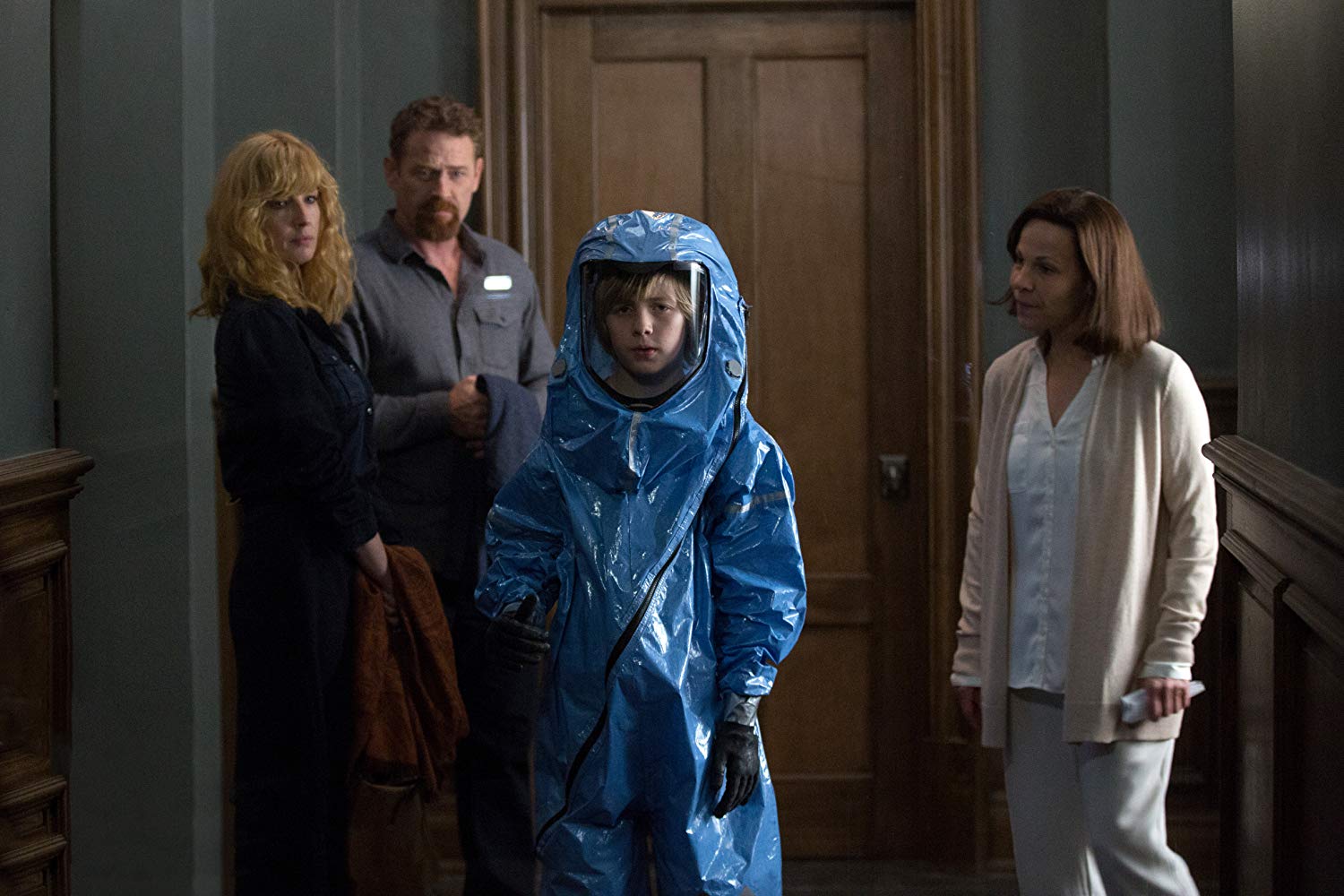
Rose (Kelly Reilly) and Paul Miller (Max Martini) have stretched themselves to their financial limit caring for their young son Eli (Charlie Shotwell). He has a rare autoimmune disease where everything makes him sick, air and water burn his skin, and he's required to live in a plastic bubble or be in a sealed Hazmat-type suit if he goes outside. They're taking him to a clinic housed in an old manor that's been equipped with a state-of-the-art air filtration system and is run by Dr. Horn (Lili Taylor), a leading--and expensive--immunology specialist. Since the house is "clean," Eli is able to walk around without the plastic suit, but from Dr. Horn's nervous smile and askance glances, it's obvious that things aren't what they seem. The aggressive treatments make Eli's condition worse, underlying tensions between Rose and Paul start bubbling to the surface with clumsy dialogue like Rose insisting "We just have to have faith!" and a glaring Paul responding "I have always been a faithful man" with a cold terseness that borders on passive aggression, and Eli starts seeing ghostly, CGI apparitions of dead children who appear to have shuffled in from a circa 2003 Dark Castle production.
Dumbest of all is the handling of Eli's only friend, a sassy, snarky, red-headed teenager named Haley (STRANGER THINGS' Sadie Sink), who loiters around the property, talks to him through the windows, and seems to know a lot about what's happened with other children who have been treated at the clinic. Nobody else sees Haley until it's convenient for the plot, Eli never mentions her to anyone, and her own highly suspect backstory ("I live down the road"), coupled with her affected 'tude, doesn't in any way add an air of mystery to ELI. Rather, it spotlights its lax story construction and inept execution where plot twists and exposition dumps are just shat out willy-nilly with no concern over the effect they have on whatever happened before. Knowing what you know when it's over, ask yourself "Why are the Millers so financially strapped?" and "Would money even be a concern under those circumstances?" and "Where was Paul when that deal went down?" These complaints only make sense if you see the movie and experience first-hand its wholly unique brand of stupidity that's almost unparalleled in the horror genre in 2019. In the right hands, ELI could've been one of those "You know what...fuck it" sort-of gonzo batshit fright flicks that's so unabashedly ridiculous that you just roll with whatever it throws at you. But what's here is essentially audience contempt, with a final 15 minutes that's so out-of-nowhere and leads to so many "But, hold on...wait a minute...what the fuck?" questions that you'll wonder why Netflix didn't just re-title it CLOVERFIELD'S BABY and be done with it.
IN THE SHADOW OF THE MOON (UK/US - 2019) Directed by Jim Mickle. Written by Gregory Weidman and Geoffrey Tock. Cast: Boyd Holbrook, Cleopatra Coleman, Michael C. Hall, Bokeem Woodbine, Rudi Dharmalingam, Rachel Keller, Sarah Dugdale, Quincy Kirkwood, Philippa Domville, Tony Nappo, Al Maini, Julia Knope, Colton Royce. (Unrated, 115 mins) After a trio of films that were well-received in indie horror scenester circles (2007's MULBERRY ST, 2011's STAKE LAND, and 2013's WE ARE WHAT WE ARE, a remake of a 2010 Spanish film), director Jim Mickle delivered an instant cult classic with 2014's East Texas noir COLD IN JULY, adapted from a Joe R. Lansdale novel. Following that, he devoted his energies to the three-season run of the Lansdale-based Amazon series HAP AND LEONARD. Now, Mickle--working for the first time from a script by others and not with writing partner Nick Damici, though Damici is one of the producers--returns to features for his most ambitious effort yet with the Netflix Original film IN THE SHADOW OF THE MOON. Written by TV vets Gregory Weidman and Geoffrey Tock (both worked on the CBS series LIMITLESS and ZOO), the film has a doozy of a high concept involving a time-traveling serial killer hitting Philadelphia once every nine years beginning in 1988, on a fateful night that will forever affect the future of young patrolman Thomas "Locke" Lockhart (Boyd Holbrook). With a pregnant wife (Rachel Keller) due to give birth at any moment, Locke heads out for another night on the graveyard shift with his partner Maddox (Bokeem Woodbine) when the entire department ends up in a state of chaos over a string of identical deaths--a sort-of hemorrhage where the victims' brains seemingly melt out of their eyes, ears, nose, and mouth--simultaneously taking place miles apart across the entire city. The victims all have puncture wounds on the backs of their necks made by some kind of undetermined weapon, and witnesses mention a black female in a blue hoodie fleeing a club where the weapon was used on a young woman, who soon dies in the same manner while she's giving a statement to police.
After hitching themselves to the investigation against the wishes of Capt. Holt (Michael C. Hall, Mickle's COLD IN JULY star), who also happens to be Locke's brother-in-law, Locke and Maddox manage to catch up to the blue-hoodied killer, a young, shaven-headed woman named Rya (Cleopatra Coleman) after cornering her on a subway platform. Rya breaks Maddox's leg and gets into a violent scuffle with Locke, who injures her with her own strange weapon, causing her to stagger off the platform into the path of a speeding train, killing her instantly. Cut to 1997, Locke and Maddox are now detectives who made their names on the events of nine years ago, which has come to be known as the "Market Street Murders," though the department managed to get away with never divulging the identity of the killer and keeping many of the details secret. But on this day, his daughter's ninth birthday, a string of copycat killings take place, with Locke eventually coming face-to-face once more with Rya, who was splattered into pieces nine years ago but is somehow back to pick up where she left off with the killings.
To say anymore would involve significant spoilers, but this will pattern of Rya returning will repeat in 2006, 2015, and into 2024 over the course of the film, a time frame that finds Locke growing more obsessed and disheveled over time, at the expense of his job and his relationship with his daughter (played by Quincy Kirkwood at 9 and then Sarah Dugdale at 18 and older). The story is a wild mash-up of THE TERMINATOR, TIMECOP, DEJA VU, ZODIAC, LOOPER, and TRUE DETECTIVE among others, all wrapped into what plays like a feature-length episode of BLACK MIRROR with some incendiary present-day social commentary that's actually pretty ballsy in what it's trying to accomplish. But the more it goes on, the more muddled it becomes and the realization sets in that Mickle and the writers are simply trying to do too much in the timeframe they've been allotted. That's especially true in the deployment of about ten minutes worth of voiceover narration in lieu of a climax, which feels last a last-ditch Hail Mary because there's too many loose ends and no other way to resolve them while keeping it under two hours. It's still very much worth a watch, and the opening 35 minutes stands as a terrific extended suspense/chase set piece, but IN THE SHADOW OF THE MOON is ultimately a film whose incredibly lofty thematic ambitions would've perhaps been better served as a two or maybe three-part Netflix limited series.